Size Selection Tips for Singapore HDB Living Rooms
Choosing furniture for a Singapore HDB living room is not simply a matter of choosing what looks attractive in a showroom. The piece must also move through the lift, turn along the corridor, fit through the entrance, and still leave enough space for daily life. In compact flats such as those in Tampines, Bedok, or Punggol, a difference of just 10 cm can change the way a room works.
I tested this principle last month when I visited a family in Bedok. Their new solid wood sofa looked perfectly proportioned in the show unit, but the 215 cm frame could not be angled into the 180 cm lift lobby. The retailer offered an alternate delivery route through a window, but the family preferred a 195 cm model that passed through without disassembly. The smaller sofa was not merely a compromise: it made the living room more comfortable from the day it arrived.
This guide explains how to measure before ordering, why furniture dimensions matter, and how to balance storage, movement, and light-luxury styling in a Singapore home. Prices below use SGD and include examples relevant to local shoppers.
What dimensions should you check before ordering furniture?
Start by measuring the route, not only the living room. Record the entrance door width, corridor turns, stair or lift door width, lift interior width, lift interior depth, and ceiling height. Lift labels often state the door size but not the cabin dimensions, so ask the building management for the usable internal measurements. If the route includes a 90 cm turn, a rectangular piece longer than about 190 cm may need special handling even when its longest dimension is below the corridor width.
Next, tape the intended furniture footprint on the floor. Allow a minimum of 75 cm for a main circulation route between a sofa and dining table, 60 cm in front of wardrobes or doors, and 90 cm in a busy kitchen-to-living passage. These are practical clearances rather than fixed building rules. In an HDB flat, preserving an unobstructed path is usually more useful than squeezing another 20 cm of table length into the room.
Measure the room at 2 or 3 points because older HDB walls and refurbished condo finishes are not always perfectly square. Write down the width, depth, ceiling height, radiators, sockets, and window positions. Furniture should complement these details rather than conceal them.
How wide should a living room sofa be?
A common sofa-width mistake is assuming that the longest sofa will fill the wall most attractively. For a typical Singapore living room, a solid wood sofa between 180 cm and 220 cm works well, provided it leaves at least 60 cm to the television console and does not obstruct the main passage. A 160 cm three-seat sofa can suit a room with a 280 cm usable wall length, while a 200 cm model may suit a wall of at least 330 cm after accounting for side tables and door swings.
Do not judge the sofa only by seat width. Check its depth, including the back frame, and allow about 40 cm between the front edge and the coffee table. A 90 cm-deep sofa needs approximately 90 cm of clear coffee-table space for comfortable legroom, while a 75 cm arm width on each side helps prevent the sofa from appearing to press against the walls.
Armchair buyers should consider whether the frame can enter the home assembled. For delivery planning, note that the sofa may weigh 55–90 kg, which makes a narrow lift difficult to work through safely. MIDHILL can advise on packed and assembled dimensions for individual pieces, and buyers should confirm the final route with their building manager before the delivery date.
Will a dining table fit an HDB dining area?
For a 70–90 square metre HDB flat, a dining table around 120 cm by 70 cm often gives four people room to sit without blocking a nearby sofa. A 140 cm by 75 cm table seats six, but it needs at least 90 cm of clearance behind each occupied side. If one side faces a wall or a balcony sliding door, leave at least 60 cm for chairs to be partly pulled out.
Round and oval dining tables can help when circulation is tight, although they still require chair clearance. A 110 cm round table can seat four in a compact dining area, while a 130 cm round version may suit six. Check whether chairs overlap with a bed frame, wardrobe doors, or the route from the kitchen. Sliding or extension mechanisms can provide flexibility, but make sure the extension does not project into a doorway when used.
Marble dining tops require close attention to weight and support. A 140 cm by 75 cm natural-stone table may weigh roughly 85–130 kg depending on the slab and frame. That weight is useful information for lift planning, not a reason to choose a thinner unsupported top. Ask for the packed weight, lifting points, and whether the base is shipped separately.
How should you measure a bedroom for a bed frame and wardrobe?
Allow 60 cm beside a double bed if one side is used for walking, and 75 cm on both sides if both sides need regular access. A 150 cm by 200 cm bed frame requires a room that is not simply 150 cm wide: include the wardrobe depth, bedside clearances, and the door-opening arc. Compact HDB bedrooms often work better with a 135 cm by 200 cm bed or a 120 cm by 200 cm model when space is limited.
A wardrobe should be measured by its projection as well as its frontage. A 180 cm-wide wardrobe with a 58 cm depth is different from a 150 cm-wide wardrobe with a 60 cm depth. Hinged doors need room to open, whereas sliding doors need less swing clearance but require a wider frame. Leave at least 60 cm in front of a wardrobe used daily, although 75 cm is preferable in a shared bedroom or beside the bed.
For a nightstand, measure the gap beside the bed and the height of the mattress. A 40 cm wide by 35 cm deep unit often fits beside a queen bed, but the top should be within about 10 cm of the mattress surface for convenient use. Italian light luxury nightstand designs can look refined with slim profiles and restrained hardware, yet a 50 cm-wide model may be necessary if the frame includes a broad headboard or thick side posts.
How do lift and corridor widths affect your order?
Ask your building manager for usable lift measurements and note whether the delivery vehicle can reach the block. The quoted free shipping over US$350 is useful for international customers, but Singapore deliveries should still be costed locally. A local delivery to Tampines, Bedok, or Punggol may be around SGD 60–180 for a normal furniture order, with extra charges possible for carrying, installation, or a restricted access route. Request the final amount in SGD, including GST where applicable.
For corridor delivery, add the safety margin to the narrowest point. A 200 cm sofa may pass a 210 cm corridor, but a slight turn can require extra diagonal room. The building’s corridor width is not the same as the clear width after pipes, signs, or fire equipment are taken into account. Photograph these obstacles and send the measurements to the supplier before dispatch.
Heavy pieces such as a marble table may need two-person carrying and a protective route. Arrange a delivery window of at least 2 hours, reserve the lift if the building permits it, and protect floors with approved coverings. If a piece cannot be assembled inside the home, discuss that before purchase rather than after the truck arrives.
How can marble furniture work in a small Singapore living room?
Marble furniture can create visual calm when used selectively. A single marble table with pale veining, paired with warm solid wood, can make a compact room feel composed. The risk is visual heaviness: several dark-veined tables, a marble console, and a stone-top dining table may make the same area feel crowded. One statement marble table is often easier to balance with a wood bed frame, dining table, wardrobe, or solid wood sofa.
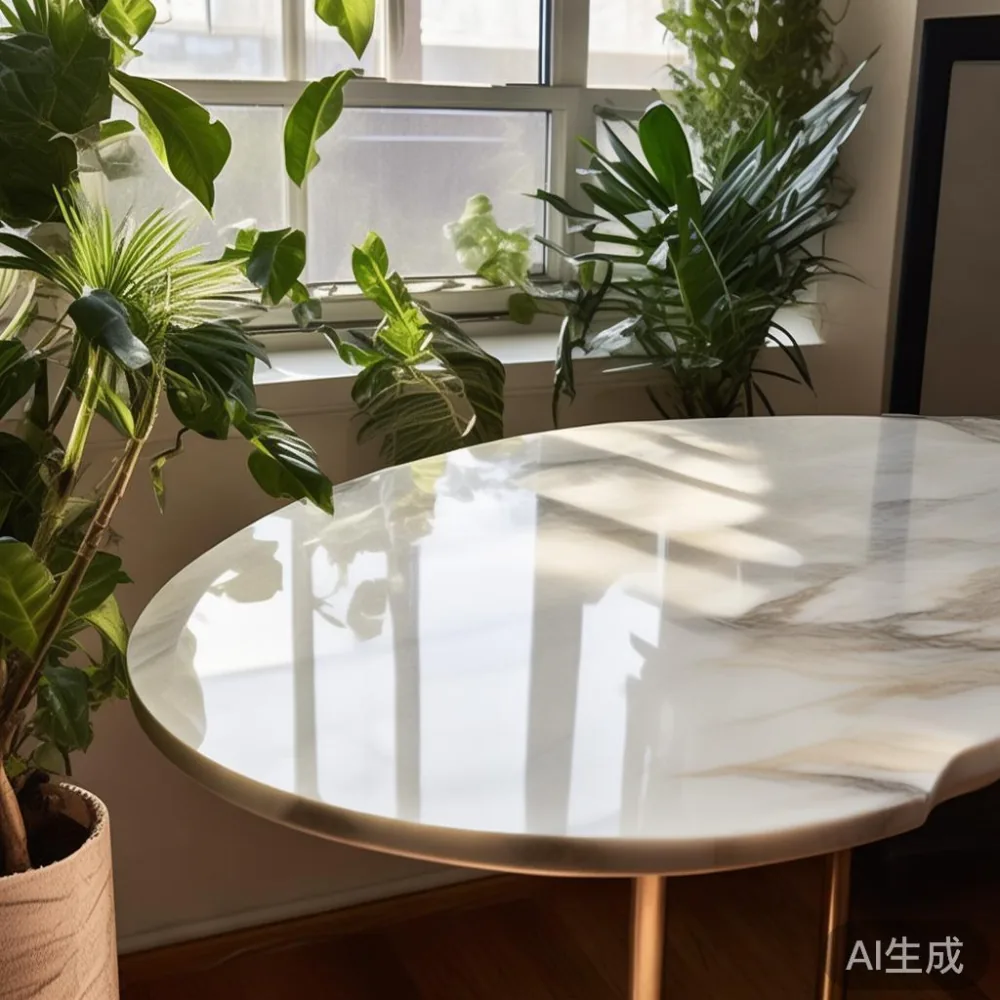
For example, a 100 cm round marble table with a 35 cm base can work beside a 180 cm sofa in a room measuring 320 cm by 360 cm. Leave about 40 cm between the table and sofa for reach and movement. Keep the table light enough that its legs do not dominate the seating area. Marble furniture also needs careful upkeep: wipe spills quickly, use coasters and felt pads, and avoid acidic cleaners unless the supplier confirms the stone is suitable.
French for small living room design often favours pale upholstery, slender frames, and compact tables with delicate proportions. French light luxury can also be achieved through curved edges, muted cream tones, and one marble accent. Do not rely on delicate-looking construction alone: check the actual load rating and the stability of the base.
How do you create a balanced light-luxury interior?
American light luxury works well in HDB living rooms through clean lines, generous spacing, and durable materials. A 200 cm solid wood sofa, a 120 cm dining table, and two slim nightstands can establish a coherent scale without filling every wall. Modern light luxury for apartment planning is a practical exercise: choose fewer, larger roles for each piece and keep visual weight low near the entrance.
Post-modern light luxury offers another route through contrast: warm timber against pale stone, simple silhouettes beside one expressive detail, or rounded forms beside a rectilinear marble table. The goal is proportion, not a crowded collection of expensive-looking items.
For readers comparing styles, a French bed vs Japandi bed comparison often comes down to the frame profile and visual footprint rather than nominal width. A French-style bed may use a shaped headboard; a Japandi frame usually has a quieter, straighter outline. Both should be checked against the room’s measured width and wardrobe location. Similarly, how to style Japandi sofa in bedroom advice is less useful if the sofa cannot pass the lift, so route measurements come before fabric and finish decisions.
If you are researching top 10 Scandinavian furniture ideas, use them as a scale reference rather than a fixed shopping list. Pale woods, simple legs, and uncluttered forms can suit HDB interiors, but Scandinavian sizing assumptions may not match Singapore lift access.
What should a furniture order checklist include?
Before paying, confirm these points:
- Room dimensions: width, depth, ceiling height, doors, windows, sockets, and obstructions.
- Access dimensions: entrance, corridors, turns, stairs, lift door, lift cabin, and loading access.
- Product dimensions: size, usable seating or sleeping space, packed size, and weight in kg.
- Materials: solid wood species, marble thickness, finish, fabric composition, and care instructions.
- Delivery: local SGD charge, GST treatment, estimated delivery days, assembly needs, and return arrangement.
- Warranty and service: retain the receipt and confirm whether structural coverage applies to the specific item.
MIDHILL’s 10-year structural warranty and lifetime refinishing service can be relevant when you are comparing the long-term upkeep of a solid wood sofa, bed frame, dining table, wardrobe, nightstand, or marble table. Confirm the scope, exclusions, and service procedure for your order. Singapore shoppers should also confirm GST treatment and ask for any applicable local return terms. The brand’s 14-day returns policy may be subject to item condition and customisation, so read the current terms before ordering.
Allow roughly 7–21 delivery days for standard items, while made-to-order pieces may require 30–60 days. Custom sizes, special marble slabs, and selected finishes can extend the schedule. A written dimension sheet prevents the most expensive mistake: discovering that a well-designed piece cannot physically enter the home.
What is the right size for your HDB living room?
The right size is the size that fits the room, the household routine, and the access route with room to spare. A 180 cm sofa may be more comfortable than a 220 cm model in a compact HDB living room, while a 120 cm dining table may serve a family of four better than a 150 cm table placed against a walkway. Measure twice, compare the maker’s specifications, and keep the largest dimensions visible throughout the ordering process.
For coordinated Foshan furniture choices, work from a measured floor plan rather than a mood board alone. Solid wood gives warmth, marble furniture creates focus, and disciplined spacing keeps either material from overpowering an HDB flat. The most successful room is not the one with the most furniture; it is the one where every piece has a clear purpose and can be delivered, positioned, and used without daily frustration.