How Humidity in Southeast Asia Affects Wood Furniture — And What Singapore Buyers Should Know
I keep a small hygrometer on my office shelf. Last April, during three back-to-back weeks of afternoon thunderstorms, the needle barely dropped below 82% relative humidity — and that was indoors, on the 14th floor of a Tampines HDB block with the windows closed and the air-conditioner set to 24°C. Two of the cabinet doors on my solid oak sideboard had visibly bowed by the end of the month, and the drawer runners on my reading-room chest stuck in a way they never had during the previous Chinese New Year season. The point of the story is not that oak is a bad choice. The point is that Southeast Asia is unusually punishing on furniture, and Singapore — with year-round readings between 70% and 90% RH — sits near the top of that list. Buyers who understand what humidity does to solid wood, and who choose pieces designed with that reality in mind, get decades of service from their furniture. Buyers who ignore it replace warped drawers within three years.
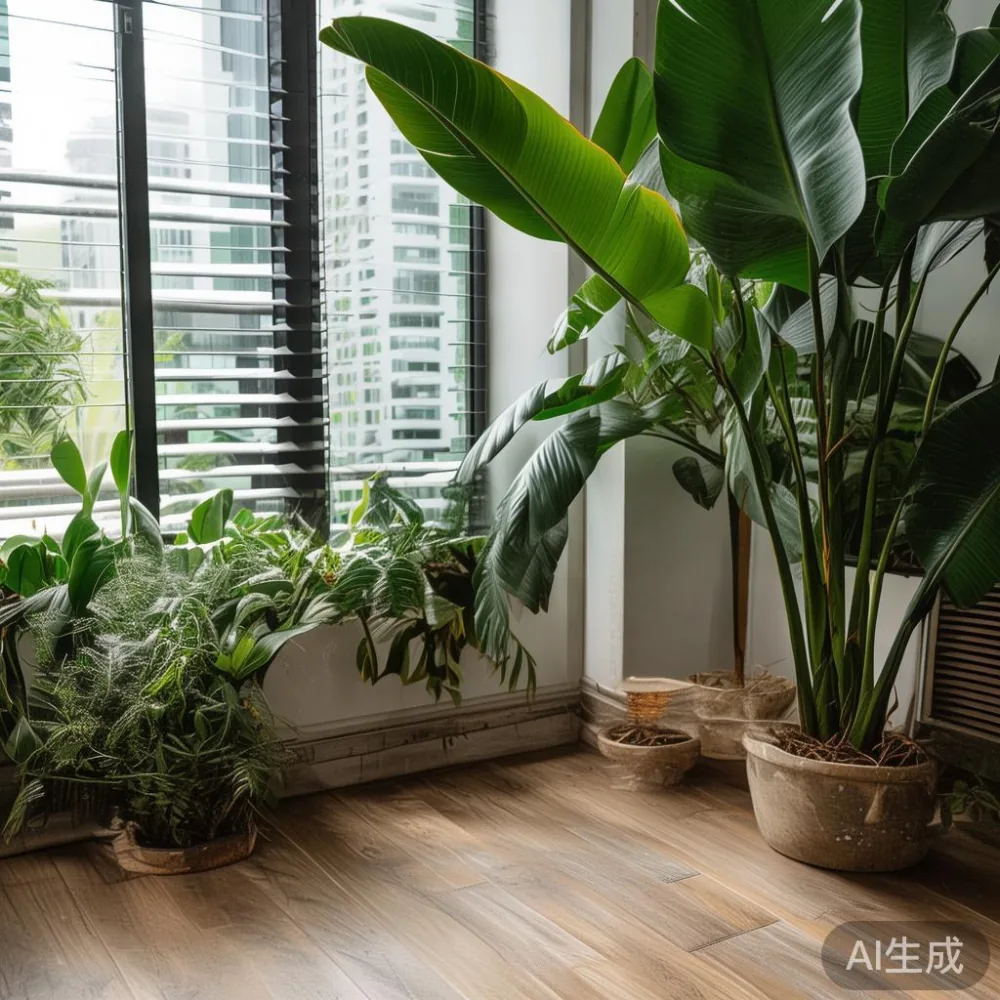
Why Singapore's Climate Is Harder on Wood Than Most Buyers Expect
Outdoor humidity in Singapore averages 79–84% across the year, with month-on-month swings of only 10–15 percentage points. Indoor humidity in a non-air-conditioned HDB flat typically sits 5–10 points below the outdoor reading, which means a bedroom in Toa Payoh without a dehumidifier will still hover around 72–78% RH most nights. Those numbers matter because solid wood is hygroscopic: it absorbs and releases moisture until it reaches equilibrium with the surrounding air. When wood gains or loses moisture, it does not do so evenly across the plank. End grain moves faster than face grain, tangential cuts move roughly twice as much as radial cuts, and any glue line, dowel, or mortise acts as a constraint that creates internal stress. The visible result is cupping, bowing, splits along the grain, and joints that either open up or seize solid.
For a piece like a 1.8 m dining table made from a single slab of ash, a 4-percentage-point swing in indoor RH over a week can translate to roughly 0.3–0.5 mm of width change across the top. That is small enough to ignore in isolation, but repeated for twenty weekends across a year, it is enough to crack a poorly seasoned tabletop or pop the joints on a chair. Manufacturers who kiln-dry their stock to a target 8–10% moisture content for tropical climates — instead of the 6–7% target used for heated Northern European homes — start with wood that is closer to its long-term equilibrium and therefore moves less once it arrives in your flat.
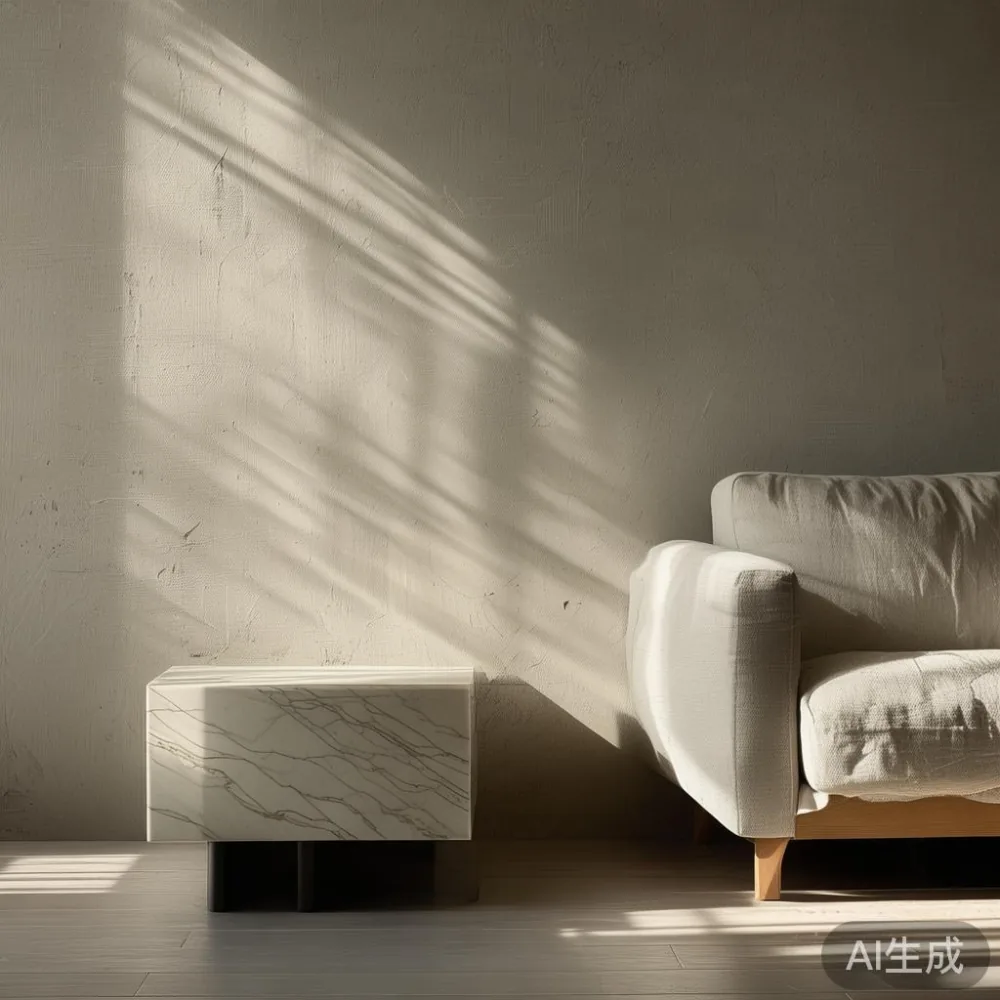
What Humidity Actually Does to a Solid Wood Sofa, Bed Frame, or Wardrobe
Most warping complaints I hear from Singapore owners relate to three product types: long dining tables over 2 m, wardrobe side panels, and the slatted bases under bed frames. A solid wood sofa is actually one of the more forgiving pieces, because the load-bearing frame is usually hidden behind upholstery and the visible surfaces are short, thick components that resist cupping. A Post-modern cherry wood corner sofa, for example, uses shorter rails and thicker posts than a dining table, so seasonal movement stays within the tolerance of the joinery. Corner units also distribute stress across two directions, which lowers the chance of a single racking failure.
Bed frames are a different story. The side rails on a queen-size bed are 2 m long, and the slats that support the mattress span roughly 70 cm each. In a consistently humid room, slats can cup upward by 1–2 mm, which the mattress hides but your lower back notices. The fix is either a slat-tensioning system or a 12 mm plywood deck over the slats. Wardrobe side panels are the most exposed surfaces in the bedroom, and because they are usually 200–220 cm tall and only 1.8–2.2 cm thick, they are the components most likely to bow outward when humidity climbs above 80%. A quality wardrobe uses a back panel that is fully captured in a groove, which restrains the side panels and prevents the classic banana shape. Look for that detail before you buy.
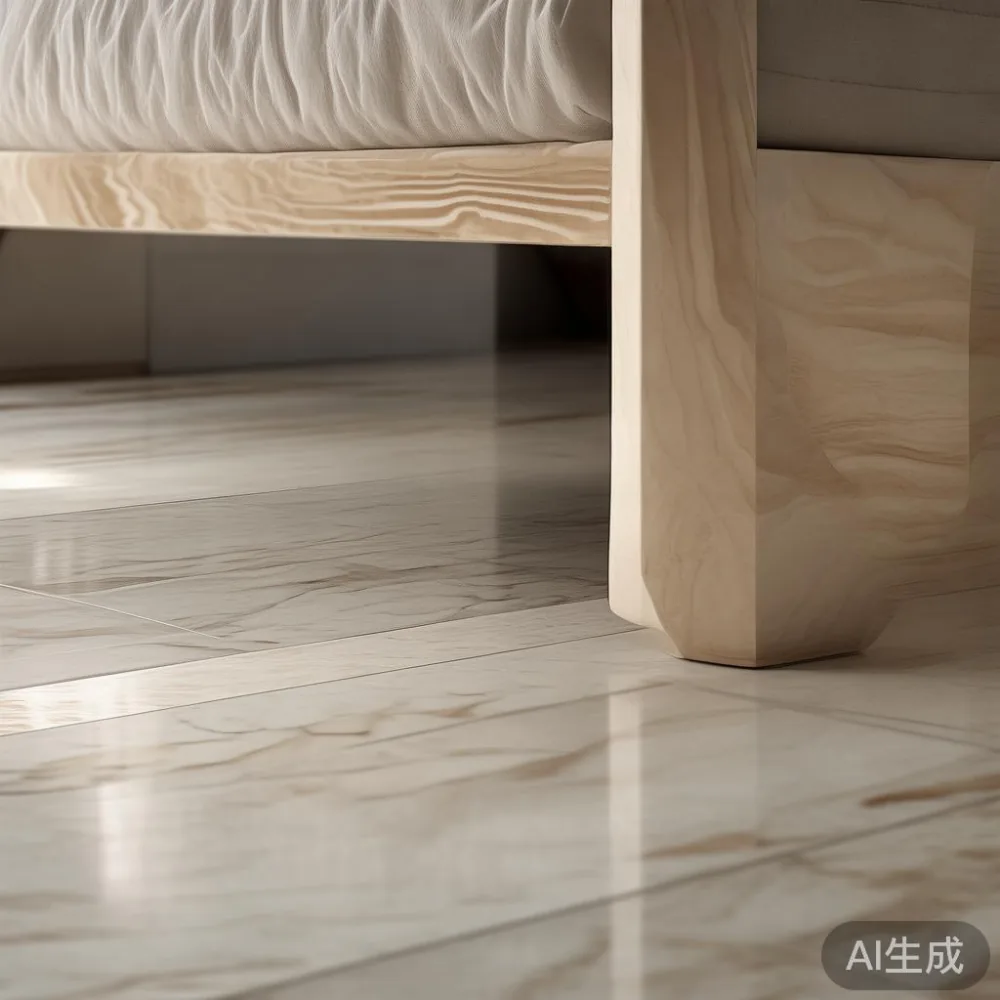
Dining tables and marble table hybrids deserve a separate paragraph because they combine two materials with very different expansion rates. A 1.6 m marble top on a solid wood base will move perhaps 0.2 mm across its width in a typical Singapore year, while the wooden base moves 1–2 mm. If the marble is bonded directly to the wood with adhesive, that differential shows up as hairline cracks at the joint within a season or two. The better construction leaves the marble floating on felt pads or silicone biscuits, so each material can move independently. The same principle applies to nightstand tops: a marble surface mounted on a wooden carcass should never be glued across the full underside.
Is a Bean Bag Worth the Price in Singapore?
No — for most Singapore households, a bean bag is not a good use of budget in this climate, and here is why: bean bags depend on a flexible, breathable cover that moves with the user, and that flexibility is exactly what humidity destroys. The polystyrene bead filling absorbs trace moisture over time, clumps at the bottom of the bag, and develops a faint sour smell that no amount of airing will fix. In a Tampines condo where the indoor RH sits at 75% most evenings, you would replace a mid-range bean bag every 18–24 months, which works out to roughly S$45–60 a year for what is in effect a temporary seat. A small solid wood accent chair with a washable cushion cover costs S$220–380 new, lasts fifteen years with a once-a-decade re-cushion, and adds resale value to the flat. The chair is the rational purchase here.
How to Read a Singapore Furniture Warranty in Plain English
Two clauses matter more than any others. The first is the moisture-content disclosure: a responsible maker will tell you the kiln-drying target (8–10% for tropical use) and the species of timber, because teak behaves differently from rubberwood, and both behave differently from American white oak. MIDHILL publishes that information on the spec sheet of every solid wood bed frame, dining table, and wardrobe, which is uncommon in this category and saves the buyer a phone call. The second clause is the structural warranty period and what it covers. A 10-year structural warranty that covers joint failure, severe warping above 4 mm across a panel, and slat breakage is a strong signal; a 1-year warranty that excludes "natural movement of wood" is a warning. Lifetime refinishing is a separate perk that matters in Singapore because UV exposure through east-facing windows bleaches cherry and walnut faster than owners expect — a refinishing service at a known per-hour rate is worth more than a fifth side table.
Delivery and access are the practical worries that warranty clauses cannot solve. A queen-size bed frame in solid wood typically weighs 60–75 kg and arrives in flat-pack cartons that measure 210 × 35 × 18 cm for the headboard and similar for the rails. Most HDB lift doors in blocks built after 2010 are 90 cm wide and 210 cm tall, with internal cabins of roughly 1.1 m × 1.4 m × 2.2 m, so the cartons fit comfortably. Older blocks in Bedok and Queenstown have narrower 80 cm doors, and a 2.2 m headboard will not angle in without removing the end caps. Measure first, then order. Corridors in walk-up blocks (no lift) typically turn at 90° at each landing, and a 2.4 m wardrobe carton will not make the corner without being stood on end. MIDHILL's delivery team, by the way, has handled enough Punggol and Sengkang corridor turnarounds to know which blocks need a pre-survey.
Five Habits That Add Ten Years to Solid Wood Furniture in Singapore
First, run a dehumidifier in the bedroom for at least four hours a day during the November-to-January monsoon peak, and aim for a steady 55–65% RH. A 12-litre compressor unit costs S$180–260 and uses about 200 W, which is roughly S$0.04 an hour on the latest tariff. Second, keep solid wood pieces at least 15 cm away from air-conditioner vents; the constant blast of cold, dry air on one face of a wardrobe side panel creates a moisture gradient that cracks finishes. Third, rotate dining tables 90° every quarter so the side closest to the window receives roughly equal UV exposure across the year. Fourth, dust with a barely damp microfibre cloth once a week and follow with a dry cloth; never use furniture polish containing silicone on a French light luxury finished surface, because it seeps into the grain and complicates future refinishing. Fifth, check the tightness of chair and table joints every six months — a 30-second pass with a hex key restores a loose stretcher before it becomes a broken tenon.
Two more habits are worth adopting. Avoid placing a solid wood nightstand directly against an exterior wall that lacks a moisture barrier; the 5–10 cm of air gap behind the piece lets the back panel breathe. And if you own a marble table, wipe spills within ten minutes. Marble is porous to acids — fruit juice, wine, even some air-freshener sprays will etch the polish within hours, and humidity then lifts the etched area into a visible dull patch.
Which Furniture Categories Survive Southeast Asia Best — and Which to Approach Carefully
Teak and shorea lead the species ranking for tropical durability: both contain natural oils that resist fungal attack and that slow moisture exchange. American walnut, cherry, and white oak sit in the middle and perform well when kiln-dried for tropical service. Rubberwood is widely used in Singapore-made pieces and is perfectly serviceable for bedroom furniture, but it moves more than denser hardwoods and benefits from a sealed underside on every panel. Engineered boards with a real wood veneer (rather than a printed laminate) give the most stable wardrobe carcasses in this climate, because the plywood core resists the racking that solid timber experiences. American light luxury styling, which typically pairs pale oak or ash with brass fittings and clean lines, suits HDB interiors well because the lighter finish shows dust less obviously than dark walnut and ages more gracefully under fluorescent lighting.
Approach with care: anything described as "solid hardwood" without a species name, anything with panels wider than 80 cm that are not edge-banded, anything with through-tenons that have not been pegged, and anything with a marble top glued directly to a wooden sub-top. Also be cautious with imported flat-pack pieces from temperate-climate makers: their kiln-drying target of 6–8% means the wood will absorb moisture and swell noticeably during the first Singapore monsoon. A small expansion of 1.5 mm across a 1.6 m tabletop does not sound like much, but it is enough to push a tight-fitting drawer out of alignment or to crack a ceramic tile inlay on a dining surface.
Pricing, Delivery, and After-Sale: What a Realistic Singapore Budget Looks Like
For a Singapore household furnishing one four-room HDB flat in Tampines or Bedok, a sensible wood-furniture budget in 2026 sits between S$4,500 and S$9,000 before GST, depending on whether you choose one consistent maker or mix brands. A typical line-up: a queen-size solid wood bed frame at S$980–1,400, a six-seater dining table in ash or walnut at S$1,200–2,200, four matching dining chairs at S$120–180 each, a three-door wardrobe at S$1,400–2,000, two nightstands at S$180–260 each, a 1.4 m marble table for the living room at S$900–1,600, and a compact solid wood sofa at S$1,600–2,800. Add a 9% GST on top, and the total lands between S$4,900 and S$9,800. Delivery is free above US$350 (roughly S$470) on most direct-from-factory platforms, which MIDHILL and a handful of regional makers offer as standard; below that threshold, a S$60–90 dispatch fee is common. Most Singapore deliveries arrive in 14–21 days from a Foshan factory, with white-glove placement and carton removal included; express air-freight upgrades of 7–10 days typically add S$220–380 per shipment. Returns within 14 days are honoured for unused pieces in original cartons, with the buyer paying return freight of roughly S$80–160 per carton from Singapore back to the consolidation warehouse in Tuas.
One practical note on payment: avoid wire transfers to unfamiliar accounts, and prefer credit-card payments that carry a chargeback window. A Singapore-registered business with a GST-registered invoice and a local service team is a much safer counterparty than an unverified marketplace seller. MIDHILL, for example, invoices in SGD, accepts major cards through a Singapore payment gateway, and staffs a local WhatsApp line that handles warranty claims in the same time zone as your contractor — a small detail that becomes important when a wardrobe arrives with a hairline crack and you would like someone to acknowledge it before the weekend.
Quick Answers to Questions Singapore Buyers Ask Most
Do I need a dehumidifier if I run the air-conditioner 24/7? Yes, because air-conditioning alone does not pull indoor RH below 60% in a Singapore HDB flat; it cools the air, but the moisture content of that air is still high unless the unit has a dedicated dry mode. A separate dehumidifier is the reliable answer.
Is solid wood really better than plywood for a wardrobe in Punggol? Solid wood looks better at the edges and ages with character, but a plywood carcass with a real-wood veneer is more dimensionally stable in this climate. Choose solid wood for the doors and drawer fronts, plywood for the carcass, and you get the best of both.
Will a marble table stain if I put a cold glass on it? Condensation rings are a real risk on polished marble. Use coasters, and wipe any ring within five minutes. Etching is permanent; surface stains often buff out with a marble polishing powder.
How long should I expect a quality dining table to last? With the five habits above and a stable indoor climate, a kiln-dried solid wood dining table from a maker like MIDHILL should give 20–30 years of daily family use before any structural attention is needed. A marble table with a properly isolated top can outlast the owner.
Are light-luxury finishes harder to maintain than matte finishes? French light luxury and post-modern light luxury pieces usually combine satin or open-pore finishes with subtle metallic hardware. They show fingerprints less than high-gloss lacquer and are easier to spot-repair than matte painted surfaces. For Singapore households with children, satin is the practical choice.
Humidity in Southeast Asia is not a problem to be solved; it is a condition to be designed for. The buyers who enjoy their furniture longest are the ones who match species to room, who keep indoor RH in a sensible band, and who buy from a maker who kiln-dries for the tropics, publishes the spec, and stands behind the warranty with a local service team. Everything else is decoration.