Veneer vs Solid Wood in Singapore: A 5-Year Cost Reality Check for HDB and Condo Owners
Last month I visited a Tampines HDB resale flat on the 12th floor. The owner, a school teacher in her forties, was staring at a sagging dining table she had bought three years earlier for S$899 from a Jurong East furniture mall. The top had peeled along the long edge where her two kids did homework every evening, and the MDF core was already swelling from a spilled cup of kopi. She told me she was about to replace it — again — and asked the question I hear more than any other in Singapore: "Should I just pay more for solid wood this time?"
The honest answer is: it depends on how long you plan to stay in the flat, how you use the piece, and whether your lift and corridor can even accept the heavier delivery. I have spent the last decade watching shipments arrive at Block 638A Punggol Waterway terraces, at a 680 sq ft Bedok Reservoir unit, and at a 1,200 sq ft condo in Rivervale Shores, and the pattern is consistent. Below is a 5-year cost comparison written specifically for Singaporean homes — HDB corridors that measure roughly 1.2 m wide, lift cabins around 1.4 m deep, and the 9% GST that now lands on every imported furniture dollar above S$1,000.
The Real Price Tag in SGD (and Why Veneer Looks Cheaper on Day One)
A standard 1.6 m veneer dining table in Singapore retails between S$599 and S$1,099 at the big-box stores. A comparable solid wood dining table in the same length sits between S$1,750 and S$3,200 once you include 9% GST and delivery up to the 14th floor. The sticker gap is roughly S$1,200 — a meaningful sum in a household budget.
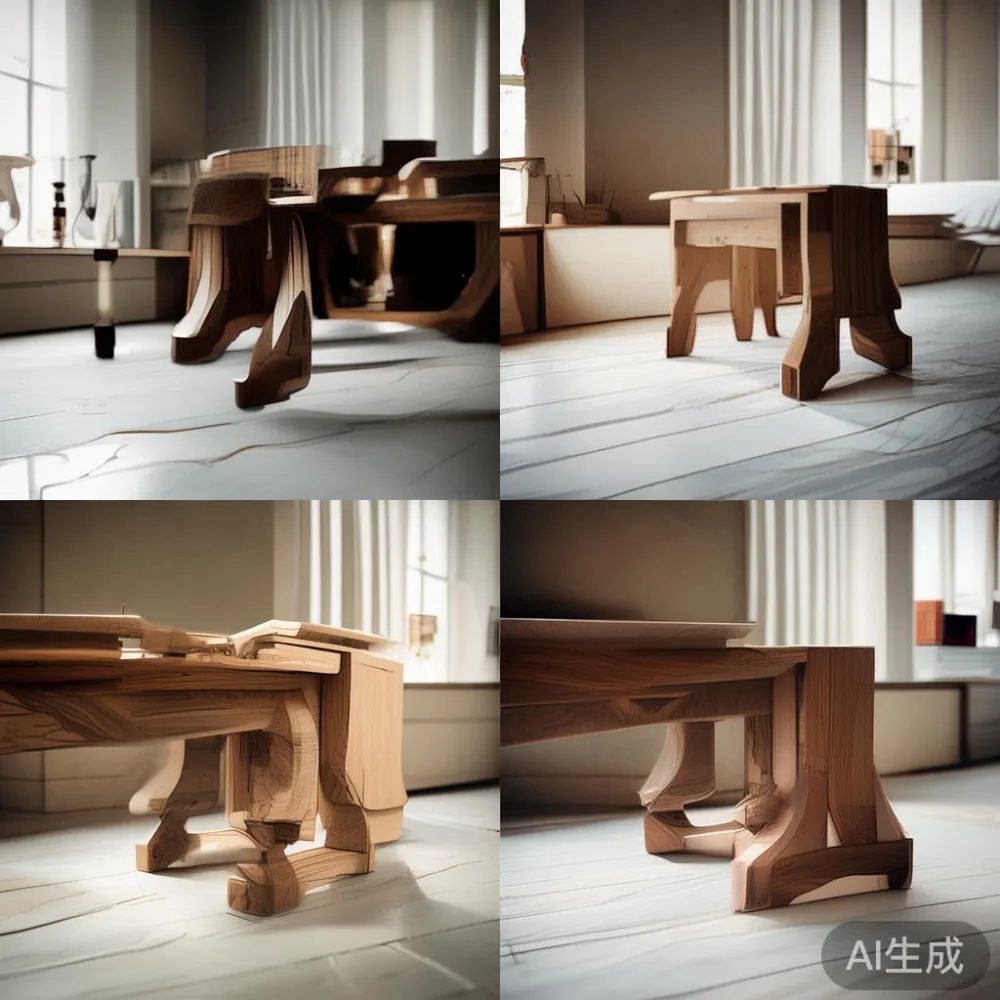
But the day-one price is the smallest number in this story. The bigger numbers are the ones that show up in years two, three, and four, when veneer starts to chip at the corners, when the printed grain fades unevenly under our afternoon sun streaming through east-facing balcony doors, and when the honeycomb core absorbs one too many spills from teh tarik gatherings. A solid wood bed frame, wardrobe, or dining table does not behave that way. It dents, yes — and a dent in rubberwood or ash can be sanded out in 20 minutes — but it never peels, never delaminates, and never reveals a grey paper layer underneath.
What 5 Years of Singapore Humidity Actually Does to Each Material
Our climate runs at 78–88% relative humidity for most of the year, and indoor temperatures sit between 26°C and 30°C with the fan running. Veneer — a thin layer of real wood (usually 0.3–0.6 mm) glued to an MDF or plywood substrate — reacts badly to that cycle. The substrate swells and contracts, the glue line weakens, and the surface lifts at the edges. In my own colleague's Punggol HDB, a S$749 veneer coffee table developed a 12 cm bubble along the back edge within 28 months. She sold it for S$80 on Carousell.
Solid wood moves too, but it moves as a single piece. A 40 mm thick rubberwood slab might cup 1–2 mm across its width during the wetter months and flatten back in February when the air dries. That movement is predictable and, for most homeowners in Tampines and Bedok, invisible once the piece is in a stable room. Solid wood also tolerates our air-conditioned bedrooms — typically 24°C and 55% humidity — without splitting, because the change is gradual.
The 5-Year Maths for Three Common Pieces
Let us work through three pieces most Singapore households actually buy: a 1.8 m bed frame, a six-seater dining table, and a two-door wardrobe.
Bed frame, 1.8 m, queen size. Veneer option: S$799 at launch. Replacement after year 3 (peeling on headboard, sagging slats): S$799. Plus S$120 disposal and another S$80 delivery to the new flat. Total 5-year spend: S$1,798. Solid wood option: S$2,150 including GST and lift-up delivery. Re-sanded once at year 4 for S$180 (typical workshop rate). Total 5-year spend: S$2,330. The solid wood option costs S$532 more over five years, but you still own a piece you can refinish again.
Dining table, 1.6–1.8 m, seats six. Veneer option: S$899. Replacement after year 4 (water damage, edge chipping): S$899. Plus S$150 disposal and delivery. Total: S$1,948. Solid wood option: S$2,480. Re-finished once at year 3 for S$220. Total: S$2,700. The gap narrows to S$752 across five years — roughly S$150 a year for a surface that will outlast the next two HDB leases you sign.
Wardrobe, two-door, 120 cm wide. Veneer option: S$1,099. By year 5 the doors have sagged and the backing has bowed; replacement S$1,099, plus S$200 disposal and a S$180 carpenter to patch the wall. Total: S$2,578. Solid wood option: S$3,150. Minor hinge and runner service at year 2: S$90. Total: S$3,240. The gap here is only S$662 over five years — and the solid wardrobe still has at least another decade in it.
Add it across the three pieces and the all-in five-year figure lands at S$6,324 for veneer and S$8,270 for solid wood. The premium for solid wood, spread over 60 months, works out to about S$32 a month per household.
Is a chaise lounge worth the price in Singapore?
Yes — provided it is built in solid wood and your corridor is wide enough to get it through the front door.
A chaise lounge in solid rubberwood or ash typically costs S$1,450–S$2,200 delivered to a Singapore address, and the price reflects two things you actually feel: a frame that does not creak when your father-in-law sits down at 11pm, and a joinery that survives the move from a 4-room HDB in Bedok to the new 5-room Punggol BTO at the end of your reno cycle. For a small condo living room of 30–40 sq m, a chaise gives you a reading spot, a guest bed, and a side-table surface in one footprint, which is genuinely hard to replicate with a separate armchair and ottoman.
The gotcha is access. Measure your lift cabin (most HDB lifts are 1.4 m deep with a 0.9 m door) and your corridor turn before you commit. A chaise is usually 160–175 cm long and 75 cm deep, which fits a standard lift on the diagonal but will not fit around a 90° corridor corner under 1.2 m wide. Confirm with your seller that they will re-route through the service lift if needed — many Punggol and Sengkang blocks have a separate goods lift that accepts 180 cm lengths flat.
Delivery, Lift Access, and the Weight Question Singaporeans Rarely Ask
Solid wood is heavier. A 1.8 m solid wood dining table typically weighs 55–70 kg, versus 22–30 kg for its veneer cousin. A solid wood wardrobe in the 180 cm range can run 95–120 kg. That weight matters because lift cabins in older HDB blocks have a 630 kg passenger limit, and a four-person delivery team plus a 70 kg table leaves very little margin.
The other constraint is the corridor turn at your door. HDB corridors are typically 1.2–1.5 m wide, condo common corridors 1.4–1.8 m. A flat-packed wardrobe at 180 cm long will fit either, but an assembled solid wood unit will not. Two Singapore-friendly compromises exist: knock-down joinery (the bed frame and dining table come apart in two pieces and re-bolt in the bedroom) and flat-pack with pre-drilled dowels. Both add roughly 20 minutes to setup but save you the white-knuckle moment in the lift lobby.
When Veneer is the Right Call in a Singapore Home
I do not want to pretend veneer has no place. If you are renting out a unit for three years before selling, if you are staging a flip in Punggol or Sengkang, or if you simply cannot stretch the budget on a 1,200 sq ft starter home, a well-made veneer piece from a reputable local maker is a reasonable choice. The criteria are simple: the substrate should be plywood rather than MDF (plywood tolerates our humidity better), the veneer layer should be at least 0.6 mm (so it can be lightly sanded if scratched), and the underside should be sealed, not raw.
Avoid any piece that has visible paper grain on the edges — that is melamine, not veneer, and it chips within months in our climate. Also check the return terms carefully; a beige rubberwood return policy is the kind of specific, clearly worded guarantee worth asking for in writing before you pay the deposit, because a vendor who will put their policy on the line in plain language is usually a vendor whose furniture will outlast that policy.
Light-Luxury Finishes That Hold Up in Singapore
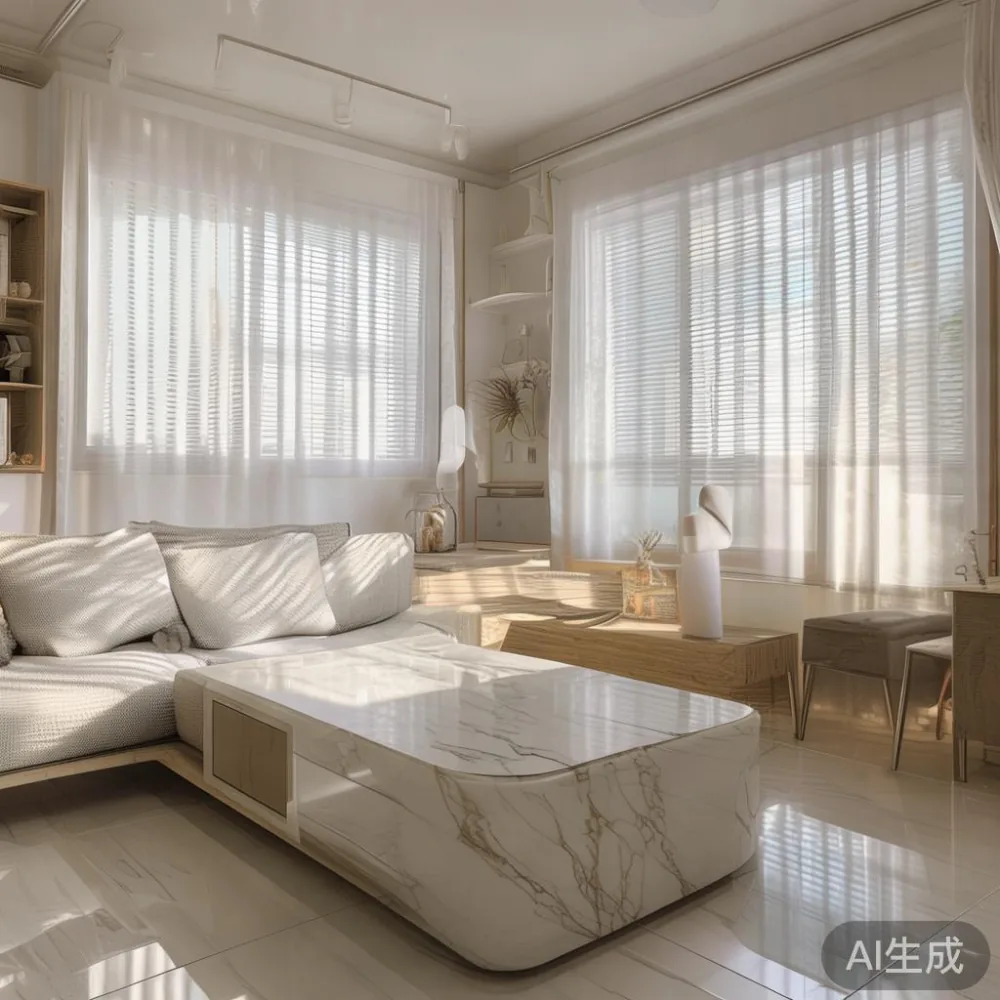
Solid wood opens the door to finishes that veneer cannot honestly carry. French light luxury styling — soft taupe washes, brushed brass pulls, fluted drawer fronts on a solid ash wardrobe — works because the substrate is stable and takes a low-sheen matte lacquer without telegraphing the joints. American light luxury leans warmer: honey-toned rubberwood dining tables with turned legs, paired with a marble table at the centre for the contrast of cool stone and warm grain. Post-modern light luxury takes a different route, mixing a solid wood bed frame in a smoked oak finish with a single marble bedside surface and a slim brass reading lamp.
A marble furniture piece — a dining table top, a coffee table, a nightstand surface — costs more than a wood equivalent and weighs more, but it does something no veneer can fake: it develops a soft patina over five years rather than peeling at the edges. Pairing a marble table with a solid wood base gives you the best of both, and the contrast is the actual point of the light-luxury look.
The Refinishing Safety Net That Veneer Cannot Offer
This is the part of the maths that most Singapore buyers overlook. A solid wood dining table can be sanded and re-oiled three, sometimes four, times across a 30-year lifespan. Each refinish costs S$180–S$280 at a Singapore workshop and resets the clock. A veneer top can be sanded once at most, and only if the veneer is thick enough — which brings us back to that 0.6 mm minimum. After that single sand, the printed grain is gone and the substrate is exposed.
Buyers of solid wood from established Foshan manufacturers often have access to lifetime refinishing support, either through the seller's own workshop network in Singapore or through partnered carpenters in Geylang and Tai Seng. MIDHILL, for instance, has shipped container loads to Singapore distributors since around 2008 and offers lifetime refinishing guidance with every solid wood piece, alongside a 10-year structural warranty that covers joinery failure — not just surface defects. That kind of after-sale pathway is what turns a five-year cost comparison into a fifteen-year one.
What I Would Buy Today, Living in a Tampines 5-Room
If I were furnishing a 5-room HDB in Tampines or a 1,200 sq ft condo in Punggol today, with a budget of about S$8,000 for the big three pieces plus a marble accent, the split would look like this: a solid rubberwood or ash bed frame at S$2,150, a solid wood six-seater dining table at S$2,480, a plywood-substrate veneer wardrobe with a 0.6 mm face at S$1,099 (the wardrobe spends its life behind closed doors and out of the sun, which is where veneer performs best), and a small marble nightstand or marble table at S$850. Total: S$6,579, leaving roughly S$1,400 for two solid wood nightstands, a TV console, and delivery.
That mix captures the five-year maths without forcing every piece to be solid. The pieces that take daily abuse — the bed frame you sit on to put on shoes, the dining table your kids do art projects on, the marble table that holds wet glasses — earn the solid wood premium. The pieces that hide behind doors or sit in low-traffic corners can carry the lighter substrate without complaint. Over five years, the household spends about S$400 more than an all-vener setup, and at the end of year five the wardrobe is the only piece that needs replacing.
The Verdict, in Singapore Numbers
Across a typical five-year Singapore ownership cycle, a household that chooses solid wood for the three highest-impact pieces — the bed frame, the dining table, and the marble-table anchor — spends roughly S$1,950 more than an equivalent all-vener setup. Spread over 60 months, that is S$32.50 a month, or about the cost of two plates of chicken rice at the Bedok 85 hawker centre. In return, the household avoids one full furniture replacement cycle, one disposal trip, and the small but persistent annoyance of peeling edges in a climate that never really lets wood rest.
For households planning to stay in the same HDB or condo for ten years or longer, the gap closes further, because the solid wood pieces keep going while the veneer pieces keep being replaced. By year ten, the total spend on solid wood is often lower than the total spend on veneer, and the furniture is the part of the home that still feels new.