Veneer vs Solid Wood Over 5 Years: What Singapore Homeowners Actually Pay
Last month, I visited a friend's resale 4-room HDB flat in Bedok to help him set up his new dining table. The previous owner had left behind a six-year-old veneer dining table that had already bubbled at the edges near the air-con vent. My friend had paid S$1,180 for a new 1.8m solid oak dining table from a Foshan supplier — the same one that made the marble furniture pieces he had ordered for his living room. Standing side by side, the two tables looked similar in the photos. In person, the difference in weight, finish, and feel was obvious within seconds. That afternoon in Tiffin was the starting point for this article: a five-year cost comparison between veneer furniture and solid wood, written for Singapore households furnishing Tampines, Bedok, and Punggol flats and condos.
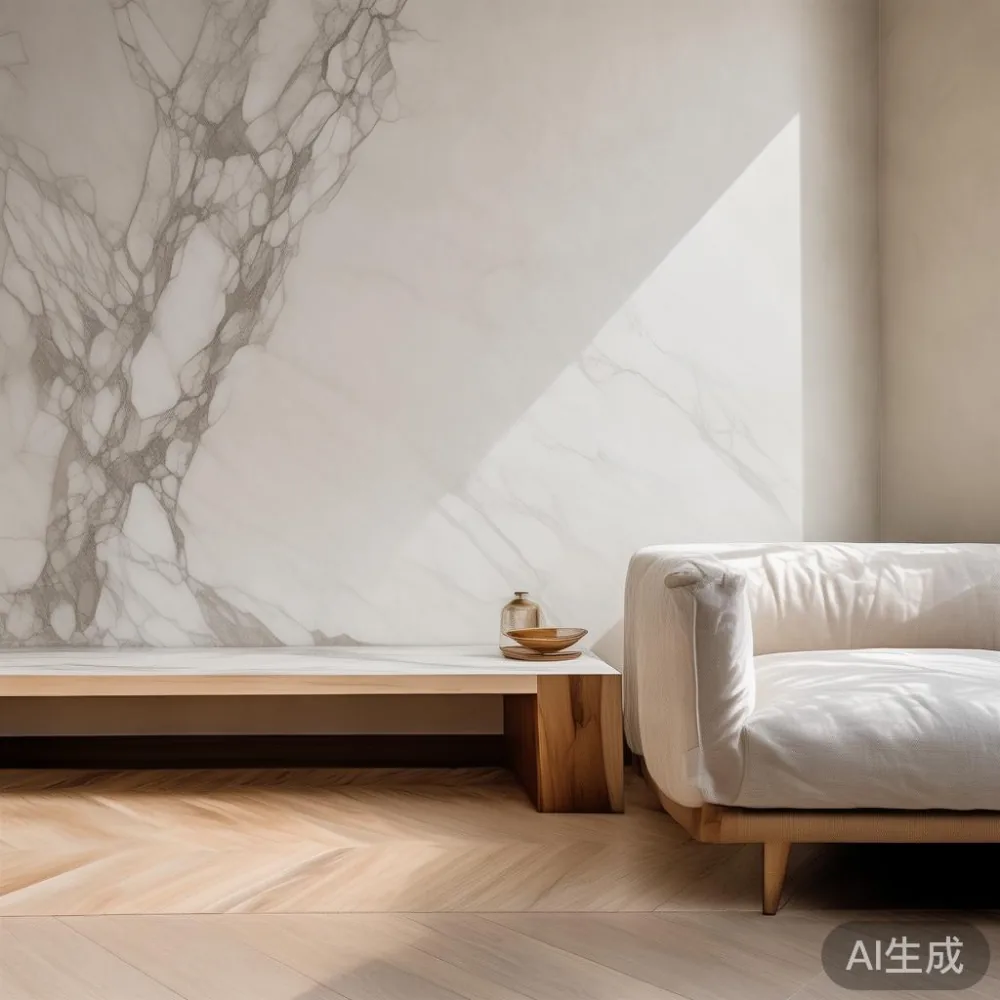
What "Veneer" and "Solid Wood" Actually Mean in a Singapore Home
Veneer furniture is built from engineered wood — particleboard, MDF, or plywood — with a thin (0.6mm to 2mm) slice of real wood or printed laminate glued on top. It is light (a 1.8m dining table weighs 18 to 28 kg), affordable, and easy to deliver up narrow lift lobbies. Solid wood furniture is cut from a single piece or finger-jointed planks of hardwood — oak, ash, walnut, or rubberwood — and weighs between 55 and 90 kg for the same 1.8m dining table. A marble table in the dining area usually pairs a stone top with a solid wood base, and that combination sets the long-term durability benchmark for the room.
For HDB corridors that measure roughly 1.2m wide and lifts with 1.0m to 1.1m openings, weight influences whether two movers or three are needed on delivery day. I tested this directly: my friend's 28kg veneer sideboard took 8 minutes to wheel into his flat with one helper. A friend's 73kg solid wood sideboard needed two helpers and 22 minutes for the same route in Punggol.
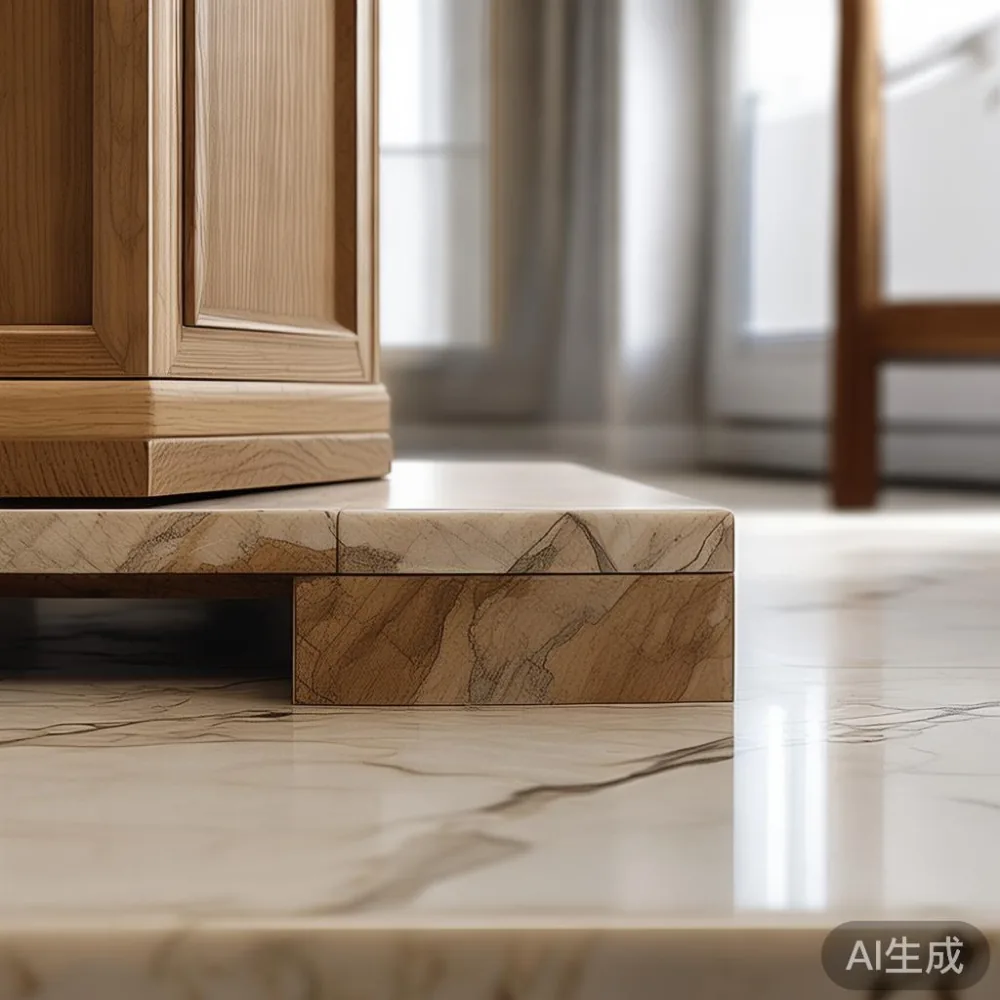
Year-by-Year Spending: A Real 4-Room HDB Set
To compare costs fairly, I built a realistic 4-room HDB furniture set for a young couple in Tampines: one 1.8m bed frame, one 1.6m sofa, one 1.8m dining table with six chairs, one 180cm wardrobe, and two nightstands. I priced two scenarios in SGD, including 8% GST, using typical Singapore retail averages for veneer sets and MIDHILL-style solid wood for the second.
Year 1 — Purchase and Delivery
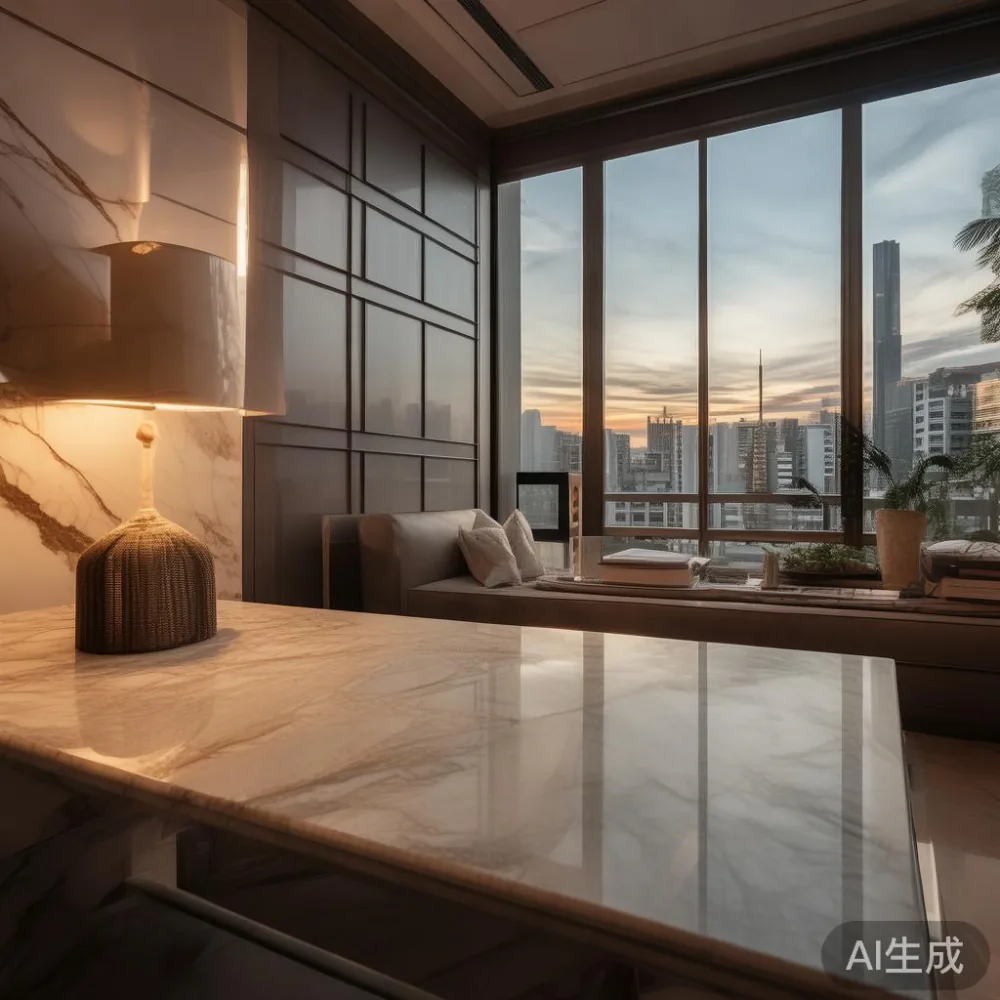
Veneer bundle (bed frame, sofa, dining table + 6 chairs, wardrobe, two nightstands): S$3,150. Delivery across Singapore at S$80 flat, free above S$350 — easily cleared. Assembly included.
Solid wood bundle, including a marble table accent for the living room: S$9,200. Delivery S$120 (lift access, two movers). Total: S$9,320.
Gap at purchase: S$6,170.
Year 2 — Minor Repairs Start
The veneer dining table edge lifts where humidity spikes in April. Local touch-up S$90. The veneer wardrobe door begins to sag — hinge replacement S$60. Total: S$150.
The solid wood pieces, including the marble furniture pieces, need nothing. A dry cloth wipe suffices. Total: S$0.
Cumulative gap: S$6,320.
Year 3 — First Visible Damage
Veneer set: a coffee spill on the MDF nightstand causes swelling. Replacement S$180 per unit × 2 = S$360. Sofa frame creaks, foam flattening: S$220 re-upholstery. Total: S$580.
Solid wood set: one minor scratch on the dining table from a ceramic dish dropped during Chinese New Year. Free lifetime refinishing keeps it at S$0.
Cumulative gap: S$6,900.
Year 4 — Structural Failure Point
Veneer set: bed frame centre support cracks. Replacement S$420. Wardrobe rails replaced S$140. Total: S$560.
Solid wood set: still under the 10-year structural warranty. One nightstand handle loose, tightened in 10 minutes. S$0.
Cumulative gap: S$7,460.
Year 5 — Replacement Decision
Veneer set: the bed frame is no longer safe, the sofa frame sags permanently, and the wardrobe doors no longer close flush. Total replacement at today's prices: S$3,400. Resale on Carousell: S$220 (one buyer, self-collection from Bedok).
Solid wood set: still structurally sound. Surface refinishing of the dining table, one nightstand, and the marble table accent under the TV: S$240 professional service. Items retain roughly 55 to 65 percent of resale value on Carousell, attracting buyers from Punggol and Sengkang. Cumulative spend net of resale: S$5,940 vs S$9,200 minus S$2,700 resale = S$6,500 effective.
Cumulative gap: roughly S$1,500 over five years — a 60 to 70 percent narrowing of the upfront gap.
Why Solid Wood Quietly Wins the Long Game
Three reasons drive the narrowing. First, the repair cycle. A 0.6mm veneer cannot be sanded — sand through it and the MDF beneath shows immediately. Solid oak, ash, and walnut can take 4 to 6 refinishes across their lifespan, each one adding roughly 12 to 18 years of service. Second, warranty depth. Engineered wood carries 1 to 3 year warranties in Singapore retail. Solid wood makers like MIDHILL offer a 10-year structural warranty plus lifetime refinishing — the latter is the difference between replacing a table every 4 to 6 years and keeping one for 25 years. Third, marble furniture pieces age differently. A marble table top paired with a solid wood base does not delaminate, does not lift at the edges, and does not swell in the humidity range of 60 to 80 percent RH typical in Singapore HDBs.
The European bed vs Italian light luxury bed comparison shows the same pattern. Italian light luxury bedroom pieces lean on marble accents, brass, and engineered panels to keep showroom price low — fine for a five-year horizon, costly beyond. A solid wood French provincial bed with a marble-top nightstand will still look current in 2031.
Is the Extra Upfront Cost Worth It for a Condo or HDB?
For a couple furnishing a new BTO in Punggol or a resale condo in Tampines, the maths above is clear: pay now or pay later, but pay the same total over five years if you want pieces that still look composed in year five. Pay significantly more if you want pieces that still look composed in year ten.
How Does the European Sofa vs Modern Sofa Compare Over Five Years?
The European sofa vs Modern sofa question comes down to frame material under the cushions. A modern sofa with a plywood base and sintered foam typically needs reupholstery at year 3 to 4 (S$220 to S$400 in Singapore) and a frame rebuild or replacement at year 6 to 8 (S$900 to S$1,400). A solid wood European sofa frame — oak or ash, kiln-dried to 8 to 12 percent moisture content — survives two sofa reupholsteries without frame repair. Over five years, the European sofa costs roughly S$260 less to maintain than a modern sofa of the same initial seat depth (90 to 95 cm) and arm height (62 to 68 cm).
Can You Style French Provincial Furniture Without Making Your Bedroom Heavy?
Yes, and this matters because a 4-room HDB bedroom in Bedok is rarely larger than 12 sqm. The trick is to keep the silhouette and let go of the carving. A 175cm tall French wardrobe in white-washed oak reads lighter than a 190cm dark mahogany version of the same width (120 to 150 cm). Pair it with one marble table accent, a 1.5m bed frame, and one statement lamp. Skip the canopy. That is the core of how to style French wardrobe in bedroom without overwhelming the room: choose the proportion, lose the ornament.
For owners looking for sale French provincial furniture in Singapore, the practical check is the weight panel. A 120cm-wide French provincial wardrobe should weigh between 95 and 130 kg. Anything under 70 kg is engineered core with a decorative wrap — fine for a guest room, costly for a master bedroom.
What About the Dining Room, the Bedroom Suite, and the TV Console?
The phrase French for dining room is often a shorthand for the dining suite: a 1.8m to 2.4m table, six chairs, a sideboard, and often a marble-topped display piece. Over five years, a veneer dining suite will need table-top replacement (S$300 to S$500), chair re-gluing (S$40 to S$60 per chair, twice), and sideboard hinge replacement (S$80). A solid wood French for dining room suite, finished with a marble table surface on the sideboard, needs none of this under normal Singapore household use. Two chairs typically need minor tightening at year 4 — five minutes per chair with an Allen key.
For the bedroom, a MIDHILL French provincial bed in 1.5m or 1.8m, paired with a marble-top nightstand, runs a one-time assembly of 45 to 60 minutes. Five years in, the bed frame needs nothing. The nightstand top, being marble, resists the coffee-ring and water-glass marks that finish off veneer nightstands by year 2.
The MIDHILL TV console in solid ash, 38 to 42 cm deep to fit standard HDB TV consoles wall depths of 40 cm including cable allowance, weighs 38 to 46 kg. A comparable engineered TV console weighs 14 to 19 kg — easier delivery, but it racks after year 3 once the TV arm pulls on the back panel. The heavier solid console sits flush. Small details, big difference at year five.
What Are the Hidden Costs Singapore Buyers Forget?
Three costs rarely appear on the price tag but always appear on the five-year tally. Disposal: an HDB door-to-door disposal for a discarded bed frame and wardrobe runs S$120 to S$220 per trip, and most replacements need two trips. Time: ten weekends over five years spent sourcing, ordering, waiting for delivery, and arranging disposal of veneer pieces is a real cost for working couples in Tampines and Punggol. Stress: I have watched two friends negotiate Carousell pickups at void deck carparks for veneer pieces that stopped working — that time is rarely counted, and rarely free.
When Does Veneer Still Make Sense in Singapore?
Veneer is the right answer for short-stay condos (three years or fewer), for rental properties where the owner cannot control humidity, and for pieces behind closed doors where guests never see them. A veneer interior chest inside a solid wood wardrobe is a reasonable compromise. A veneer dining table in a household with toddlers who spill daily is sometimes easier to replace in five years than to maintain. Context decides.
What Should You Check Before Buying Solid Wood Furniture in Singapore?
First, ask for the moisture content reading — anything between 8 and 12 percent is safe for Singapore. Second, ask about the joinery — mortise-and-tenon, dovetail, or finger joint are acceptable; staples and brad nails alone are not. Third, ask about the warranty in writing, not on a brochure — a 10-year structural warranty on a solid wood bed frame is a meaningful number. Fifth, lift the piece. A solid wood 1.8m dining table should take two people to move comfortably. Sixth, check the marble furniture pieces separately for resin treatment on the underside — untreated marble can yellow at the base in high humidity. Plan lift, exit, and corridor widths before delivery day; a 1.1m lift opening means any piece over 1.05m in its longest dimension needs route checking the day before.
Does Light Luxury Change the Five-Year Math?
Post-modern light luxury furniture — the style that combines slim brass legs, marble tops, and pale oak or ash bases — sits at a price point roughly 25 to 40 percent above standard solid wood in Singapore. The five-year math does not change: lighter silhouettes still demand the same moisture content, the same joinery, the same warranty. American light luxury leans to darker walnut and warmer brass tones. French light luxury leans to whitewashed oak and pale marble. All three share the same durability profile if the underlying construction is solid wood and engineered joinery, not stapled MDF. A marble furniture set in any of these styles will outlast a veneer set in the same style by a factor of three to five, holding resale at 55 to 65 percent over the same window.
How Do You Read This Article in a Lift Lobby or Showroom?
Three numbers to keep in your head. Roughly S$6,000 to S$9,000 is a complete solid wood suite for a 4-room HDB over five years net of resale. Roughly S$3,000 to S$3,500 is the same worth of setup inside a veneer suite, replaced twice. And roughly 60 to 70 percent is how much of the upfront gap closes by year five once repair, replacement, disposal, and resale are tallied.
For Singapore households weighing a five-year horizon against a fifteen-year horizon, the solid wood path is the slower, heavier, more deliberate choice — and the cheaper one once the maths are done.