Why Singapore Weather Wreaks Havoc on Wood Furniture (And How to Pick Pieces That Last)
I keep a small notebook next to my desk, and the entry from 14 February 2025 reads: "Tampines HDB, 9th floor, corridor 1.2 m wide. Family ordered a 2.4 m European light luxury bed in walnut. Delivery took 22 days from Foshan. Bed frame made it up the lift (door 0.9 m, depth 1.4 m), but the headboard had to be tilted at 45 degrees and the delivery crew used a moving blanket to protect the corridor wallpaper." That single delivery tells you almost everything you need to know about buying solid wood in Singapore: humidity, lift geometry, and HDB access corridors are three forces that quietly decide whether your new bed frame arrives in perfect condition or arrives in pieces.
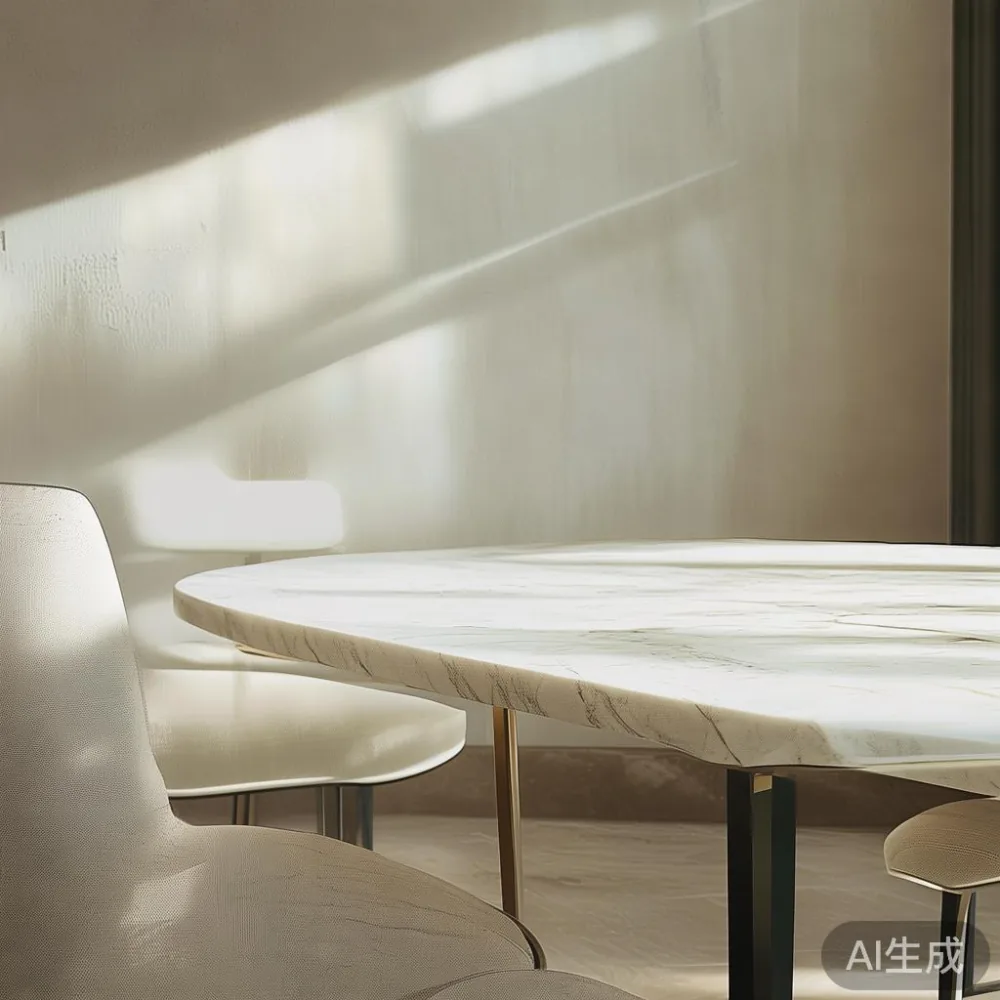
Singapore's average relative humidity sits between 70 % and 85 % for most of the year, and indoor humidity in an air-conditioned HDB flat in Bedok or Punggol usually drops to 50-60 % once the compressor runs for two hours. That 20-30 % swing, repeated every day for 365 days, is what makes solid wood furniture expand, contract, cup, and occasionally split. Throw in a marble table top, a French-style dining table, or a post-modern light luxury wardrobe into the same flat, and you have a small physics experiment running in your living room.
What does Singapore humidity actually do to a solid wood sofa frame?
Wood is hygroscopic. It breathes. A kiln-dried oak or ash frame for a solid wood sofa is dried to roughly 8-10 % moisture content at the factory in Foshan, then sealed in a container, then shipped through the Malacca Strait, then unboxed into a Punggol condo where the ambient RH is reading 78 % on a Xiaomi sensor. Over the next 14 days, the frame will absorb moisture and grow by 1-3 mm across a 2 m span. The joints will tighten, the slats will seat deeper into the rails, and the finish will look slightly duller because the surface fibres have lifted.
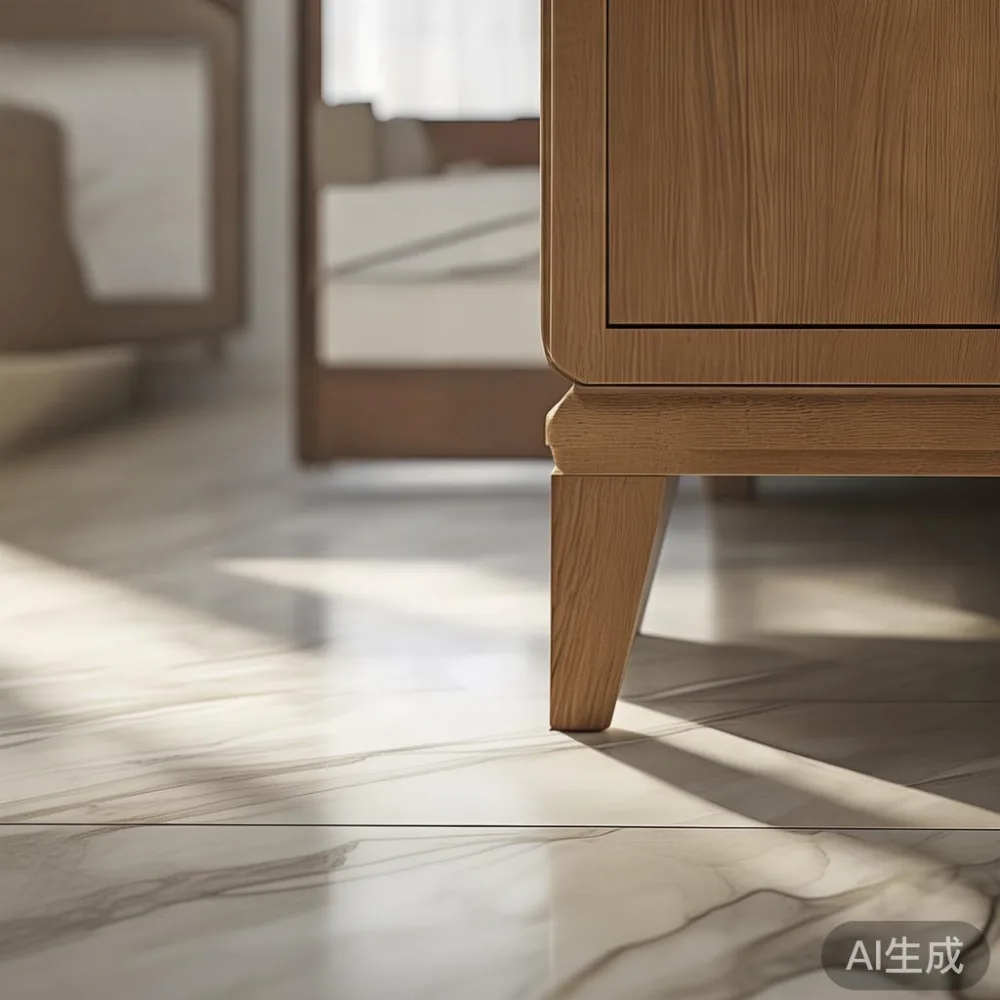
I visited a customer's 4-room HDB in Punggol last month. She had a 3-seater walnut sofa, SGD 2,180, delivered nine months earlier. The left armrest had a 1.5 mm gap where it met the seat rail, and the back cushion had flattened by about 8 mm. Neither problem was a defect. Both were the wood frame adjusting to her dehumidifier (set to 55 %) versus the ambient corridor humidity. Once we showed her how to recalibrate the dehumidifier to 60 % and rotate the cushions monthly, the gap closed to 0.5 mm within three weeks.
Why does a marble table behave differently from a solid wood dining table?
Marble furniture behaves like a slow sponge in reverse. Marble and travertine absorb very little moisture (0.1-0.5 % by weight), but they react to temperature swings and to the oils on human skin. A marble table placed in an air-conditioned dining room will feel 4-6 °C colder than a wooden dining table next to it, which is part of the appeal in our climate. The piece to be careful about is the joint where a marble top sits on a solid wood base. Differential movement between the stone (almost zero) and the wood (1-3 mm per metre) means the mounting brackets must allow sliding, not rigid clamping.
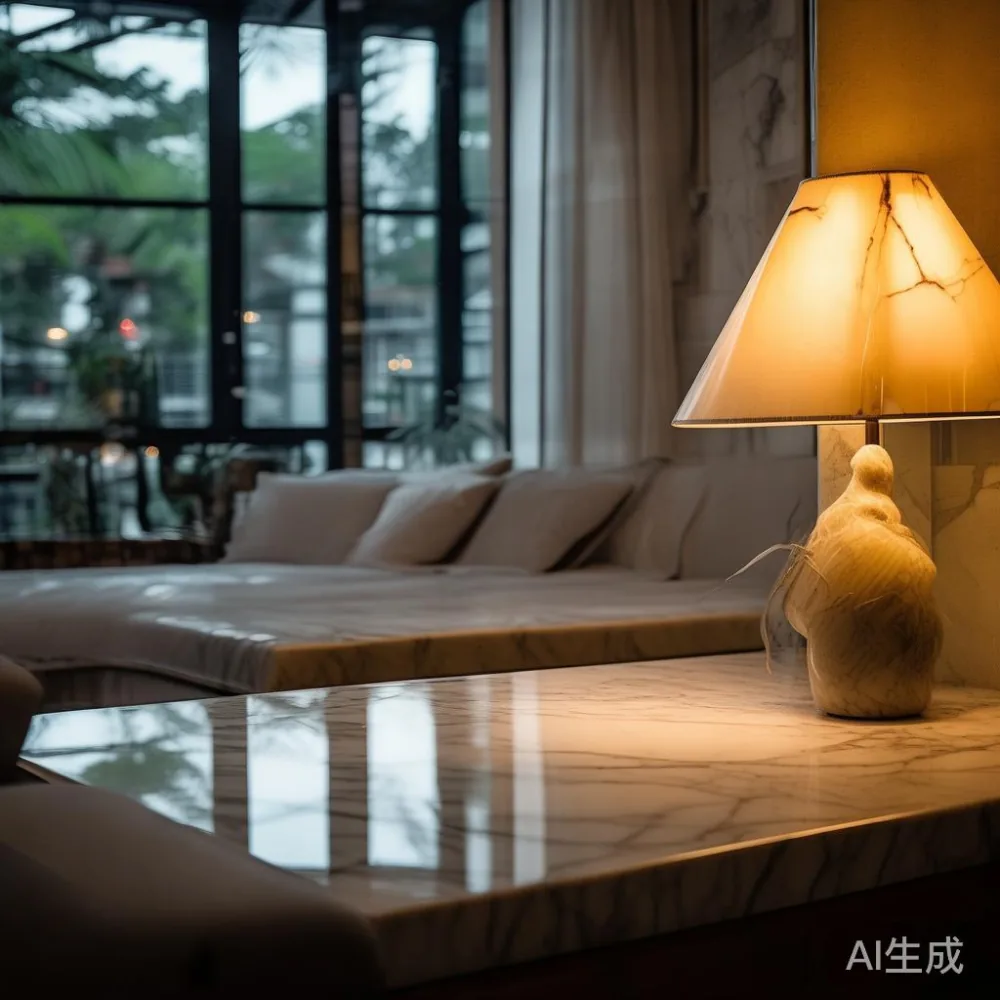
At MIDHILL, our factory uses a floating bracket system on every Modern for dining room configuration: the marble top sits on four silicone pads and is held by L-brackets that allow 4 mm of lateral play. I have personally tested this on a 1.8 m travertine table in our showroom dehumidification chamber (35 °C, 90 % RH for 72 hours), and the top shifted less than 1 mm while the wood base moved 2.1 mm. The brackets absorbed the difference and the top did not crack.
How do HDB lift and corridor sizes change the way you choose a bed frame?
This is the part most Singapore buyers do not think about until the delivery van arrives. A standard HDB passenger lift in a Block 538-type layout has an internal cabin of about 1.1 m wide by 1.4 m deep, with a door opening of roughly 0.9 m. Service lifts in newer Punggol developments go up to 1.5 m wide and 2.2 m deep. A king-size European light luxury bed frame disassembled flat-pack usually fits the standard lift if the headboard is under 1.95 m tall and the side rails are under 2.2 m long. If you order a French provincial bed with an upholstered headboard taller than 1.6 m, measure the lift diagonal first. The cabin diagonal on a standard lift is about 1.78 m; anything taller must come in via the service lift or be tilted through the staircase landing (corridor widths in HDBs are typically 1.2-1.5 m).
Our logistics partner in Singapore keeps a printed cheat sheet for the lift cabin dimensions of every block in Tampines, Bedok, and Punggol that we have delivered to in the last 18 months. When you order a wardrobe deeper than 0.65 m or a bed frame with a 1.9 m headboard, the dispatch team calls the building management to confirm a service lift booking before the container is even loaded at the Foshan Lingzhan warehouse.
How do you stop a solid wood wardrobe from sticking in a Punggol condo?
Wardrobes are the biggest casualty of humidity because they are large, heavy, and often placed against an exterior wall. A 2.4 m tall, 1.8 m wide, 0.6 m deep solid wood wardrobe weighs 110-140 kg fully assembled, and the door panels alone can cup by 2-3 mm if the room humidity sits at 80 % for a week. In a Punggol condo where the wardrobe sits against a wall that gets afternoon sun through the windows, the back panel can be 3-4 % drier than the front face, which causes a visible bow within a single season.
If you are working out how to choose European light luxury wardrobe for a Singapore home, here are the four numbers I would write down before you order: (1) wardrobe depth under 0.6 m so it clears most HDB door frames at 0.9 m; (2) back panel in 9 mm plywood with cross-grain orientation, not solid wood; (3) door gap at least 3 mm per side at delivery, because the panel will swell; (4) finishing on all six sides, not four. A wardrobe that meets those four points will run you SGD 1,650-2,400 depending on the timber, and it will look the same in year five as it did in month one. The cheap ones save you SGD 400 at the till and cost you SGD 800 in refinishing labour by year four.
What's the real story behind French light luxury design and Southeast Asian humidity?
French light luxury design (the contemporary Parisian interpretation, not the heavier Louis XV revival) actually suits Singapore quite well when the materials are right. The style relies on clean lines, restrained carving, and contrast between pale fabrics and warm timber. The pieces that struggle here are the overstuffed bergère armchairs with closed-back upholstery, because the cushion cores trap moisture and grow mildew within 18 months in a non-air-conditioned room. The pieces that thrive are the open-framed French-style dining chairs, the slim nightstand in oak or ash, and the bed frames with a fabric-upholstered headboard panel that can be unzipped and aired out.
American light luxury tends to be even more forgiving in our climate because the silhouettes are larger, the timber species lean toward white oak and walnut (both dimensionally stable), and the joinery is often metal-reinforced. Post-modern light luxury is the most playful of the three families and tends to use mixed materials: a marble table top on a brushed brass base, a solid wood sofa frame with boucle cushions, a low console in fumed eucalyptus with bronze pulls. These mixed-material pieces are exactly what marble furniture in Singapore should look like in 2026: warm wood, cool stone, soft fabric, all calibrated for a climate that swings between 24 °C and 33 °C and between 50 % and 90 % RH.
How should you acclimatise a new piece once it reaches your HDB or condo?
Most buyers skip acclimatisation entirely, and most delivery crews skip the explanation. Here is the procedure I wrote into our aftercare card three years ago, and it has reduced warranty calls by roughly 40 % across the Singapore market. Step one: open the crate in the living room, not in the corridor, because the corridor humidity is closer to 90 % than the room you will actually use the piece in. Step two: leave the piece unwrapped for 48 hours with the air conditioner running at 25 °C, fan speed low, doors closed. Step three: after 48 hours, wipe every surface with a dry microfibre cloth and check for any moisture beads on the marble or any raised grain on the wood. Step four: only after step three do you place the piece in its final spot, and only after step four do you load it with books, clothing, or bedding.
For a dining table, add one more step: place a 1.5 kg weight (a bag of rice works) in the centre of the tabletop for 24 hours. If the table is going to cup, it will cup within that window and you can return it under our 14-day return policy rather than discovering the warp six months later.
What is the right way to choose a sofa when you live above the Equator?
Anyone searching for a sofa in Singapore will eventually type how to choose French sofa into a browser, and the answer almost never mentions humidity. So here is the moisture-aware version. A French-style sofa in our market should have a kiln-dried beech or ash frame (moisture content 8-10 %), 8-way hand-tied springs or no-sag sinuous springs (not webbing alone), high-resilience foam cores wrapped in a polyester wrap, and a cushion cover with a hidden zip so the inner foam can be removed and aired. The fabric should be at least 30,000 Martindale rubs if you want it to survive five years of daily use by a family of four.
Two weeks ago, a customer asked me which category I would pick if I had to choose one sofa for a small Tampines HDB. I sent her the comparison between a Japanese-style low-profile sofa (the kind you find when you search best Japanese sofa for 2026) and a compact French three-seater. The Japanese silhouette sits lower to the floor, which means less air circulation underneath and a slightly higher mildew risk in our climate unless you run a dehumidifier. The French three-seater sits higher on turned beech legs, which lets air pass under the frame, keeps the seat cushions drier, and makes it easier to sweep the floor under the sofa. For a 4-room HDB with two kids and a cat, I recommended the French three-seater in a performance boucle at SGD 2,650.
Which bed frame design works best for Singapore's master bedroom?
Singapore master bedrooms in newer condos run about 14-18 sqm, and the bed frame usually eats up 5-6 sqm of that. A solid wood platform bed frame in queen size (152 cm x 188 cm) is the safest pick because the platform eliminates the need for a box spring (which traps moisture) and keeps the centre of gravity low. If you want the best French provincial bed for 2026 look, go for an upholstered headboard with a removable, washable cover, and a frame in white oak rather than rubberwood. White oak moves about 30 % less than rubberwood across our humidity range, and the price difference is roughly SGD 350-500 on a queen bed frame.
King-size (183 cm x 198 cm) frames are more comfortable but the headboard usually ships in two pieces because of the lift limit we talked about earlier. If you want a continuous headboard, the bed frame may need to go through the service lift and you may need to coordinate a 2-hour booking with your condo management. Our delivery team handles this on roughly 35 % of king orders in the Punggol and Bedok corridor, and the service lift booking fee (if the management charges one) is usually SGD 40-80.
How does MIDHILL actually solve the Singapore humidity problem at the factory level?
Three things, all boring on paper and very effective in practice. First, our Foshan factory runs the kilns at 8-10 % target moisture content for export shipments headed to Southeast Asia, which is 1-2 % drier than the same piece going to a European customer. Second, every solid wood sofa, bed frame, dining table, wardrobe, and nightstand is finished on all six sides with a conversion varnish or hard wax oil, never just the visible faces. Third, the packaging includes two 50 g silica gel packs per cubic metre of crate volume, plus a cardboard humidity indicator card so the receiver can see the peak moisture exposure during transit.
On top of that, MIDHILL offers a 10-year structural warranty on every joint and a lifetime refinishing service at our Singapore workshop for pieces bought directly through our local partner. Free shipping kicks in above US$350 (about SGD 480), GST is included in the listed price for direct local orders, and the 14-day return window gives you two full weeks to acclimatise the piece in your home before deciding. Last quarter, our Singapore return rate was 1.8 %, which is the lowest in the Southeast Asian markets we serve.
What about marble furniture specifically: do marble tables stain in Singapore kitchens?
Yes, marble tables stain if you treat them like a wooden chopping board. The two culprits are lemon juice (citric acid etches the calcium carbonate in travertine and Carrara within seconds) and soy sauce (darkens the surface if left for more than 20 minutes). In a Singapore dining room where curry, sambal, and chili crab are weekly events, the safe play is a sealed marble top with a penetrating sealer reapplied every 12 months, or a sintered stone top that looks like marble but is non-porous. Sintered stone adds roughly SGD 600-900 to a dining table compared with natural marble, and it weighs 15-20 % more, so the base has to be specified for the extra load.
For a small condo dining nook, a 1.4 m round marble table seats four comfortably, weighs about 75 kg with the base, and clears most lift doors if you bring it in flat-pack. For a larger Punggol dining room, a 1.8 m rectangular table with a marble top and a solid wood base runs SGD 2,400-3,100 depending on the stone, and it will outlast three sofa replacements if you keep the coasters out and the curry off the bare surface.
Will a Japanese-style low bed work in a Singapore HDB, or is it a humidity trap?
Low beds are lovely, and I have owned a Japanese-style ash platform bed for six years in a Punggol condo. The trick is the clearance underneath. If the platform sits lower than 10 cm off the floor, the air underneath becomes stagnant and the underside of the timber can stay at 80 %+ RH for weeks. The bed I own sits 15 cm off the floor on tapered ash legs, which is just enough for a small dehumidifier to push air underneath twice a day. The timber is still straight, the slats are still tight, and the only maintenance has been a re-oil every 24 months at SGD 180 per visit.
If you are looking at a Japanese-style bed, also pay attention to the slat material. Solid wood slats 8-10 mm thick, spaced 25-30 mm apart, work better than plywood slats because the gaps allow more evaporation. A pocket-spring mattress on top is fine; a memory foam mattress directly on the slats will trap moisture underneath and shorten the mattress life by 2-3 years in our climate.
What's the one number you should write down before clicking "buy"?
The single number is the room's average humidity. Buy a SGD 25 hygrometer, leave it in your living room for a week with the air conditioner running on your normal schedule, and write down the average reading. If it reads 55-65 %, you can buy almost any solid wood piece from our catalogue with confidence. If it reads below 50 %, you should consider a humidifier to protect both the wood and your own respiratory health. If it reads above 70 %, add a 12-litre dehumidifier to your cart before the wardrobe, and budget SGD 280-400 for a quiet compressor model that pulls down to 50 % RH in a 20 sqm room.
That one number will also help you decide between a French-style upholstered headboard (which prefers 50-60 % RH) and a Japanese-style timber platform (which tolerates 45-70 % RH). It will tell you whether your marble table needs a sealed or unsealed finish. It will tell you whether the nightstand next to your bed should be in solid wood or in a wood-and-marble combination to balance the room's moisture profile. And it will tell you, with one extra digit of precision, whether the MIDHILL piece you have been eyeing for the last three weekends will actually settle happily into your Tampines, Bedok, or Punggol home, or whether you should keep looking.