Caring for Lacquered Marble Furniture in a Tropical Climate
Most lacquered pieces in Singapore spend their lives inside air-conditioned homes, but the ninety seconds each morning when the balcony door is thrown open, the afternoon thunderstorm rolling in from the East Coast, and the slow crawl of humidity through a Tampines corridor lift are enough to undo ten years of careful factory finishing. I learned this the hard way last March, when a client's 1.8 m solid wood dining table developed a 4 cm cloudy ring right where a wet glass had been forgotten. The table had been delivered only eleven months earlier. The lacquer was a nine-coat piano finish, the kind that looks like still water. A wet coaster, ninety minutes, and 82 percent ambient humidity had been all it took.
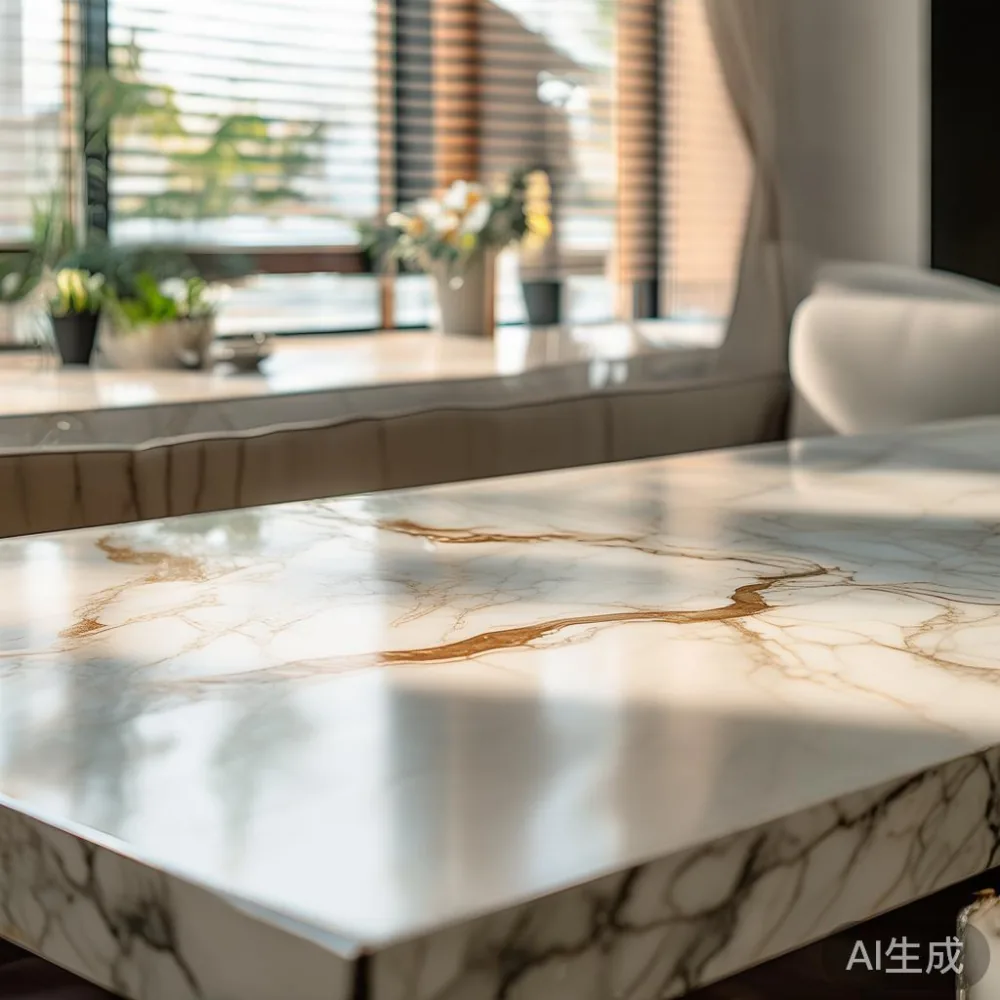
This guide is written from the workshop floor, not from a marketing deck. The principles below apply to any sealed surface that lives in a Singapore HDB flat or condo, but they are tuned for the specific demands of lacquered marble furniture, lacquered solid wood bed frames, lacquered dining tables, and lacquered wardrobes with marble accents. If your home is between 22 and 26 degrees Celsius for most of the day and your corridor door is closed for eight to ten hours at a stretch, the advice that follows is for you.
Why a Tropical Climate Is So Hard on Lacquer
Lacquer is a film, not a surface. It is built up in thin coats, each one cured and sanded before the next goes on, until the total film thickness sits somewhere between 0.08 mm and 0.18 mm. That film is doing two jobs at once: it is the part of the table you actually see, and it is the only barrier between the wood or marble substrate and the air around it. In a temperate country, the air around it is usually between 40 and 55 percent relative humidity. In Punggol at three in the afternoon in August, the air can be 88 percent. The film absorbs moisture from one side faster than it can release it from the other, and the swelling shows up as the cloudy patch I described above.
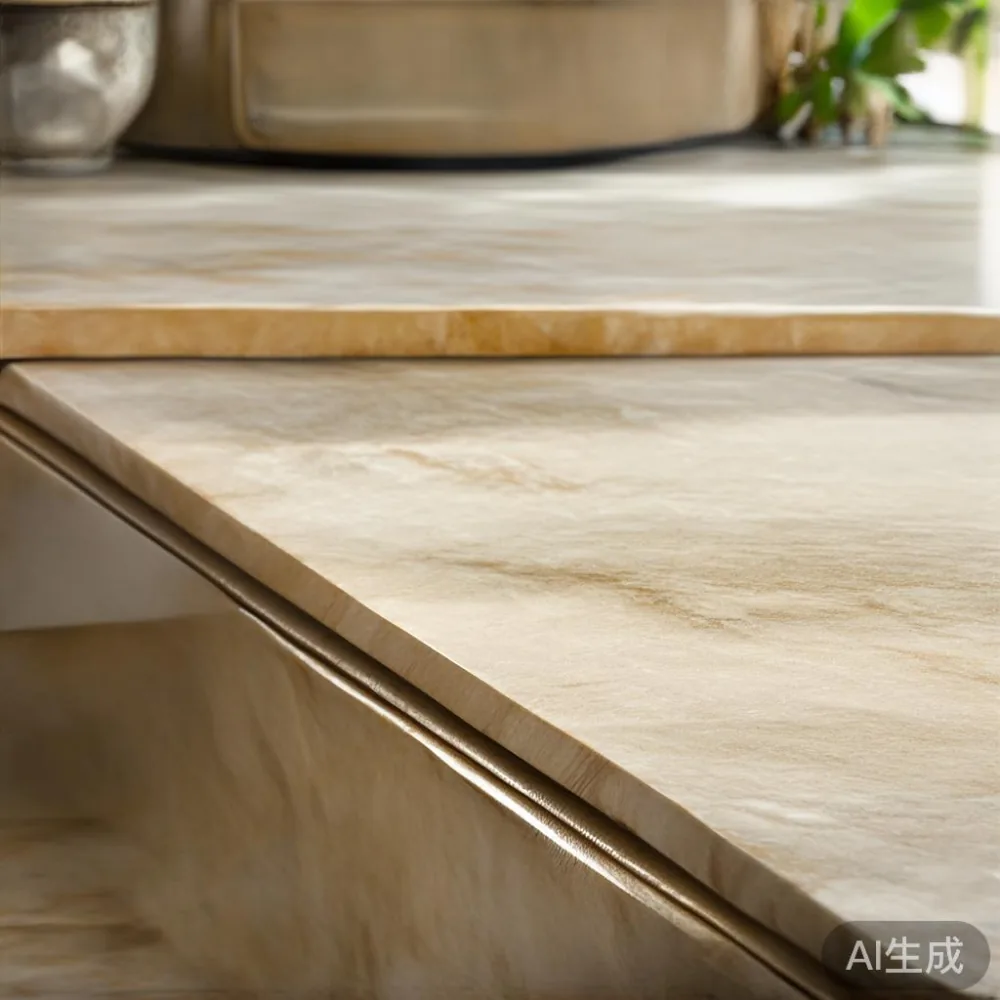
There is a second problem specific to marble furniture. Marble is porous along its grain, even when sealed. A polished marble table top that has been lacquered is a hybrid: the lacquer seals the top face, but the underside and edges still breathe. If the underside of a marble dining table absorbs moisture faster than the lacquered top releases it, the slab can cup by as little as 0.5 mm or as much as 2 mm across a 2.4 m span. That cupping will telegraph straight through the lacquer as a visible warp within six to nine months.
Temperature swings make things worse. Singapore homes typically run between 23 and 25 degrees Celsius indoors, but a west-facing condo in Bedok can hit 30 degrees at the window wall by four in the afternoon, then drop eight degrees in twenty minutes when the air-con cycles on. Each one-degree drop in temperature can raise relative humidity by roughly four to five percentage points. The lacquer is constantly expanding and contracting. Any of those micro-cracks that you cannot see with the naked eye are doors waiting to be opened.
What is the difference between American sectional sofa and modern furniture?
An American sectional sofa is a single, oversized seating piece made up of two or more connected modules, designed for spacious suburban living rooms with family-room proportions, while modern furniture is a broader design category defined by clean lines, minimal ornamentation, and an emphasis on form following function across every piece in a room, from dining tables to nightstands. The confusion between the two usually comes from the word "modern," which in furniture marketing can mean either a twentieth-century design movement or simply "contemporary style." An American sectional belongs to a specific typology of large, deep, often recliner-equipped sofas. Modern furniture is a wider umbrella that includes lacquered dining tables, marble coffee tables, platform bed frames, and slim-profile wardrobes in neutral palettes.
This distinction matters for Singapore owners because what we call "modern light luxury" or "French light luxury" interiors here are built on a hybrid vocabulary. The marble furniture piece is often a French light luxury silhouette with American light luxury proportions, which means a 2.2 m dining table with a 12 mm marble top and a matte-lacquered solid wood base. The American sectional sofa might anchor the living room, but the dining set, bed frame, and nightstand are all drawn from the modern category. Knowing the difference helps you care for each surface type correctly.
The Daily Routine That Actually Works
I keep a laminated care card on my own dining table, taped to the underside of the apron so guests never see it. Here is the exact routine, with timing and product notes that match real Singapore conditions.
Once a day, after dinner: Wipe the surface with a dry microfiber cloth, 40 by 40 cm, weight between 220 and 280 grams per square meter. Anything heavier can leave lint. Wipe in the direction of the wood grain if the surface is a solid wood dining table, or in straight lines if it is a marble top. This single habit removes the acidic film that builds up from cooking vapour, which is the leading cause of the dull patches people blame on the lacquer itself.
Three times a week: Lightly mist a second microfiber cloth with a pH-neutral cleaner, around 6.5 to 7.5 on the pH scale, and wipe. Never spray directly onto the surface. The droplets can pool along a lacquer edge and seep through micro-pinholes. A 250 ml bottle of pH-neutral cleaner costs between SGD 12 and SGD 22 at any Cold Storage or FairPrice, and lasts roughly six weeks for a four-seater table.
Once a month: Apply a small amount of paste wax, about the size of a Singapore five-cent coin, onto a clean cloth and rub into the lacquer using small circles. Wait twelve minutes, then buff with a fresh microfiber. Paste wax fills the micro-pores in the lacquer film and slows moisture transfer. One 200 ml tin of quality paste wax runs between SGD 28 and SGD 45 and covers a 1.6 m dining table four to five times.
Every six months: Move the table 15 cm away from the wall to let air circulate behind it. This sounds excessive, but in a Tampines HDB flat the back of a wardrobe sits 30 mm from a non-breathable concrete wall, and that 30 mm gap can hold enough trapped moisture to cloud the back panels.
What to Put Under Everything
Coasters are not decorative. On a lacquered marble dining table, a 350 ml glass of iced water at 4 degrees Celsius will condense on the outside of the glass within four minutes in a 24-degree room. Place that glass directly on lacquer and you get a ring that may or may not buff out. Felt-backed coasters, minimum 8 mm thick, 90 mm diameter, raise the glass high enough that condensation evaporates on the felt before it reaches the lacquer. A set of six cork-and-felt coasters costs between SGD 18 and SGD 35 on Lazada and lasts three to four years before the felt mats down.
Placemats matter for the same reason. A woven vinyl placemat, 1.2 mm thick, absorbs the heat shock from a plate that has come out of the microwave at 65 degrees. Without it, the heat differential across a 30 cm circle can stress the lacquer enough to hairline-crack within twelve to eighteen months. For a family of four eating off the same table nightly, this is the single biggest preventable cause of refinishing bills.
For a marble nightstand, the rule is harder because you set your phone, a glass of water, a book, and often a ceramic lamp on it. Keep a single 30 by 45 cm leather tray on the nightstand. Everything that touches the lacquer goes inside the tray. A full-grain leather tray costs between SGD 45 and SGD 95 and will outlast three rounds of lacquer refinishing.
Dealing with the Air, Not Just the Surface
I visited a 92 square metre four-room HDB flat in Punggol last month with a client who could not figure out why her solid wood wardrobe was peeling at the bottom 30 cm. Her air-conditioner ran at 23 degrees from ten at night to six in the morning. The rest of the day, the bedroom sat at 29 to 31 degrees with the door closed. That is a daily swing of eight degrees and a humidity swing of roughly 30 percentage points. The lacquer film was failing at the bottom of the wardrobe because that is where the warm humid air pooled after the air-con switched off.
The fix was not a better lacquer. The fix was a 35 dehumidifier running from 7 a.m. to 10 p.m., set to 55 percent relative humidity. The unit cost SGD 248, draws 215 watts, and uses about SGD 14 a month in electricity at the current tariff. Six weeks later, the peeling had stopped and the lacquer had flattened back to its original sheen. The wardrobe, incidentally, was a MIDHILL piece delivered eighteen months earlier with a ten-year structural warranty, and the local service team refinished the bottom panels at no charge once the humidity issue was confirmed.
If a dehumidifier feels excessive, a simpler trick works for wardrobes in particular: leave one wardrobe door open 8 to 10 cm for two hours a day to let the inside air exchange with the room. This single habit drops the interior humidity of a 1.8 m wardrobe by 12 to 15 percentage points on a typical afternoon.
The Cleaning Products You Should Actually Avoid
Silicone polishes, the kind sold as "instant shine" sprays in tins at Spotlight and IKEA, are the worst thing you can put on lacquer in a tropical climate. They form a temporary gloss that traps moisture against the film and prevent the lacquer from breathing. Within six to nine months of regular silicone use, the lacquer underneath develops a haze that can only be removed by sanding back to bare wood. Avoid anything with dimethicone or cyclomethicone on the ingredient list.
Vinegar, lemon juice, ammonia, and bleach are all out. The kitchen-cleaning reflex of grabbing a vinegar spray for a water ring on a marble table top will etch both the lacquer and, if the seal is broken, the marble beneath. Etching on marble shows up as a dull spot that cannot be polished away by hand. Professional refinishing is the only fix, and that runs between SGD 180 and SGD 420 per square metre depending on the marble and the depth of the etch.
For lacquered marble furniture specifically, never use a glass cleaner that contains ammonia. The ammonia will craze the lacquer film in as little as ninety seconds of contact. Stick to pH-neutral soap, a single drop of dish soap in 250 ml of distilled water, on a microfiber cloth.
When to Call a Professional, and What It Actually Costs
Minor surface marks, light clouding, and small water rings can usually be buffed out at home with paste wax and elbow grease. Anything deeper, and you are looking at a refinish. A full refinish of a 1.6 m lacquered solid wood dining table in Singapore runs between SGD 380 and SGD 720 depending on the number of coats and the condition of the substrate. A 2.4 m marble dining table with a lacquered top runs SGD 850 to SGD 1,400 because the marble has to be masked off and the lacquer film on stone behaves differently than on wood.
Refinishing takes three to five working days for a table, longer in the wet season when cure times stretch. The piece is usually taken back to the workshop, which means arranging a courier. A same-day courier for a dining table inside Singapore costs between SGD 120 and SGD 220 depending on the pickup zone and the floor the table sits on. Lift dimensions matter: a standard HDB passenger lift is 1.1 m wide by 1.4 m deep by 2.1 m tall, which fits most dining tables on their side but not all marble tables with integrated bases. Measure before you book.
If you bought from a maker that offers lifetime refinishing, the freight and the labour are usually covered, which is one of the quietest perks of buying from a Foshan workshop like MIDHILL that ships directly to Singapore. The savings on the first refinish alone, which most lacquered pieces need between years seven and ten in this climate, covers the cost of the courier ten times over.
A Short Buying Note for New Pieces
If you are still shopping, a few concrete numbers help. A lacquered solid wood dining table that uses a 9 to 12 coat piano finish will outlast a 5 to 6 coat satin finish in Singapore by roughly four to six years. Marble furniture with a UV-cured lacquer on the top face and an open-pore sealer on the underside breathes better than a piece sealed on all six sides. A solid wood bed frame with a closed-grain lacquer, ash or maple for example, will resist humidity cycling better than oak or walnut, which are open-grain by nature and demand more aggressive sealing.
Wardrobes in Singapore are particularly vulnerable because of their size. A 2.2 m three-door wardrobe has roughly 11 square metres of internal surface area, all of it exchanging moisture with the air inside. Look for wardrobes with back-panel ventilation slots, ideally two 30 by 250 mm slots near the top and two near the bottom. They are a 1990s detail that has almost disappeared from modern light luxury lines, and they matter more in Punggol than any warranty card.
Finally, think about the corridor. Most Singapore HDB corridors run 1.2 to 1.5 m wide, and the lift door opening is 0.9 m wide. A flat-pack wardrobe in three boxes fits through. A fully assembled 2.2 m wardrobe often does not. Delivery teams in Tampines, Bedok, and Punggol will tell you within five minutes whether your block has a service lift, and if it does not, whether your wardrobe can be brought up the stairs in two pieces or has to be craned through a window. That detail is decided at the buying stage, not the delivery stage, and it shapes how you care for the piece for the next decade.
Lacquer in a tropical climate is not a problem you solve once. It is a 365-day-a-year practice, and the owners who keep their pieces looking new for fifteen years are the ones who treat it that way. A 90-second wipe after dinner, a coaster under every glass, and a 35 dehumidifier in the bedroom will do more for your marble furniture than any factory warranty ever can.