How to Match Furniture to a Warm Minimal Interior in Singapore — A Practical Guide from a Foshan Workshop
Last month I visited a four-room HDB flat in Tampines with my colleague Lin, who had just taken over the keys. The previous owner had painted the whole home in pure Brilliant White, and under the LED downlights the rooms felt closer to a clinic than a home. We spent a Saturday moving in a solid wood dining table, a marble table for the entryway, and a low walnut bed frame. By 6pm, the same walls looked warmer, the corridor felt shorter, and Lin texted me that evening: "It finally feels like mine." That afternoon is the reason this article exists — because warm minimalism in Singapore is not about buying less, it is about buying the right pieces once.
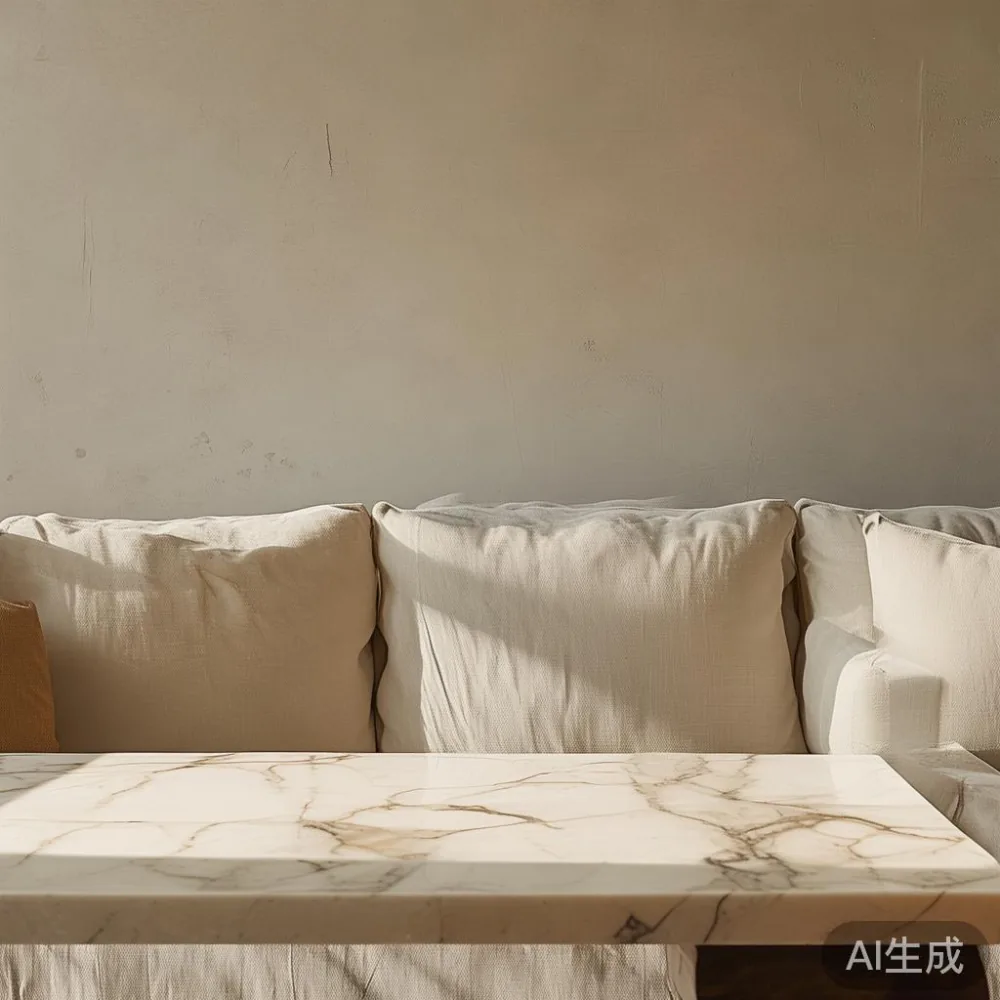
Warm minimalism sits between two poles that often confuse buyers: the cold Scandinavian look (lots of white, grey, and pale oak) and the heavy traditional look (dark carved timber, plush upholstery, heavy curtains). The middle path uses restrained forms, natural materials, and a tight palette of two or three wood tones. For an HDB or condo here, that restraint matters even more than in a landed house — corridor widths are typically 1.2 m to 1.5 m, lift doors are around 0.9 m wide, and most main-door openings are 0.9 m to 1.0 m. Every piece of furniture you bring in must be designed to fit that physical envelope, not just look good in a magazine.
What "warm minimal" actually means in a Singapore HDB or condo
In practice, warm minimal interior design is the combination of three things: low-saturation colour (off-white, sand, oat, putty, taupe), one warm wood species (usually walnut, white oak, or ash), and one quiet accent material — most often marble, brushed brass, or woven rattan. The forms stay clean: straight edges, slim legs, no carved mouldings. The warmth comes from texture and undertone, not from pattern.
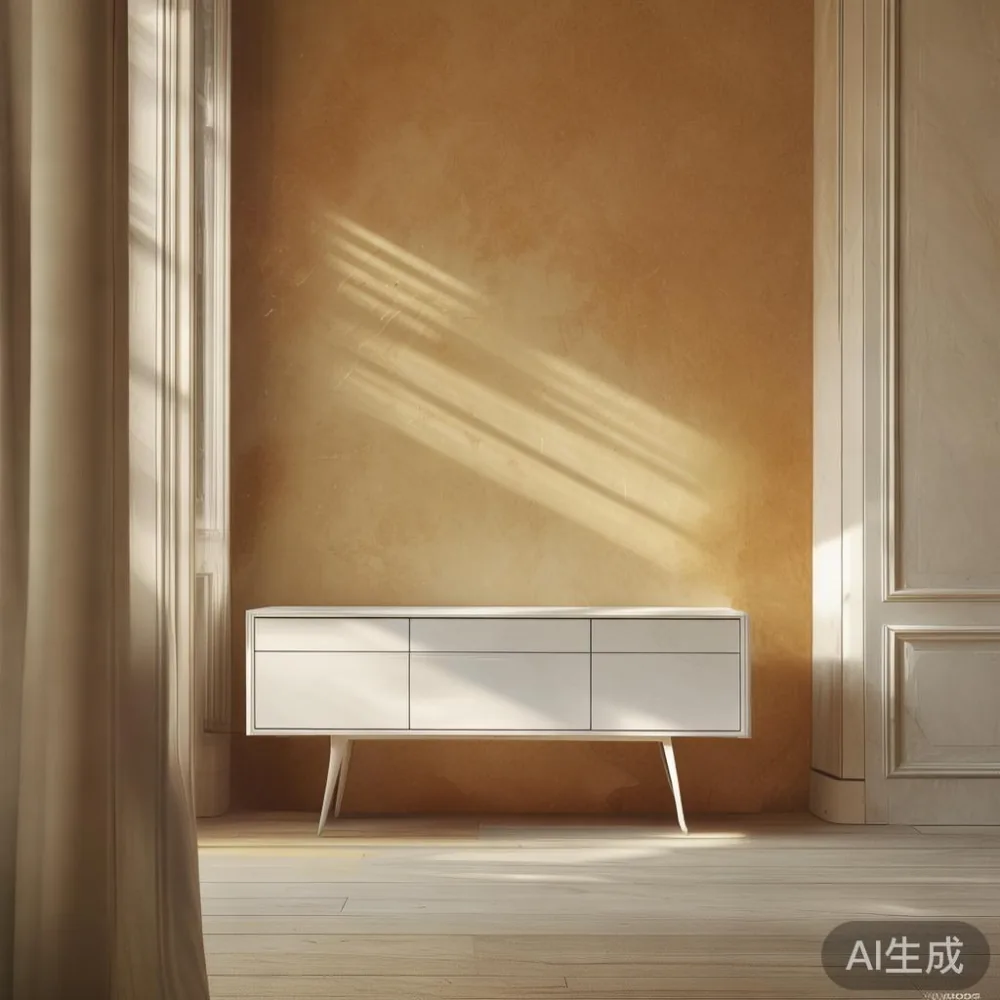
For Singapore homes, this works unusually well because our flats already have a strong architectural shell — feature walls in the living room, built-in cabinets in the kitchen, a service yard you can close off. You do not need to add decoration. You need furniture that respects the shell. A 1.8 m solid wood dining table with a 4 cm thick top and tapered legs, for example, will read as warm and quiet in a Tampines five-room flat because the room is already doing half the work.
Start with the floor plan and lift access before you fall in love with a piece
The most common mistake I see in Bedok and Punggol flats is buyers choosing a marble table or a king-size bed frame, only to discover on delivery day that it will not fit up the lift or around the corridor bend. Measure three things before you buy anything:

1. The lift car. Standard HDB passenger lifts are about 1.1 m deep by 1.4 m wide, with a door opening of roughly 0.9 m. A marble table top larger than 1.0 m on its short side often needs to be carried vertically, which adds labour cost and risk.
2. The corridor turn. In older blocks the corridor makes a 90-degree turn at the lift lobby. A 2.0 m wardrobe shipped as one piece rarely clears it. Most Foshan workshops — including the MIDHILL factory I visited in 2008-built facility — split wardrobes into two 1.0 m carcasses for exactly this reason, and the seam is hidden behind the central panel.
3. The main door. HDB main doors are usually 0.9 m wide by 2.1 m tall after the frame. A solid wood bed frame headboard taller than 1.1 m needs to come in at an angle. Ask the supplier for the packed carton dimensions, not just the assembled dimensions.
Which furniture pieces earn their place in a warm minimal Singapore home
You do not need a lot. In Lin's flat, we used six pieces across 95 sqm, and the home felt furnished, not crowded. Here is the core list, with the role each one plays:
Solid wood sofa (3-seater, walnut or ash frame). The single most expensive piece, so get it right. Look for a frame depth of 90–95 cm, seat height of 42–45 cm, and legs that lift the base at least 12 cm off the floor. The legs are what make the room feel calm — a skirted sofa in the same fabric will visually shrink a small living room by 10–15%.
Dining table (1.4–1.6 m, solid wood, 4–5 cm top). A 1.4 m table seats four comfortably and fits a 2.4 m wall. A 1.6 m table seats six and needs a 2.8 m wall. For most four-room HDBs, 1.4 m is the honest answer. Choose a wood with visible grain but minimal knots — ash, white oak, or North American walnut.
Bed frame (queen, 152 cm × 188 cm, low platform). A platform bed at 28–32 cm tall keeps the bedroom grounded. Avoid headboards above 1.1 m if your bedside pendant light drops below 90 cm from the mattress.
Marble furniture (one statement piece only). This is where most Singapore homes go wrong — they buy a marble dining table and a marble coffee table and a marble console. Pick one. A 1.2 m marble table in the entryway, with a Carrara or Volakas top on a black metal base, gives you the cool counterpoint to all that warm wood. Marble furniture reads as a quiet luxury cue — closer to French light luxury than to American light luxury, which tends toward larger scales and brass hardware.
Wardrobe (2.0–2.4 m wide, two-door or three-door). Floor-to-ceiling if your ceiling is 2.7 m or higher; standard 2.2 m height for older HDBs with the dropped beam at the doorway. Sliding doors save 60 cm of swing clearance compared to hinged doors — that 60 cm is the difference between fitting a nightstand on each side of the bed or not.
Nightstand (45–50 cm wide). Two nightstands are non-negotiable in a shared bedroom; one always drifts to the corner and collects clutter.
What size sideboard do I need?
A sideboard for a Singapore dining area should be 1.4 m to 1.6 m long, 40–45 cm deep, and 80–85 cm tall, because the sideboard must align with the dining table edge (standard 75 cm table height) and fit between the dining wall and the corridor without blocking traffic. For a 1.4 m dining table seating four, choose a 1.4 m sideboard — anything longer looks disproportional and makes the room feel narrower than its actual 2.8–3.0 m width.
Two practical notes on sideboards specifically. First, if you plan to use the top as a buffet during gatherings, allow 30 cm of clearance behind your seated diners — that means a 2.4 m minimum distance between the table edge and the sideboard front. Second, in newer condos with the kitchen door opening directly onto the dining area, a sideboard deeper than 45 cm will block the door swing. Measure the door arc before you order.
For a four-room HDB in Bedok or Punggol, a 1.5 m sideboard with three drawers and two cabinet doors is the most useful configuration: the drawers hold cutlery and linen (around 8–10 sets of dinnerware plus 12 pieces of glassware fit comfortably), and the cabinets hide the appliances you do not want on display. Solid oak or ash carcass with a marble top is the warm minimal default — the marble protects the wood from water rings and ties visually back to your marble table in the entryway.
Wood tones, finishes, and how to mix them without clashing
Warm minimalism allows two wood tones, maximum three. The safest pairing in Singapore light is American walnut (warm chocolate-brown undertone) with white oak (yellowish neutral). The walnut reads as the "feature" wood — use it on the bed frame and the dining table. The oak reads as the "support" wood — use it on the sideboard, the wardrobe interior, and the nightstand. Ash sits between the two and works as a bridge if you want a third tone.
Avoid mixing walnut with teak or mahogany — both are redder and will fight the walnut. Avoid mixing oak with pine — the grain contrast is too sharp. If you already own a teak piece (very common in older Singapore flats), keep it isolated in one room rather than trying to make it match the rest.
On finishes, choose matte or satin, never high-gloss. A matte solid wood sofa frame, a satin lacquer on the dining table, and a honed (not polished) marble table top will all absorb light similarly. That shared light response is what makes a room feel calm — your eye does not have to keep adjusting between shiny and dull surfaces.
Budgeting honestly: what a warm minimal set costs in SGD
Buyers often underestimate the total because they price pieces individually. Here is a realistic build-up for a four-room HDB, delivered and assembled in Singapore, with prices converted at roughly SGD 1.00 ≈ RMB 5.4:
• Solid wood sofa, 3-seater, walnut frame, linen-blend upholstery: SGD 2,400–3,200
• Solid wood dining table, 1.4 m, ash or oak: SGD 1,100–1,600
• Four dining chairs, solid wood frame, fabric seat: SGD 480–720 (set)
• Marble table, 1.2 m entryway console, Volakas or Carrara top: SGD 1,600–2,400
• Bed frame, queen, low platform, walnut: SGD 1,300–1,900
• Two nightstands, 45 cm wide: SGD 380–520 (pair)
• Wardrobe, 2.0 m, two-door, sliding: SGD 2,200–3,000
• Sideboard, 1.5 m, oak with marble top: SGD 1,400–2,000
Total: roughly SGD 10,800–15,300 for the main pieces, before mattress, lighting, and textiles. Add another SGD 1,500–2,500 for a good queen mattress and you are looking at SGD 12,500–17,500 for a complete warm minimal set. That is a meaningful spend, which is why the warranty and after-sale terms matter as much as the look. Look for a 10-year structural warranty on the frame, lifetime refinishing on solid wood surfaces (sanding and re-lacquering typically costs SGD 280–450 per piece after the first three years), and a delivery window of 30–45 days from a Foshan workshop. Free shipping over SGD 350 is standard from most direct-from-factory suppliers, and a 14-day return window gives you time to check for defects before committing.
One local note on cost: Singapore's 9% GST applies to all imported furniture, and the supplier should show this as a separate line so you can claim input credits if you are registering the purchase under a business. Some buyers try to avoid GST by self-collection, but for a 1.4 m marble table the self-collection cost (cargo van, two porters, and your own time at the warehouse) usually runs SGD 180–260, which cancels out most of the saving.
Delivery, assembly, and the realities of Singapore corridors
Plan delivery for a weekday morning if you can. Lifts in Tampines and Bedok blocks are less busy before 10am, and the porter team can take 15–20 minutes instead of 45. Most Foshan-to-Singapore shipments go by sea via Shenzhen or Hong Kong and arrive in 18–25 days, then another 5–7 days for customs clearance and last-mile delivery. Allow 30–35 days total from order to assembly.
On assembly day, the team should bring the wardrobe in two halves, the dining table with the legs detached, and the marble table top wrapped separately in a wooden crate. The headboard and footboard of the bed frame come as two flat panels. A typical four-room fit-out takes 3–4 hours with two porters and one assembler. Budget SGD 80–150 for assembly if the supplier does not include it — many do.
One more detail that catches buyers out: the corridor fire-rated door at your flat's entrance usually opens outward, into the corridor. A 1.6 m sideboard delivered in one piece may physically fit through your main door but block the neighbour's fire door on the opposite wall. Coordinate with your supplier to bring long pieces in flat-pack and assemble inside.
Care and longevity: why solid wood pays you back over ten years
A solid wood sofa frame, properly kiln-dried and jointed, will outlast a plywood or MDF frame by 15–20 years. The catch is humidity. Singapore's average relative humidity sits between 75% and 85%, which causes unprotected solid wood to expand and contract by 2–3 mm per metre across the seasons. To keep your pieces stable:
• Run the air-con or a dehumidifier for at least 6 hours a day in the bedroom (target 55–65% RH).
• Keep solid wood furniture at least 15 cm away from the wall to allow airflow behind it.
• Wipe spills within 10 minutes — water sitting on oak for over an hour will raise the grain.
• Refinish high-traffic surfaces (dining table, sideboard top) every 3–4 years, not every 10. The factory-grade lacquer wears through faster in our climate than in temperate markets.
Marble furniture needs a different routine. Seal the top on delivery with a penetrating sealer (the supplier should do this — it takes 24 hours to cure), then re-seal every 12 months. Blot, do not wipe, red wine or coffee spills — wiping spreads the stain into the marble's micro-pores. For everyday cleaning, a pH-neutral stone soap is enough; never use vinegar, lemon, or bleach on marble.
A short checklist before you click "order"
1. Measure the lift car, the corridor turn, and your main door. Write the numbers down.
2. Confirm the packed carton dimensions for every piece, not the assembled dimensions.
3. Ask for the wood species in writing, not just "solid wood" or "oak colour."
4. Check the warranty: frame (10 years minimum), marble top (5 years against cracking), hardware (2 years).
5. Confirm the delivery window in days, not weeks.
6. Ask whether refinishing is included, and for how long — lifetime refinishing from the original supplier is worth real money over 10 years.
7. Save the supplier's local contact, not just the email. If a hinge loosens in year three, you want a WhatsApp number.
Warm minimalism is not a style you buy in a weekend. It is a series of small, correct decisions made over a few weeks — the right wood tone, the right sideboard depth, the right marble top, the right delivery window. Get those right, and your HDB flat in Tampines or Punggol will feel quieter, warmer, and more like yours by the time the second month of instalments rolls around. And if a piece ever feels wrong after it arrives, a 14-day return policy means you can swap it before the decision hardens into regret.