Understanding Furniture Warranties: A Guide for Marble Lovers
Buying a solid wood dining table or marble table for a Singapore home is an investment in daily use, not merely a decorative purchase. A warranty can protect that investment, but only if you understand what it covers, what it excludes, and how to claim against it. The difference between a clear 10-year structural warranty and a vague promise of “quality service” can be worth hundreds of SGD after a damaged joint, cracked stone top, or faulty drawer arrives.
Singapore HDB flats and condos make this especially practical. A dining table may need to pass through a common corridor, negotiate a 90 cm lift opening, and fit through a flat entrance before it can be installed. A bed frame may have to travel in several labelled sections, while a wardrobe may require two installers and more than 4 hours of assembly. Warranty terms should cover the actual product journey, not just a pristine showroom photograph.
This guide explains how to read furniture warranty language, compare coverage, and prepare a claim. It applies to solid wood sofa, bed frame, dining table, wardrobe, nightstand, and marble table purchases alike, including light-luxury designs from a Foshan factory. It also considers the realities of humid Singapore conditions, GST-inclusive pricing, and delivery schedules in Tampines, Bedok, and Punggol.

What does a 10-year furniture structural warranty actually cover?
Ask for the warranty in writing and identify the exact term “structural.” A 10-year structural warranty normally covers defects in load-bearing components, such as a dining table’s legs, rails, joints, or frame under normal residential use. For a bed frame, it may cover the main frame, slat support structure, and critical joinery. It should not automatically be read as a 10-year promise against every scratch, stain, movement, or accidental break.
The document should state the warranty start date, the covered product and component, the definition of a manufacturing defect, and the remedy. Possible remedies include repair, replacement of the defective part, replacement of the whole item, or store credit. If the wording only says “warranty service,” ask whether that means parts are supplied free, labour is free, or both. Also establish whether freight, installation, and GST are included.
Look for exclusions connected to misuse. A dining table should not be expected to carry 300 kg if its rated load is 150 kg. A marble table should not be treated as a workbench. A nightstand should not be overloaded with 40 kg of books, and a wardrobe should not be moved repeatedly without authorised hardware adjustments. Water exposure, unapproved adhesives, outdoor use, and alterations can affect coverage. Normal use is a legal term that may not appear in the policy, so request examples.
Physical wear is different from a manufacturing defect. If a 3-year-old dining table has developed a 2 mm split at a mortise-and-tenon joint, that may be structural. If a 5-year-old marble table has a chipped edge after a delivery mishap, the cause matters. Keep delivery photographs, assembly records, and product invoices. A serial number or order reference can prevent an unnecessary dispute.
MIDHILL gives a 10-year structural warranty, which is a useful starting point. The important question is whether the terms define the structure, the claims process, and the responsible party. A decade is meaningful only when the process is written down.
Is the warranty for the whole item or only selected parts?
Read the scope line carefully. “All wooden products” may conceal a mixed warranty: perhaps 10 years for the main structure, 3 years for hardware, 2 years for veneer, and 1 year for electrical fittings in a wardrobe with a charging module. A marble table may have different terms for the stone slab, base, and fixing brackets. A solid wood sofa may have separate periods for the timber frame, springs, foam, and upholstery.
For each component, make a simple note in your own words:
- Structure: 10 years for load-bearing timber joints and frames.
- Surface: 1 to 5 years for veneer, lacquer, stains, or marble finishes, depending on the policy.
- Hardware: 2 to 5 years for hinges, drawer runners, screws, and suspension parts.
- Moving parts: 2 to 3 years for gas lifts in a nightstand or lift-up bed mechanism.
- Services: clarify whether collection, repair labour, return freight, and installation are covered.
Do not assume the longest period applies to every element. A drawer runner failing after 4 years is not identical to a warped wardrobe side after 4 years. Ask whether related parts will be replaced together. If a defective screw causes a drawer to fail, is the entire drawer assembly included? If one stone slab cracks, will the marble table’s base and fixings be checked as well?
Check whether the warranty follows the item or the original purchaser. A resale unit may have limited or no coverage. This matters when comparing under 2000 European furniture listings in Singapore, because an imported product may depend on a local authorised representative rather than the overseas manufacturer. Obtain the local contact details, business address, and claims procedure before paying the balance.
Will Singapore delivery and installation affect my claim?
Delivery responsibility can complicate a claim if damage occurs after the product leaves the warehouse but before it reaches the room. Photograph the furniture at handover, including corners, tabletops, doors, drawer fronts, and marble edges. Record the condition of packaging with a dated video lasting about 30 seconds. Ask the courier or installer to note visible damage on the delivery receipt, and keep that receipt for at least 12 months.
Measure the route before delivery. In an HDB flat, ask the delivery team to check the lift, staircase, corridor, and door width. A 180 cm dining table may fit a 120 cm lift only diagonally, while a packaged bed frame might split into 3 boxes to fit. A 200 cm wardrobe may need to be assembled inside the bedroom. Clear access can reduce the chance of damage that is later disputed as a manufacturing fault.
Confirm the expected delivery window in days. A realistic supplier should state whether production takes 7 to 14 days and delivery takes another 3 to 7 days in Singapore. Public-holiday periods, peak furnishing seasons, and custom sizes can extend the schedule. Include the promised dispatch and arrival dates in the order, and clarify whether storage fees begin if delivery is delayed.
Assembly should follow the instructions. Tightening every sofa bracket aggressively can distort a solid wood sofa, while using the wrong 4 mm screw in a marble base can split the fixing. If a claim is denied because assembly was incorrect, having the instruction manual, fixings, and an installation receipt can support an appeal.
What should I do if damage appears in the first 14 days?
The first inspection should happen before the furniture is treated as accepted. Check under the dining table for loose joints, test each wardrobe door across its full travel, and run the drawers through their complete opening stroke. On a marble table, inspect the top in daylight for hairline fractures, chips, and uneven support. On a bed frame, check all bolts, centre supports, and slats. On a nightstand, test the drawer and any charging components.
Do not repair a suspected defect immediately unless safety requires it. A damaged component is easier to document before disassembly. Photograph it at close range and include a wider image showing its location. Keep the serial number, order number, packaging, and all fixings. If the product scratches the floor, the retailer may also need evidence of the existing floor condition.
Send one written notice describing the issue. Include the purchase date, item name, colour, dimensions, defect location, photographs, and requested remedy. A clear complaint with 5 attachments is more useful than 12 messages without dates. Give the company a reasonable response period, such as 7 business days, before escalating.
Many sellers offer a 14-day return period, but returns are not the same as warranties. Read the return conditions: stock-standard items may need original packaging; made-to-order furniture may be less returnable; marble furniture may have special arrangements because stone slabs vary in pattern and cannot always be restocked. A “lifetime refinishing” service also needs boundaries. Confirm whether it covers scratches, stains, water marks, and top refinishing, and whether the customer pays transport, assessment, and return freight.
Can humidity, marble, and light-luxury styling change what counts as normal wear?
Singapore’s humidity makes material documentation important. Solid wood expands and contracts slightly as moisture levels change. Ask whether the warranty covers checking, cupping, or joint movement caused by unsuitable indoor conditions. A kitchen or bathroom can experience more moisture than a bedroom, so keep the product in a dry, ventilated room. Use a stable humidity range of roughly 40% to 65% where practical, and do not place a wardrobe against a damp external wall.
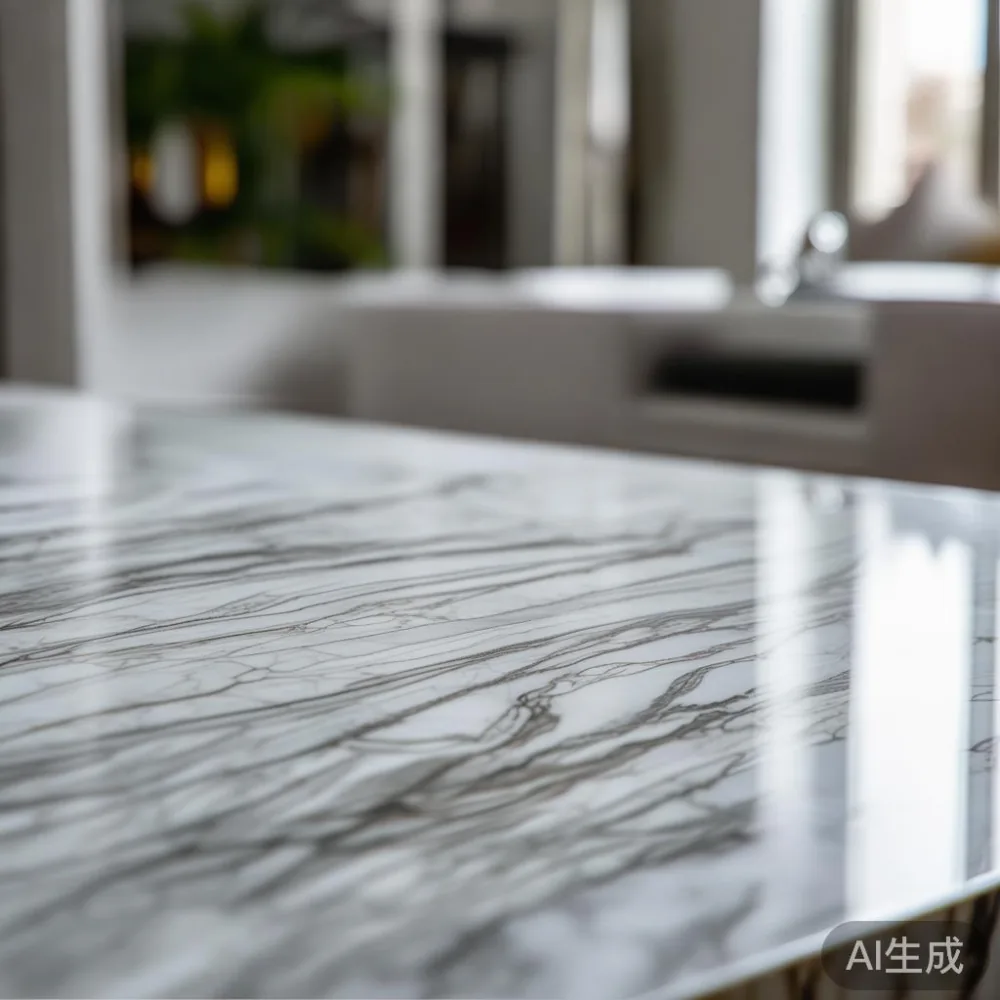
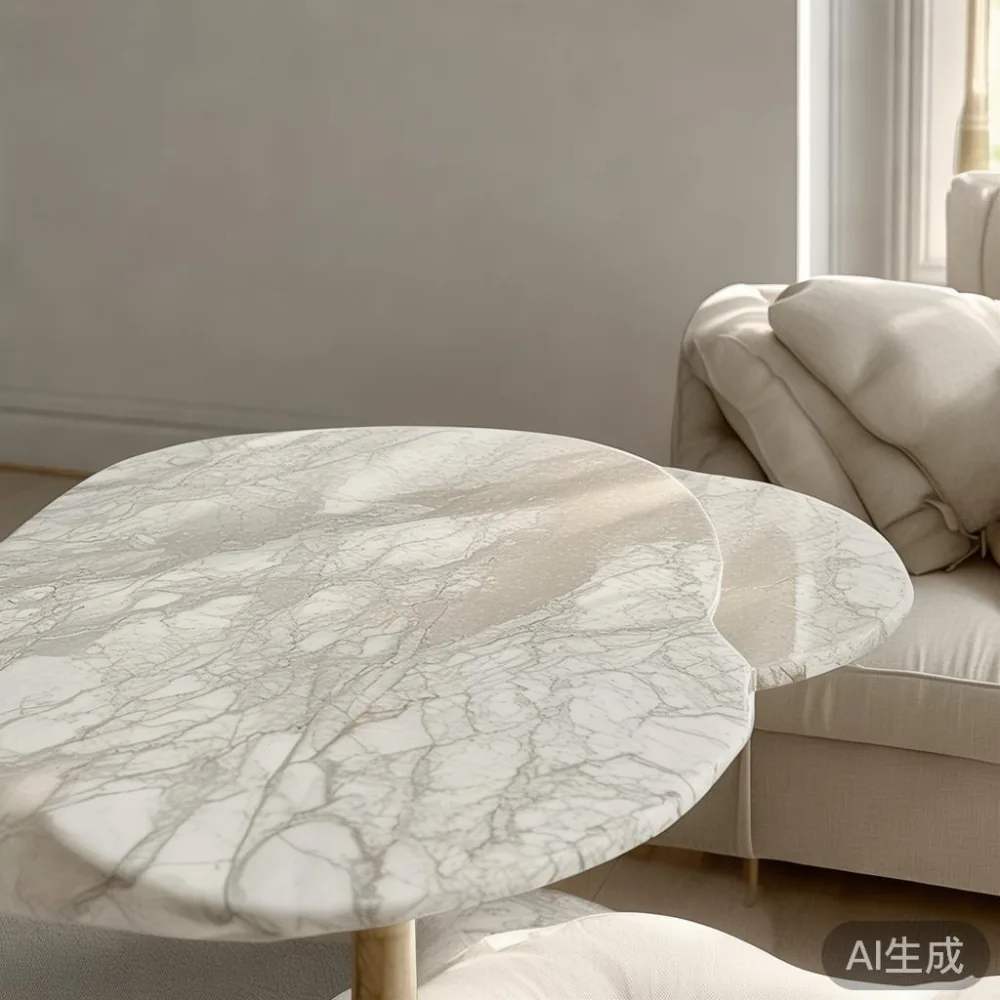
Marble furniture needs equally clear guidance. Marble is durable, but it is not flexible like solid timber. A 120 kg tabletop can look stable but fail around a poorly supported edge if a bracket is loose. Ask whether the policy treats cracking during normal use differently from edge chipping, impact damage, or a base that was assembled incorrectly. If the marble table has a protective top and underside, confirm that the product should be moved as one unit rather than lifted by the stone alone.
Style language should not obscure care instructions. A French light luxury scheme may use a solid wood sofa with refined upholstery and curved arms; post-modern light luxury may pair clean lines with tactile stone; American light luxury often centres on generous proportions and comfort. Those visual descriptions do not change the warranty. If a retailer markets “cheap Italian light luxury furniture,” request the country of manufacture, material specification, and warranty terms rather than relying on the styling label.
Likewise, a buyer asking how to style French provincial sofa in bedroom should still check the sofa frame, spring coverage, and fire-safety information. A buyer asking how to style Japandi wardrobe in room should verify carcass material, back-panel construction, hinge ratings, and wall-anchoring guidance. A buyer comparing Japanese bed vs Italian light luxury bed should compare structural coverage, joinery, slat spacing, and load ratings, not only the visual finish.
How can I compare prices and policies fairly in Singapore?
Compare total landed cost, not just the product price. A SGD 1,850 dining table plus SGD 120 delivery, SGD 90 carrying, and 9% GST can become SGD 2,237.40. A slightly higher listed price may include delivery and installation. Request a written quotation showing the furniture price, GST, delivery charge, stair or lift surcharge, installation fee, and any deposit. This makes it easier to compare a solid wood dining table, marble table, or bed frame with a lower-priced alternative.
Watch for unclear deposit terms. State whether the deposit is refundable, what triggers cancellation, and the expected production time. If a deposit is SGD 300, the balance is SGD 1,700, and GST is added at checkout, the due amount should be clear. Never assume that a low deposit means the final price is fixed.
For light-luxury purchases, request evidence behind the materials. Ask for solid wood species and components, veneer versus solid timber, marble type and thickness, hardware brand, joinery, and finish details. If a piece is described as a solid wood sofa, bed frame, dining table, wardrobe, or nightstand, clarify whether only the main visible parts are solid wood. The warranty should name the same components listed on the sales sheet.
Searches for light luxury furniture china can produce broad catalogues, but local service matters. Confirm whether a Singapore entity can process claims, whether replacement stock is held locally, and whether a technician must inspect the item. A manufacturer established in 2008 and exporting to more than 15 countries may have substantial production experience, yet the local buyer still needs a clear after-sales route.
What evidence should I keep after buying?
Create a product file for every major item. Include the quotation, tax invoice, warranty, care guide, assembly manual, serial number, material specification, and delivery receipt. Save photographs taken on arrival and after assembly. Record the date of purchase and the delivery date; these dates determine whether a complaint falls under the return period or structural coverage.
For a solid wood dining table, measure the tabletop and note the number of chairs in daily use. For a marble table, record the thickness of the top and the installation method. For a bed frame, note the mattress dimensions and the weight of the occupants. For a wardrobe, list the number of doors, drawers, shelves, and hanging rails. These facts help distinguish a manufacturing defect from an expectation mismatch.
Inspect the home around the furniture. A wardrobe taller than 210 cm may need fixing to the wall. Keep ventilation gaps where the manufacturer specifies them. Under a nightstand, check that an extension cable is not pinched or overloaded. A solid wood sofa should not be dragged by its arms. Marble furniture should be carried or shifted with adequate support. Following these points reduces avoidable damage and keeps the claim conversation factual.
Review the warranty each year, especially before moving. Moving a 90 kg wardrobe without removing shelves may damage its carcass. If relocation is planned, ask whether the company offers inspection, disassembly, and reinstallation and whether that work affects coverage.
What questions should I ask before paying the balance?
Ask these questions in writing:
- Does the 10-year structural warranty cover the complete item or named components?
- Which defects qualify, and what examples fall outside coverage?
- Are repair labour, replacement parts, delivery, and reinstallation free?
- Is the warranty transferable if I sell the home or the furniture?
- Who handles claims in Singapore, and within how many days must I report damage?
- Does normal use include the product’s specified load, and what is that load?
- Are moisture-related movements, finish changes, and stone chips treated differently?
- Can a defective component be replaced before the full item is replaced?
- What does the 14-day return policy mean for custom-size or made-to-order pieces?
- Does lifetime refinishing include collection, labour, materials, and return transport?
A useful response should distinguish 10-year structure coverage from shorter surface or hardware terms. If the answer is vague, request a sample claim form or policy document. Sales staff can explain a product, but a written policy determines what happens 3, 5, or 9 years later.
How do I make a claim that the supplier can act on quickly?
Last month I visited a family in Bedok who had just received a 180 cm solid wood dining table. It passed through a 110 cm corridor and a standard lift in 3 boxes, with the top in 1 reinforced carton. One leg had a visible 4 cm scratch and the tabletop had a 2 mm movement along a joint. The buyer photographed the cartons, wrote down the order number, and contacted the supplier before assembly. Because the supplier could compare the scratch with its dispatch photographs, it dispatched a replacement leg and resent the fixing kit within 5 business days. The table was not returned, saving the customer about SGD 210 in delivery and reinstallation.
The useful lesson was not simply to document everything. The family also kept the table unwrapped in daylight, used a straight edge across the joint, and avoided tightening the fixings until the supplier reviewed the images. A claim is easier to process when the buyer states the observation, provides scale, identifies the component, and proposes a practical remedy.
Send the notice through an official channel, such as the sales email or local customer-service form. Keep a copy of every message. If no response arrives within 7 business days, follow up with the same reference number. If the issue is unsafe, stop using the component. Escalation may involve the retailer, local distributor, or manufacturer, depending on the contract. Consumer-protection and contract terms in Singapore can provide context, but the warranty itself should remain the first reference.
The central point is control through information. A written 10-year structural warranty, clear exclusions, measurable remedies, and an organised product file protect the buyer. Before approving a marble table or solid wood dining table, make sure the structure, surface, hardware, delivery responsibility, and local claims route all appear in one document. That turns a decorative promise into a usable agreement measured in years, days, centimetres, kilograms, and SGD.