Humidity, Marble Furniture and Solid Wood in Southeast Asian Homes
Humidity is part of everyday life in Singapore. Outdoor relative humidity commonly reaches 80–90% during monsoon periods, while air-conditioned HDB flats and private condos may drop to 40–60% depending on the season, household habits and ventilation. That movement affects solid wood, marble furniture, veneer, metal fittings and finishing work in different ways. It can cause timber to swell, joints to loosen, lacquer to cloud, drawer runners to bind and marble surfaces to show moisture-related marks if care is careless.
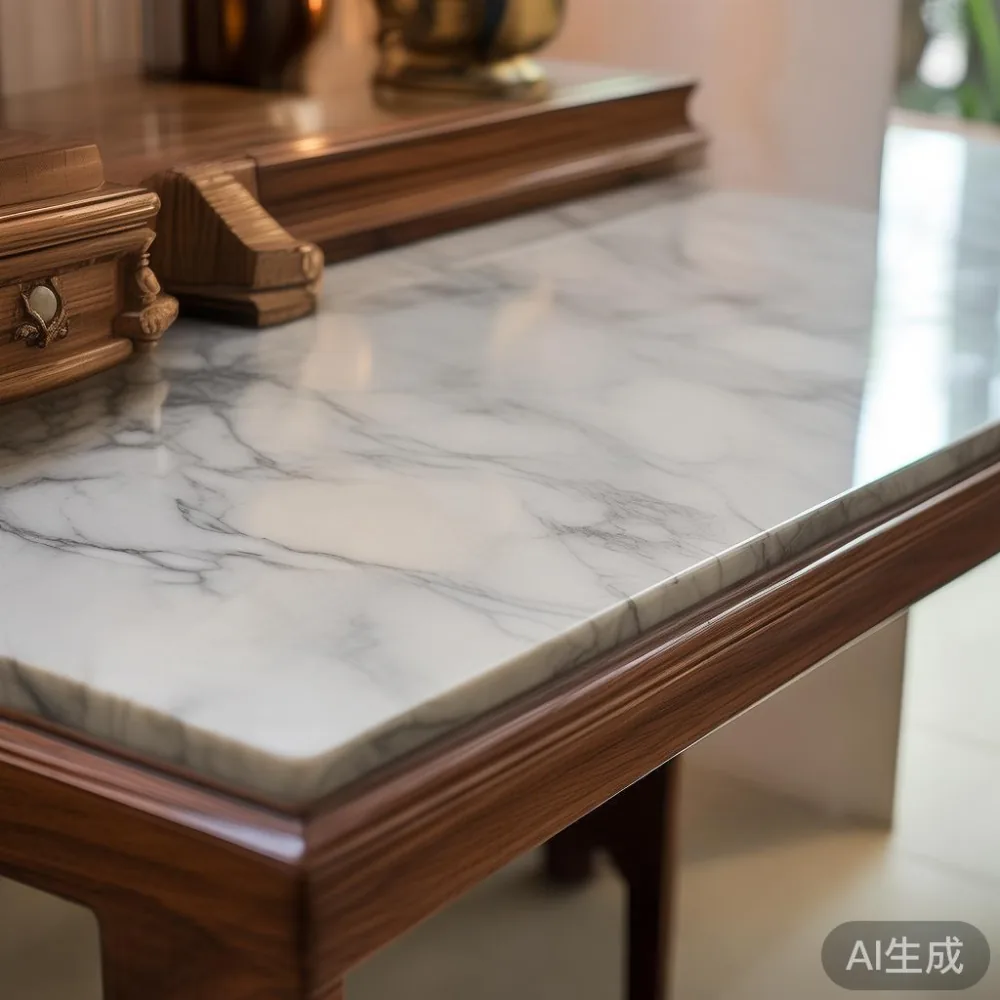
For Singapore residents furnishing compact spaces in Tampines, Bedok or Punggol, the issue is not simply whether wood likes the climate. The more useful question is how to choose furniture that tolerates humidity, fits local access routes and remains visually compatible with post-modern light luxury interiors. A well-proportioned solid wood sofa, bed frame, dining table, wardrobe, nightstand or marble table can perform well here when material selection, placement and maintenance are handled properly.
MIDHILL designs solid wood furniture for international use, with a 10-year structural warranty and lifetime refinishing service. Singapore’s tropical conditions still require sensible acclimatisation and care, particularly for new pieces delivered into air-conditioned homes or moved between different humidity zones.
How much humidity is normal in Singapore?
The Singapore Meteorological Office records a long-term annual mean relative humidity of around 74%. During the wetter months, nights can remain above 85%, and surfaces in unventilated rooms may experience repeated condensation. Air-conditioning removes moisture, but it also creates a sharp contrast between an outdoor environment at 80% humidity and an indoor environment at 55%. Wood responds to that contrast through dimensional movement.
Solid timber is hygroscopic: it absorbs moisture when the surrounding air is humid and releases it when the air becomes dry. Movement is much less visible along the grain than across it. A solid wood dining table may expand by roughly 1–3 mm across its width under moderate moisture changes. In engineered wood, swelling can be uneven across a panel or around a routed edge. Veneered surfaces may also show lifting if adhesive, preparation or moisture control is poor.
Singapore homes require controlled variation rather than an imaginary constant environment. A sensible target for ordinary living rooms is approximately 45–65% relative humidity, with fewer abrupt changes over a 24-hour period. Hygrometers are inexpensive; a basic model costs about SGD 12–25. Placing one near a wardrobe or dining area makes it easier to identify seasonal changes rather than blaming the furniture for every movement.
What humidity does to solid wood furniture?
Wood movement does not automatically mean failure. A solid wood bed frame with sound joinery may develop a minor creak as it adjusts, then settle. A drawer may need a small adjustment after the room changes from humid to drier conditions. The more serious risks come from direct water exposure, prolonged dampness, unsealed end grain and furniture positioned directly against an air-conditioning vent or exterior wall.
For a solid wood sofa, the timber frame needs to remain stable while upholstered cushions and seat covers move with people. High-density foam, breathable fabric and a supportive suspension system help manage comfort, but moisture can still enter the frame if cleaning is excessive. For a bed frame, leave space around the headboard and footboard where possible, especially if the wall is cool and the room is poorly ventilated.
A wardrobe needs the most attention because enclosed volume can trap humidity. Leave roughly 5–8 cm behind freestanding units if the manufacturer allows it, and avoid wedging the carcass tightly into a recess. Bedroom wardrobes should not be loaded immediately after delivery; allow the timber to acclimatise for about 7–14 days. A nightstand should have a top finish that can be wiped clean without leaving a dull patch.
For dining tables, use a placemat under a cold glass of water or a chilled beverage. Coasters should measure at least 7 cm across for typical tumblers. Wipe spills within 10 minutes instead of letting them soak into the finish. For storage pieces, group similar objects and avoid pushing clothes tightly against interior panels during humid periods.
How should marble furniture handle Singapore humidity?
Marble furniture does not absorb moisture like timber, but humidity can affect sealants, cleaning residue and the contact points where stone meets a base or wall. Calacatta, Carrara and other natural stones also vary in porosity. A light sealer applied during production provides a useful barrier, although it does not make the surface immune to acidic liquids, heat or harsh chemicals.
Humidity can leave temporary mineral haze on marble if dirty water evaporates rather than being rinsed and dried. This is particularly noticeable on a pale marble table. Use a soft microfibre cloth, neutral stone cleaner and a clean second cloth. A 1:1 mixture of mild dishwashing liquid and warm water can be used for ordinary wipe-clean maintenance, but test it on a hidden area and rinse afterward. Avoid vinegar, lemon, bleach and abrasive powders because they can etch calcium-based marble.
Natural stone expands only slightly compared with wood, so a marble table and solid wood dining table need slightly different care. Stone should not be dragged across a floor; carry it where possible or use furniture sliders rated for its weight. For a dining table with a marble top, check the base alignment every 6 months, particularly after a humid-to-dry transition.
Will a solid wood piece fit through my HDB flat or condo?
Humidity is only one part of a successful delivery. The route from the service lift to the flat may impose tighter limits than the room dimensions. Common HDB lift door widths are around 80–90 cm, while lift cabins measure approximately 100–140 cm deep and 110–140 cm wide, depending on the block. Corridor widths can be about 90–150 cm. Condo loading bays and private lifts vary more widely, so measurements should be confirmed before a large order leaves the supplier.
Measure the narrowest door, turning space and lift height rather than relying on the delivery van. A dining table may fit flat but not turn at a corridor corner. A bed frame can be separated into headboard, footboard and side rails, while a solid wood sofa may arrive as protected modules. Ask for the assembled dimensions, packaging dimensions and number of cartons; these should be stated in centimetres, not vague labels such as “large” or “oversized.”
Weight matters for service lifts as well as for manual handling. A dining table weighing 65–95 kg may need 2–3 people and a stair-climbing dolly if no lift is available. Keep stairwell access clear and never obstruct a fire door. Large orders may be split into two delivery appointments, a practical option for Singapore apartments where a corridor cannot accommodate a full-length frame. GST and local charges should appear clearly on the final invoice.
Delivery timing is also relevant to humidity. Allow new solid wood furniture to acclimatise for 7–14 days in the final room before tightening drawers, hanging doors or applying final alignment adjustments. MIDHILL offers delivery across Singapore, and orders above US$350 qualify for free shipping under its stated policy; any local taxes or access charges should still be confirmed before dispatch.
How do I choose furniture that suits Singapore’s humidity and local interiors?
Begin with the room’s expected humidity and ventilation rather than with a single trend label. A condo with balcony doors may experience greater daily fluctuation than a sheltered HDB bedroom. Choose solid wood with a restrained finish, avoid placing units against cold perimeter walls and provide airflow around wardrobes and bed frames. A breathable rug under dining furniture can reduce repeated moisture transfer during mopping.
For layouts, a solid wood sofa suited to a compact living room should have a lower profile, but comfort should not be sacrificed by choosing an unsupported frame. A dining table of 120–140 cm can serve 4–6 people in many Singapore flats, while a 90–120 cm round or oval table may ease circulation in an L-shaped dining area. Bed frames should allow about 60 cm on accessible sides where space permits, and a nightstand of 40–50 cm wide is often sufficient beside a queen bed.
Style comparisons can be useful when planning a renovation. In the question French bed vs Mid-century modern bed, French provincial styling introduces carved edges and decorative detail, while mid-century modern design uses cleaner lines and slimmer visual profiles. For anyone comparing French bed vs Mid-century modern bed options, the practical choice in a humid HDB flat is the one that allows airflow, fits the lift route and carries a finish intended for tropical interiors.
Buyers researching wholesale French provincial furniture should examine the timber species, joinery, finish, moisture specification and warranty rather than focusing only on ornament. Those comparing Mid-century modern with storage should check drawer extension, shelf loading and carcass ventilation. A search for for sale Mid-century modern furniture should include clear dimensions and delivery terms. If a plan includes an Italian light luxury TV console, account for cable ventilation, wall anchoring and the need to keep electronics away from damp walls.
Those learning how to choose European bed should compare slat spacing, centre support, floor clearance and the warranty against movement. A French-inspired design can work in French light luxury or American light luxury interiors, but historical styling should not compromise modern access or maintenance.
How should I care for wood and marble after delivery?
Wait 7–14 days before making final adjustments to new solid wood furniture. During that period, keep the room reasonably stable and ventilate it for 30–60 minutes on drier days. Do not use a dehumidifier continuously unless a measured need exists; excessive drying can create its own timber movement. Set a practical indoor target of 45–65% relative humidity rather than chasing an exact figure.
Clean dust from the top and sides of a solid wood dining table weekly with a dry microfibre cloth. Wipe with a barely damp cloth every 2–4 weeks, then dry immediately. Re-oil unfinished or oil-finished surfaces only according to the product instructions, typically every 12–24 months depending on use and sunlight. Avoid silicone furniture sprays, which can create a patchy surface and interfere with later refinishing.
For a marble table, clean spills promptly and dry the surface with a separate cloth. Inspect coaster contact areas every 3 months. Keep stone tops away from direct heat and do not place hot cookware directly on them. For upholstery, vacuum every 1–2 weeks and address damp patches promptly with appropriate fabric care.
Check drawer runners, wardrobe doors and table joints every 6–12 months. A small screwdriver and felt pad may be enough for minor adjustments. Do not plane or sand a moving joint without confirming the construction and warranty conditions. MIDHILL provides a 10-year structural warranty and lifetime refinishing service, giving buyers a route for restoration rather than encouraging unnecessary DIY work.
For returns, review MIDHILL’s 14-day return terms and the condition of the packaging and finish before accepting a large item. Photograph the furniture and route during delivery, especially when a marble table or solid wood dining table has tight corridor access.
What should Singapore buyers check before ordering?
Ask for the timber species, board dimensions, finish type, expected weight, assembled dimensions, packaging dimensions and delivery lead time. A typical Singapore delivery may take 7–21 days after production and stock confirmation, while custom pieces may require 30–60 days. The quotation should identify the currency, GST treatment, access charges and return conditions clearly.
Last month, I visited a family’s three-bedroom HDB flat in Tampines with a new dining zone and a compact service lift. Their first concern was a dining table measuring 180 by 90 cm and weighing 78 kg. We checked the lift door at 86 cm, the corridor at 112 cm and a right-angle turn near the flat entrance. The full table could not be carried upright, so the supplier arranged a two-part top and separate base. After unpacking, the family left the pieces for 10 days, measured humidity at 61–68% and adjusted the base 2 mm to restore level. The timber later settled as the air-conditioning reduced nighttime humidity.
That experience highlighted a simple rule: precise measurements protect both the home and the furniture. Humidity management then protects the finish, while realistic care extends the service life of solid wood and marble furniture. Singapore does not demand a completely dry climate; it demands stable conditions, sensible spacing and regular attention.