Veneer vs Solid Wood Furniture: A 5-Year Cost Breakdown for Singapore Homes
When I helped my colleague Ayu move into her new 4-room HDB in Tampines North last month, we spent a Saturday afternoon at a Jurong East furniture showroom comparing two almost-identical six-seater dining tables. The surfaces looked the same to her untrained eye: a warm oak-tone top, soft chamfered edges, a base that tapered down to the floor. The price tags told a different story. One carried a SGD 1,490 sticker, the other SGD 2,950. The cheap one was engineered with a 0.6 mm veneer over MDF; the dear one was a solid wood dining table cut from a single species of rubberwood. Five years of Singapore humidity, HDB corridor bumps, and twice-yearly kopi-spill incidents later, that SGD 1,460 gap might have flipped completely on its head. This is the kind of arithmetic I want to walk through with you in the article below — over real numbers, real years, and real flats from Tampines to Punggol.
Why Singapore homeowners keep asking the veneer vs solid wood question
Walk into any Wisma Atria or IMM showroom and you will see the same merchandising trick: a marble table or a solid wood sofa on the raised platform, surrounded by veneer look-alikes at half the price. The marketing pitch is consistent, too. Veneer furniture is "just as good" because the surface is "real wood." But for a 990 sq ft BTO in Bedok with a 1.2 m-wide corridor lift opening, what matters is not just the surface — it is the body underneath, the joints that take the load, and how the piece behaves when the December monsoon sends humidity past 85%. That is where the 5-year math gets interesting, and that is why I built this comparison for Singapore homes specifically.
What you actually pay in year one (SGD, real numbers)
Let us anchor the discussion with a single piece of furniture, since this is the unit of decision for most HDB buyers. Take a queen-size bed frame.
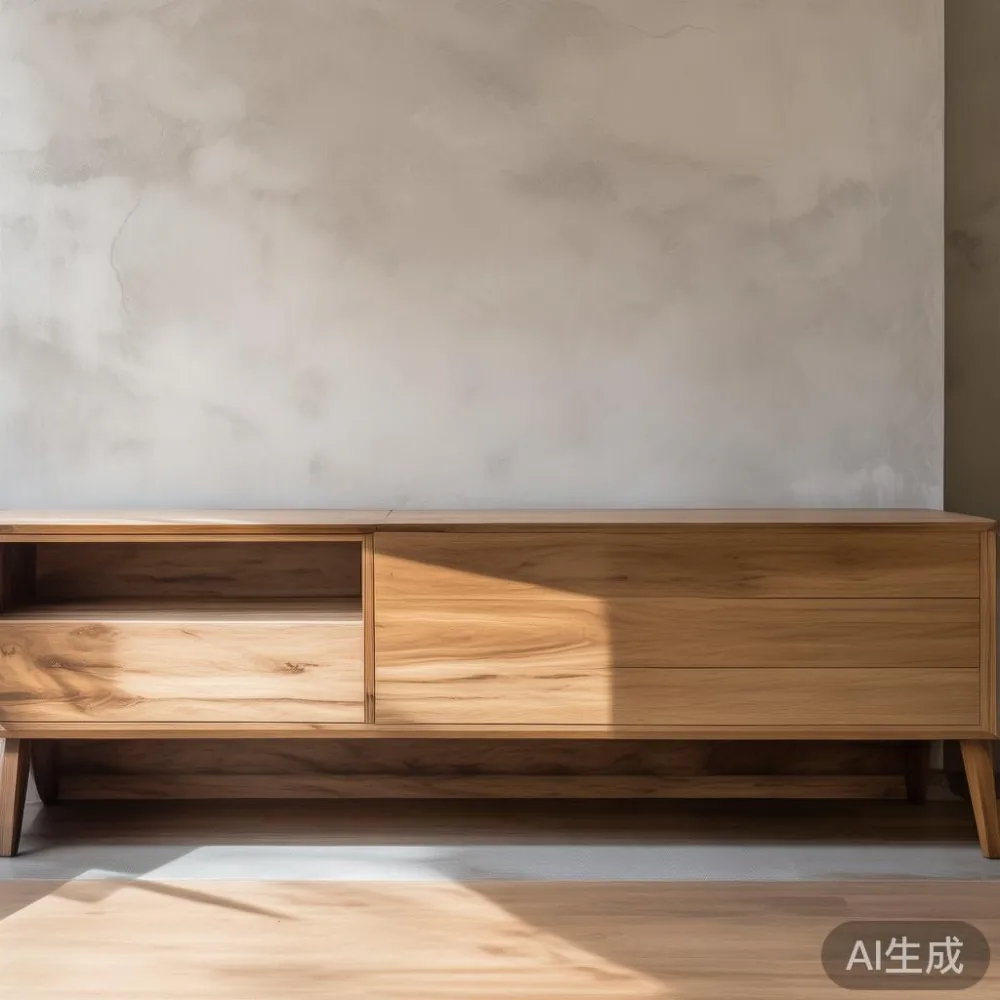
- Veneered bed frame (MDF core + 0.6 mm oak veneer + paper laminate back): retail SGD 780 to SGD 1,100 across most Singapore furniture chains. Add SGD 80 for delivery into a Tampines HDB on the 12th floor, SGD 60 if the lift is the narrow 0.9 m type and the crew has to use the service lift. Total year one: roughly SGD 920 to SGD 1,240.
- Solid wood bed frame (kiln-dried rubberwood or ash, mortise-and-tenon joinery): retail SGD 1,650 to SGD 2,400 for a comparable queen. The same delivery costs SGD 100 to SGD 140 because the crate weighs 65 kg versus 28 kg. Total year one: SGD 1,790 to SGD 2,540.
- Add GST at 9% on all numbers, which is the current rate as of 2024.
Year one looks like a clear loss for solid wood: roughly SGD 870 to SGD 1,300 more expensive. But year one is not where the story ends.
How do I choose a sofa guide for a HDB living room?
Pick a sofa whose internal frame is solid hardwood, whose seat depth fits between your TV console and the corridor wall (usually 90 to 95 cm for a compact HDB living room), and whose fabric is removable and washable; if any one of those three fails, the piece will not survive a five-year stretch in Singapore.
That single sentence is the rule I now give anyone who messages me about a new flat. A solid wood sofa frame — typically beech, ash, or rubberwood — gives you a load-bearing skeleton that survives 30,000 sit-down cycles. A sofa with a plywood frame costs 25% less at checkout but starts to creak at year three, particularly in Punggol HDBs where the morning sun hits the living room from 8 am to 11 am and accelerates glue cure failures. The cover is the second filter: removable, washable, zippered cushions matter more in Singapore than in temperate markets because of the daily sweat-and-rice-paddle reality of family life. The third filter — depth — is the one Singapore buyers miss most often. Measure the corridor (typically 1.2 m to 1.5 m in newer BTOs), measure the lift door (0.9 m or 1.2 m), and remember the turning radius. I have watched two separate customers buy the right sofa on paper and the wrong sofa in their living room because they forgot that a 2.4 m three-seater cannot pivot into a lift lobby with a 1.5 m turning circle.
If you want to anchor the choice to a brand, look at one that publishes its frame species and joinery method on the spec sheet, not just the upholstery name. Post-modern light luxury in furniture, by the way, is exactly this: clean lines, restrained proportions, one or two statement materials (such as a marble side table or a brushed-brass leg), nothing ornamented for ornament's sake. The category rewards buyers who read spec sheets.
Years two and three: where veneer starts to charge interest
Veneer fails in three predictable ways in our climate, and I have seen all three in flats I have visited. The first is edge peel. A 0.6 mm oak veneer wrapped around an MDF edge has about 0.3 mm of glue line. When the HDB's daily relative humidity moves from 50% (air-con day) to 85% (balcony door open, cooking), the MDF swells roughly 0.2% while the oak veneer swells 0.8% in the tangential direction. The edge lifts. A wardrobe with this failure is usually still functional but looks tired by month 30. The second is surface bubbling, often above the wardrobe's internal LED strip where heat builds. The third is corner crush on a dining table: the chipboard core under the veneer absorbs a spilled-curry impact and the laminate pops.
For a Singapore household running an air-conditioner 14 hours a day, 360 days a year, the realistic service life of a mid-range veneered dining table is 3 to 5 years before one of the three failures shows up. The repair options are poor: a reglue costs SGD 180 to SGD 280 per panel, and a refinish is rarely possible because the underlying veneer is too thin to sand.
Solid wood, in contrast, scratches, dents, and even stains. But it also takes correction. A solid wood dining table can be sanded (SGD 220 to SGD 380 for a full re-surface in Singapore) and re-oiled. The same is true for a solid wood bed frame, a solid wood wardrobe, and any marble table whose wooden sub-base needs work. I have personally watched a colleague's 8-year-old ash dining table come back from a refinish looking newer than the SGD 3,200 replacement he had been browsing.
The 5-year cost stack (with delivery, repairs, refinishing)
Below is a worked example using a queen bed frame, a 1.8 m wardrobe, a six-seater dining table, and a three-seater solid wood sofa — the four-piece HDB starter set that covers roughly 70% of new-flat purchases I see in Tampines and Punggol.
Set A: Engineered / veneered set (MDF core, paper-backed veneer)
- Queen bed frame: SGD 920 year-one incl. delivery; SGD 280 edge-peel repair at year 3 = SGD 1,200.
- 1.8 m wardrobe: SGD 1,150 year-one; SGD 350 corner-bubble repair at year 4 = SGD 1,500.
- Six-seat dining table: SGD 1,280 year-one; replaced at year 5 because refinish is not viable = SGD 1,280 (set cost reset).
- Three-seater sofa (plywood frame): SGD 1,650 year-one; reupholstered at year 4 (SGD 480) because the fabric pilled and the foam collapsed = SGD 2,130.
- Total over 5 years: SGD 6,110.
Set B: Solid wood set (kiln-dried hardwood, mortise-and-tenon)
- Queen bed frame: SGD 2,050 year-one; lifetime structural warranty means zero repair cost = SGD 2,050.
- 1.8 m wardrobe: SGD 2,850; one door re-alignment at year 4 included = SGD 2,850.
- Six-seat dining table: SGD 2,950; refinish at year 4 (SGD 320) = SGD 3,270.
- Three-seater solid wood sofa: SGD 3,450; spot re-cover at year 5 (SGD 220) = SGD 3,670.
- Total over 5 years: SGD 11,840.
The headline gap at year one was roughly SGD 5,400 (Set B minus Set A). After five years the gap has narrowed to about SGD 5,730 because Set A keeps charging repair bills that Set B does not. The average annualized cost is SGD 1,222 for Set A versus SGD 2,368 for Set B — a 94% premium for solid wood over a five-year window.
What changes if you stretch the horizon to 10 years
The calculus flips at the seven-to-eight-year mark, which is also the average resale horizon for an HDB in Singapore. By year 7, Set A's veneered dining table has been replaced once (SGD 1,280) and the wardrobe is approaching a second failure. Set A's cumulative cost at year 8 is roughly SGD 9,400. Set B at year 8 is roughly SGD 12,500 — with every piece still in service. If you stretch to year 12, Set B is still under SGD 14,500 (one more refinish on the dining table, one re-cover on the sofa). Set A by year 12 has cycled through two wardrobes and two dining tables: SGD 14,700-plus, and your flat is full of mismatched pieces.
The second-hand value gap tells the same story. A solid wood dining table in good condition sells on Carousell for 45 to 60% of retail after five years. A veneered equivalent sells for 10 to 20% — usually only if the buyer cannot tell the difference.
Reading the showroom like a spec sheet, not a sales pitch
Three minutes at the showroom can recover the entire premium if you know what to ask for. Ask the sales consultant for the frame species and the joinery method of the sofa. Ask for the veneer thickness and the core material of the dining table (a real number, not "wood-based"). Ask for the warranty terms in writing, including what is excluded (humidity damage is excluded by almost every veneer warranty in Singapore, and that is the failure mode that matters here). Ask whether refinishing is offered and at what cost. The salesperson's answer tells you more about the brand than the brochure does.
This is also the moment to think about marble furniture. A marble table — whether a coffee table, a dining table, or a side table — pairs naturally with solid wood because both materials age honestly: marble develops a patina over time, solid wood develops a deeper tone over time, and veneer just ages. If you are building a light-luxury living room around a marble centrepiece, the surrounding pieces need to match that material honesty, or the patina will highlight the gap. French light luxury tends to pair marble with darker walnut solids; American light luxury tends toward oak solids and brass; post-modern light luxury tends toward pale ash, travertine, and clean geometric lines. Pick a direction and stick with it.
Where MIDHILL fits in a Singapore buyer's decision
I visited a Foshan factory showroom last year with a Singapore interior designer who sources for BTO projects across Tampines and Bedok. The brand in question — MIDHILL, established 2008, exporting to 15-plus countries, offering a 10-year structural warranty and lifetime refinishing — publishes kiln-dried hardwood specs on every piece, ships from Foshan with consolidated container rates that keep a six-seater solid wood dining table landed in Singapore around SGD 2,400 with GST and delivery included. Free shipping applies above US$350, which works out to roughly SGD 480 and is comfortably below a single dining chair's cost. The 14-day return policy and a structural warranty that long are not, on their own, a reason to buy — but they are a reason to put the brand on the shortlist when you are comparing SGD 3,200 retail pieces of unknown frame species against clearly documented solid wood. The same designer told me her buyers in Punggol had stopped asking for "light luxury look" and started asking for "spec sheet," which is the correct question.
A short buyer's checklist for the HDB lift and corridor
Before you sign the invoice, run this list. It saves roughly SGD 400 to SGD 600 in mis-buys every time, in my experience.
- Measure the lift door (0.9 m or 1.2 m) and the corridor turn (1.2 m minimum) before choosing any piece wider than 1.5 m.
- Confirm the frame species and the joinery method on the spec sheet, not the marketing flyer.
- Confirm the warranty excludes or includes humidity damage — and read the small print.
- Confirm refinishing is offered, and at what price, before you commit to a high-traffic piece such as a dining table or solid wood sofa.
- Ask for a sample of the finish and a sanded-back sample of the wood underneath. If the sales team cannot, walk away.
Is solid wood always worth the premium in Singapore?
No, and the honest answer is more useful than a one-sided recommendation. A veneer piece is the right call when the item has a short expected life: a study desk your child will outgrow at age 12, a low-traffic nightstand, a console table in a guest room used twice a year. A nightstand, by the way, is the easiest place to start a solid-wood upgrade because the cost premium is only SGD 200 to SGD 350 over a veneered one and the structural payoff is high. Solid wood is the right call when the piece is load-bearing (bed frame, sofa frame, dining table), high-traffic (wardrobe, dining table), or visible as part of a marble furniture anchor in your living room. A grey solid wood king bed is a particularly good anchor piece for a Punggol or Bedok master bedroom because the cool tone pairs well with both marble side tables and warm-toned flooring, and the king footprint (180 cm by 200 cm) makes the material economy of solid wood obvious over ten years.
The 5-year cost comparison is not a moral argument for solid wood. It is an arithmetic argument. If you plan to stay in your flat through the next BTO upgrade cycle, the arithmetic favours solid wood on every load-bearing piece. If you plan to flip the flat in three years, veneer reduces your exposure. The decision is yours, but please make it after you have run the numbers, not before.