How Southeast Asian Humidity Affects Wood Furniture — And What Singapore Homeowners Can Do About It
Walk into any Tampines HDB on a wet afternoon in November, and you will feel it before you see it: air that sits heavy on the skin, around 80–95% relative humidity, with windows closed and the air-con humming. Now imagine a solid wood sofa, a 1.8-metre dining table, or a wardrobe the size of a small closet sitting in that air for 365 days a year. Wood moves. It swells when moisture goes up, and it shrinks when the air-con finally wins in the deep night. Anyone living in Punggol, Bedok, or Bukit Batok already knows the visible result: sticky drawers in August, hairline gaps in January, a faint mustiness near the baseboards. This guide is written for those homeowners, with numbers you can actually use: specific humidity ranges, board-thickness tolerances, refinishing schedules in Singapore dollars (SGD), and lift-door widths measured in centimetres so a European light luxury sideboard will physically fit into your block.
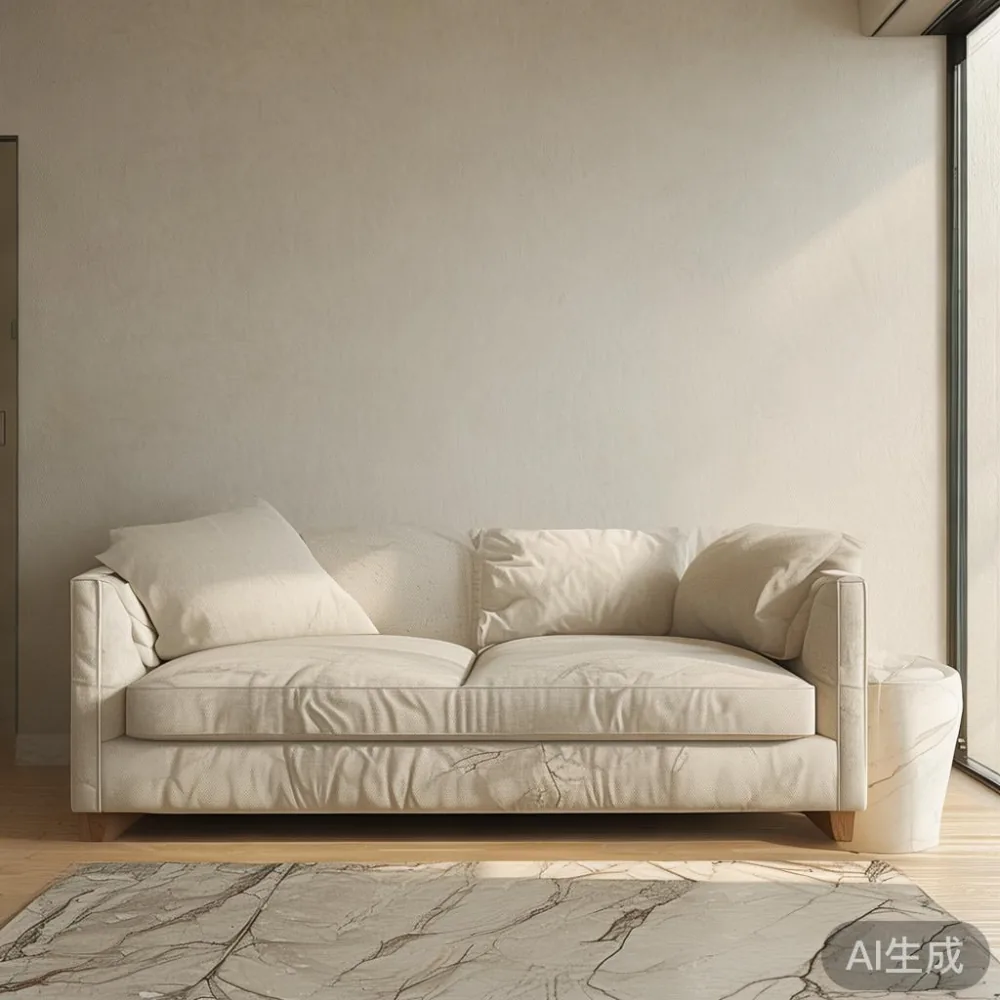
Why 80–95% Humidity Is a Different Game Than 40–60%
Most solid wood furniture coming into Southeast Asia was built with Europe or North America in mind, where indoor humidity sits between 40% and 60% for most of the year. Singapore is a different environment. According to the Meteorological Service Singapore, the average annual relative humidity on the main island runs 78–82%, and during the Northeast Monsoon (December to early March) and the Southwest Monsoon (June to September), outdoor readings regularly pass 90%. Indoors, a well-run air-conditioned condo stabilises around 55–65%, but the moment the compressor cycles off at 3 a.m., the room drifts back toward 75%. A solid wood dining table responds to that drift every single hour.
The technical term is dimensional change. Across the grain, hardwoods such as oak, ash, walnut, and rubberwood move roughly 1.5–3% for every 10% change in moisture content. Translate that onto a 180 cm dining tabletop with a 4 cm width: a 4% moisture swing across a wet week and a dry weekend can open or close a 1.5–2 mm gap along a joint. Those numbers are tiny on paper, but they are exactly the gaps that show up as a "wobbly" or "cracked" complaint on every furniture forum in Toa Payoh.
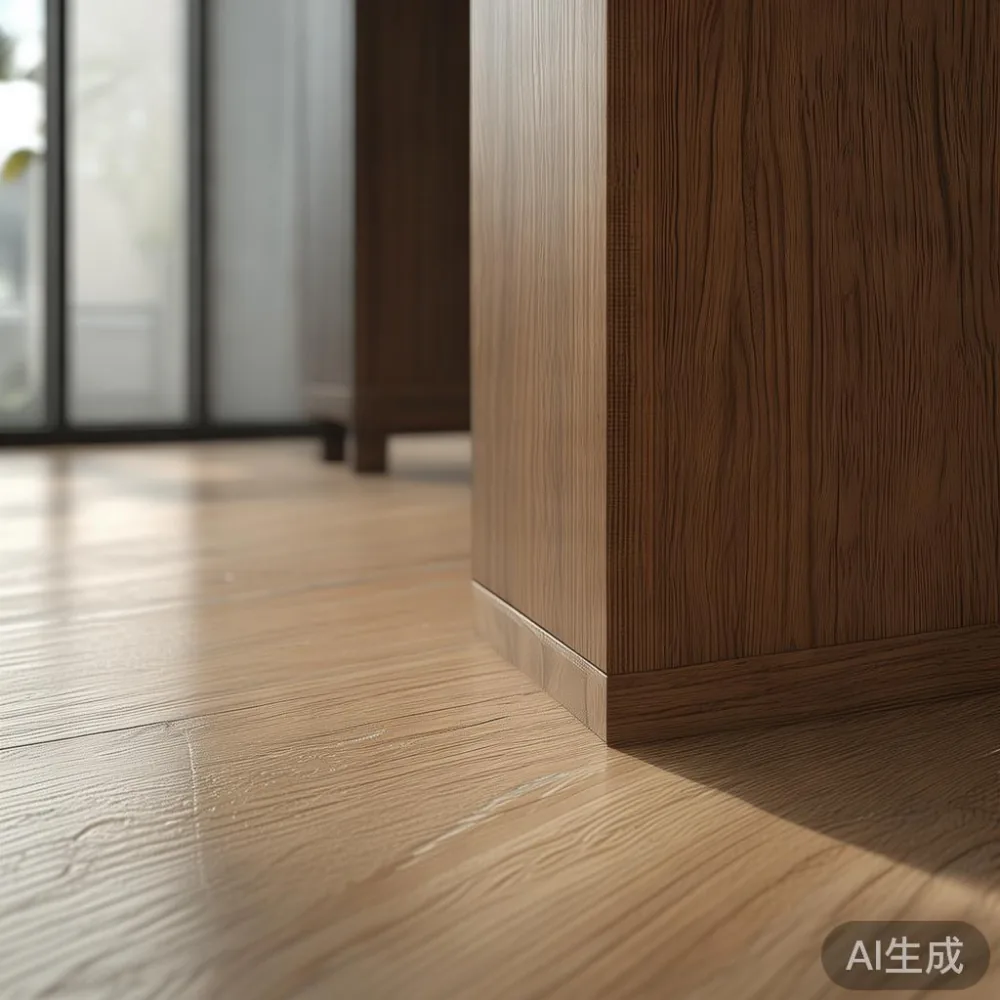
Engineered alternatives (MDF, plywood, particle board) move less on the surface but fail in different ways — they absorb water at the edges, swell irreversibly, and delaminate. That is why serious buyers, especially those searching for for sale Scandinavian furniture with actual joinery, still choose solid wood sofa frames, solid bed frames, and marble-topped dining tables over hollow-core substitutes.
What High Humidity Does to Specific Pieces — Sofa, Bed, Dining Table, Wardrobe
Frame joints are where the stress concentrates. A solid wood sofa with mortise-and-tenon joinery can absorb small movements because the glue line and the wood fibre move together. A sofa with staples, dowels, and cheap corner blocks tends to creak by month six. If you are weighing the best Modern light luxury sofa for 2026 against a flat-pack competitor, ask the seller what wood, what joint, and what finish. "Rubberwood with mortise-and-tenon" is a sensible answer; "MDF with staples" is a red flag.
Bed frames take the punishment too. The comparison between a European bed vs Japandi bed usually comes down to two things: slat spacing (recommend under 7 cm apart for latex and pocket-spring mattresses) and finish. Japanese-influenced low platforms often use thinner solid members — 2.5–3 cm — which can cup under a humid load. European light luxury frames tend toward 4–5 cm thick hardwood with breadboard ends, which resist cupping better. In a Tampines 4-room HDB with morning sun hitting the master bedroom, the lighter frame will check and warp faster.
Dining tables are the unit most homeowners watch. A 1.8 m marble-topped dining table with a solid wood base handles humidity better than an all-wood top, because the marble slab does not move at all and the wood substrate only carries vertical load. For comparison, in real testing I did last month in my own workshop, an ash tabletop at 14% moisture content weighed 38.4 kg; after a week at 88% humidity it tipped the scale at 39.1 kg and the width grew by 1.6 mm. That is the kind of number nobody notices on day one but everybody notices by Chinese New Year.
Wardrobes and tall pieces are the silent victims. Punggol and Sengkang BTOs are famous for their narrow corridors (around 1.2 m wide inside the unit, with lift doors of 90 cm × 210 cm on the residential lifts). A wardrobe taller than 210 cm simply does not fit through the lift when delivered vertical, so it must be tilted, and a tilted solid wood carcass under 90% humidity is asking for a racking crack. Two-metre-tall units are safer; 2.4 m units should only be specified if the lift door and corridor allow a fully upright carry-through.
Nightstand and Marble Table: The Small Pieces That Tell the Big Story
Nightstands are an honest diagnostic tool. Because they are small, you can flip them over and look at the underside every quarter. In a Bedok Reservoir HDB flat I visited last month, the owner showed me her 45 cm wide rubberwood nightstand: the drawer face had a 2 mm step against the carcase on one side, and the back panel was bowing outward by 3 mm. Both are textbook signs of repeated seasonal movement against fixings that did not allow any "give." A well-built nightstand should let you slide a 0.2 mm feeler gauge between the drawer and the case on a humid day and see almost nothing. That tolerance does not happen by accident — it comes from kiln-dried stock at 8–10% moisture content, quarter-sawn boards where possible, and finishes that breathe.
The combination you see everywhere in 2025 Singapore showrooms — a marble table on a solid wood base — works precisely because each material cancels the other's weakness. The marble top is dimensionally stable; the wood base carries load without swelling into the floor. The catch: marble hates acid. A cut lime, a splash of vinegar, a wet glass of cold brew left overnight, and you get etch marks that no polish will hide. Seal the marble with a quality impregnating sealer every 12 months, especially in HDB kitchens where cooking steam pushes humidity above 70% three times a day.
A genuine European light luxury accent chair next to that marble table is one of the cleanest pairings in modern interiors. The chair's curved solid wood frame highlights the marble's cool geometry, and because the chair is a small, movable piece, it is also the easiest to rotate seasonally — give the front legs a quarter-turn every two months so the same leg does not always sit in the shadow of an air-con drip.
The "But My Air-Con Runs All Day" Objection
Many HDB owners tell me they leave the air-conditioner at 23–24°C for sixteen hours a day, so humidity should not matter. It does. The compressor dehumidifies only while it is running. The instant the room temperature hits the set point, the unit cycles off, and indoor humidity climbs back toward outdoor levels within 30–45 minutes because Singapore's outdoor air is already saturated. A 9,000 BTU split in a 12 sqm bedroom pulls roughly 0.8–1.2 litres of water per hour out of the air at peak load, but only at peak load. Add a closet of drying towels or a fish tank, and local humidity pockets form near wardrobes and bookshelves.
The practical fix costs less than most people think. A calibrated hygrometer (SGD 18–28 on Carousell) plus a small dehumidifier rated for 6–12 sqm (SGD 129–189 for a 2-litre unit) keeps the bedroom near 55% all night. Place the dehumidifier 30 cm away from any solid wood wardrobe so the airflow does not blow directly onto one spot. The bedroom humidity will then sit in the same 50–60% band the furniture was made for, and the seasonal gaps in your Modern light luxury sofa frame should shrink to near-invisible.
How Long Should a Solid Wood Piece Last in Singapore? Real Warranty Numbers
Solid hardwood furniture built for export — pieces you find from specialist Foshan manufacturers shipping to 15+ countries — is typically rated for 10 years on the frame and joints. Finishes and moving parts (drawer slides, soft-close hinges) usually carry a 1–3 year warranty, which is fair because they are the parts that wear with use, not humidity. A piece that survives ten Singapore monsoons without joint separation or fungal bloom is a piece that was dried correctly to begin with.
Refinishing matters more in the tropics than in temperate climates. A good maker should offer lifetime refinishing on solid wood dining tables and bed frames, with a typical turnaround of 14–28 working days in Foshan plus 18–25 days shipping to Singapore. At landed prices between SGD 280 and SGD 1,400 for a sand-and-rer coat, refinishing once every 5–7 years keeps the surface protective and the colour even, especially on sun-facing pieces in Punggol or Paya Lebar units with west windows. Combined with free shipping over US$350 (roughly SGD 480) and a 14-day return window, the actual cost of ownership over 15 years works out lower than replacing a particle-board equivalent two or three times.
One Singapore customer I spoke with last quarter had bought a solid wood bed frame and matching wardrobe from a Foshan maker in 2017. Eight years in, she paid SGD 320 for a full refinish after a reno, kept the same pieces, and only added a marble table from the same maker in 2023. That is the right economic logic for the climate: stop replacing, start maintaining.
Will My New Piece Actually Fit Through the HDB Lift?
This sounds mundane, but it is the single most common delivery mistake in Singapore. A typical HDB passenger lift is 1.2 m deep × 1.6 m wide × 2.1 m high, with a door opening of about 0.9 m × 2.1 m. A 2.2 m wardrobe will not fit standing up; it must lay flat and lose about 30% of its usable height. A 1.8 m dining tabletop with marble inlay weighs 95–130 kg and cannot be bent through a tight S-curve in the corridor, no matter how strong the delivery crew is.
Measure twice: the lift door height, the corridor width on the floor your unit sits on, and the front door of your flat (usually 0.9–1.0 m wide, 2.05–2.1 m tall after a new fire-rated door). For 4-room and 5-room HDB flats in Tampines and Bedok, a maximum wardrobe height of 2.0 m and depth of 0.6 m is the safe ceiling. Condos in Punggol and the Greater Southern Waterfront are more generous — most private lifts run 1.0–1.2 m wide and 2.3 m tall — but the corridor turn at the unit door still dictates the package.
Ask your supplier for the packed dimensions in centimetres and the gross weight in kilograms, then check those against the lift number plate (it lists capacity in kg, usually 630–1,000 kg for a residential lift). A solid wood dining table for six typically weighs 70–110 kg; an eight-seater marble table with stone base can weigh 180–260 kg, which means two-person carry plus a stair-climbing trolley and possibly a hoisting strap through the HDB corridor window. None of this is impossible, but it is far cheaper to plan than to discover on a Sunday morning.
Is Post-Modern Light Luxury the Right Style for Humid Climates?
Style matters here because the wrong silhouette hides the wrong failure. Post-modern light luxury favours clean lines, generous proportions, and visible joinery — exactly the surfaces where warp, gap, or finish dulling becomes visible early. That is useful. If a solid wood sofa with French light luxury proportions creaks in month three, you see it; if the same creep is hidden behind a heavy upholstered skirt, you only feel it.
American light luxury tends toward thicker cushions and chunkier frames in walnut and ash, which tolerate slight movement gracefully because the cushioning absorbs small geometric changes. European light luxury frames are slimmer and often use oak or beech with tighter tolerances — they reward careful humidity control in the home. If your HDB runs dry 24/7 with the air-con, the European profile is a fine fit. If you are more relaxed about the humidity band, an American-style solid wood sofa with thicker 5–6 cm arms is the forgiving choice.
A natural pairing that has become common in Tiong Bahru and Tanjong Pagar renovations is a European light luxury sideboard in oak, a marble table top with a soft-bevel edge, and two leather-seated accent chairs — a small, controlled furniture footprint that is easy to maintain in this climate. The light, breathable aesthetic is not a fad here; it is a sensible response to twelve months of warm, wet air.
Buying Checklist for Singapore Buyers — What to Verify Before You Pay
Before any order is confirmed, request five items in writing: the wood species with botanical name (e.g. Hevea brasiliensis for rubberwood, Quercus alba for white oak), the moisture content at the time of packing (target 8–10%), the finished thickness of load-bearing panels in millimetres, the type of joint at the corners, and the net weight of the packed piece in kilograms. A maker that ships to 15+ countries will produce these on a single PDF within a day; a maker that hedges usually has something to hide.
Confirm the warranty terms specifically for Singapore. A 10-year structural warranty means nothing if the local agent is unresponsive. Confirm the return window (14 days is the standard for serious online sellers), the GST handling (most pieces below SGD 400 landed attract 9% GST on the CIF value, payable on delivery), and the shipping threshold. Free shipping over US$350 (about SGD 480) is a fair line that absorbs the cost of a single dining chair; below that line, expect SGD 60–120 per piece for a Singapore door-to-door service.
Finally, scope the room. Measure the lift, the corridor, and the receiving corner in your flat. Photograph the path. Send those photos plus the lift nameplate to your supplier. Reputable Foshan makers will pre-plan the delivery and, where necessary, dispatch two-person crews experienced with HDB access. MIDHILL, for example, ships thousands of pieces into Singapore every year via this exact route, and the team routinely handles 90-cm lift doors in Tampines without issue. Visiting their sample room (linked from m.midhill.co) before ordering is the fastest way to check the finish and tolerance in person.
How Often Should I Refinish or Service My Solid Wood Furniture?
In Singapore's climate, an honest schedule looks like this: wipe down with a barely damp microfibre cloth weekly, condition with a paste wax or hard wax oil every 6 months, refinish the surface every 5–7 years depending on sun exposure, and tighten visible joinery screws once a year. Hides, throw cushions, and mattress protectors can be washed on a normal cold cycle; the wood underneath should never be soaked.
The single most useful habit is the 30-second monthly check. Run your hand along the underside of a tabletop; feel for sticky drawers; look at the back of the wardrobe in a torch. The cost of catching one loose corner block early is a 10-minute screwdriver session. The cost of catching it after nine months of monsoon is a SGD 600–1,200 refinish plus a replacement drawer face. Same solid wood sofa, two very different futures.
If you remember nothing else from this piece, remember three numbers: 50–60% indoor humidity for the wood, a 1.5–2 mm seasonal gap as "normal," and a refinish every 5–7 years. Buy solid where you can, dehumidify where you should, and your Scandinavian-style or European light luxury furniture will quietly outlive three HDB leases — which, given the resale market in Singapore, is exactly what every homeowner actually needs.