How to Match Furniture to a Warm Minimal Interior: A Singapore Guide with Marble Accents
Last month I visited a 92 sqm four-room HDB flat in Tampines with my colleague, who had just taken the keys. The previous owners left beige ceramic floor tiles, a galley kitchen with a 90 cm corridor, and walls painted in a flat off-white that picked up a slight yellow cast by 4pm. He wanted warm minimal — not the cold Scandinavian catalog look, not the heavy Teo Heng renovation style — but something that breathed, held sunlight, and still felt calm on a 33°C afternoon with no air-conditioning. We spent a Saturday afternoon at a furniture showroom in Sungei Kadut and another at a factory outlet in Balestier. What surprised both of us was how much the answer came down to material: a solid wood bed frame with a soft matte finish, a small marble table in the living room, and a wardrobe in light oak with handleless push-open doors. He ordered two pieces that day, and the rest we figured out together over the next two weeks. Everything below comes from that visit, plus fifteen years of working with Singapore homeowners who own flats in Bedok, Punggol, Sengkang, and the older blocks around Tiong Bahru.
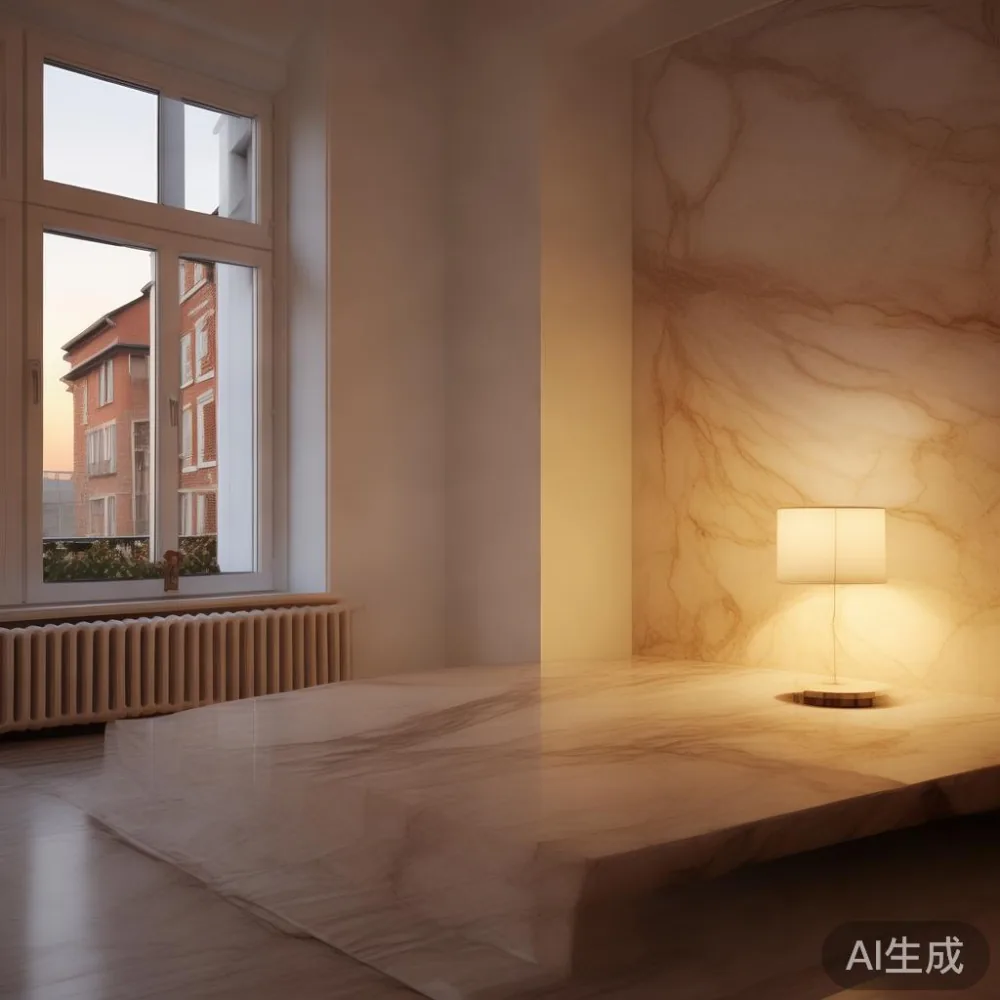
The term "warm minimal" gets thrown around a lot, but in practice it usually means three things working together: light-colored walls (warm white, never blue-white), natural materials with visible grain, and very few decorative objects. In Singapore's humidity — average 82% year-round — the wrong wood choice can warp within two monsoon seasons. The wrong marble can stain from kopi spills on Day 3. I have seen both. A warm minimal interior is not about buying less; it is about buying pieces that earn their floor space every single day. And for many Singapore HDB owners, the pieces that do the heaviest lifting are the ones that anchor a room: the bed frame you wake up to, the dining table where three generations eat on Sunday, the wardrobe that quietly stores everything. Below is the framework my colleague and I now use for every Tampines and Punggol project, with the numbers that actually matter.
Start With the Floor Plan, Not the Pinterest Board
Before you fall in love with a marble coffee table on Instagram, measure the room. In a standard Punggol BTO four-room flat, the master bedroom is usually 3.6 m × 3.2 m, the living room is around 4.2 m × 3.5 m, and the dining area is sometimes a 1.8 m strip along the kitchen. A queen-size solid wood bed frame at 1.6 m × 2.0 m leaves you roughly 90 cm of walking space on each side — workable, but only if your nightstand is narrow. Anything wider than 45 cm will force you to shuffle sideways to open the wardrobe.
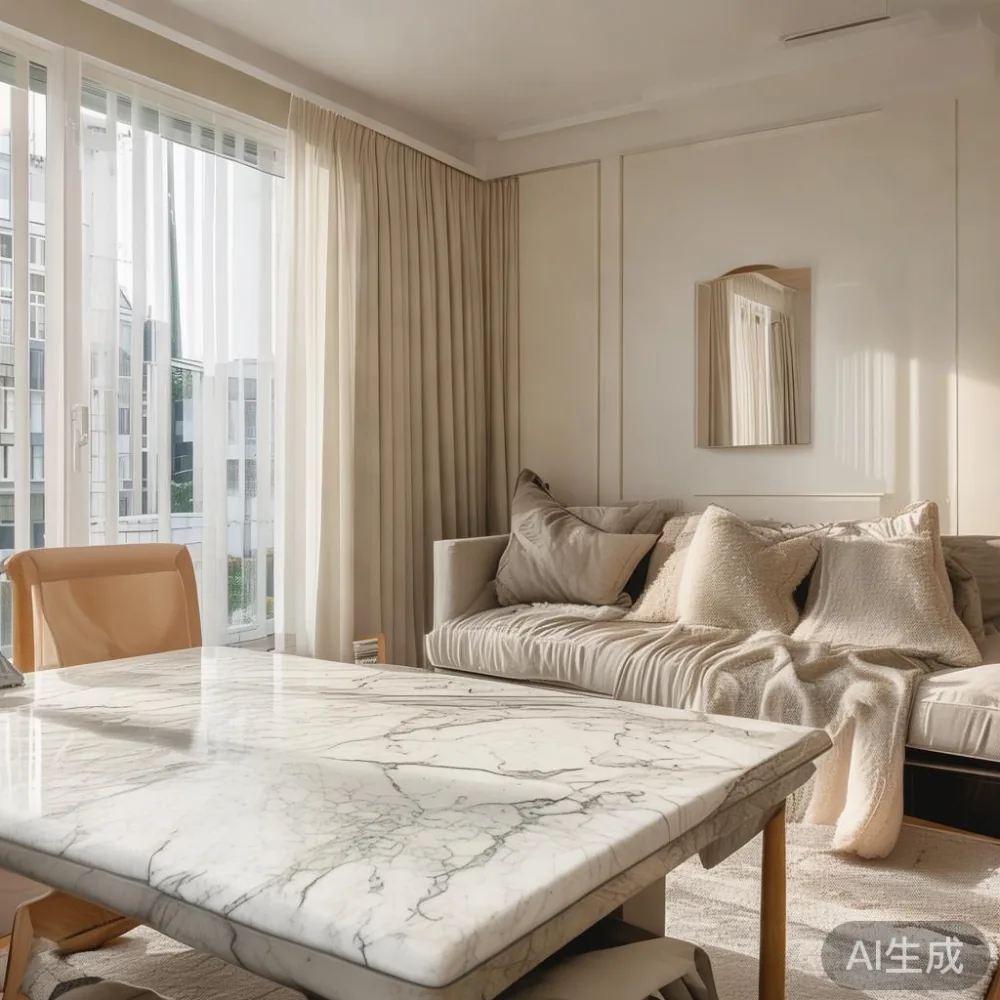
For the dining area, a 1.4 m solid wood dining table seats four comfortably and fits a typical HDB corridor during delivery. If you live on the 12th floor in Bedok and the lift door is 80 cm wide, any table longer than 1.8 m will need to be carried up the service staircase, which adds about SGD 120 to your delivery fee with most movers. Ask before you buy. Wardrobes are the trickiest: a 2.0 m sliding-door wardrobe will not fit through a 90 cm corridor turn unless the panels come apart. We learned this the hard way with my colleague's order — the supplier had to re-cut one panel on site, which delayed the install by a day.
Pick One Marble Furniture Piece, Not Five
Marble furniture is the heartbeat of a warm minimal interior, but only if you let it speak. One piece, well-chosen, does more than five pieces fighting for attention. In the Tampines flat, we landed on a 90 cm round marble side table in Calacatta — about 12 kg of stone on a brushed brass base, around SGD 1,180 from a local supplier. Placed next to the sofa, it catches the afternoon sun and gives the room a single point of visual weight. That is the whole job.
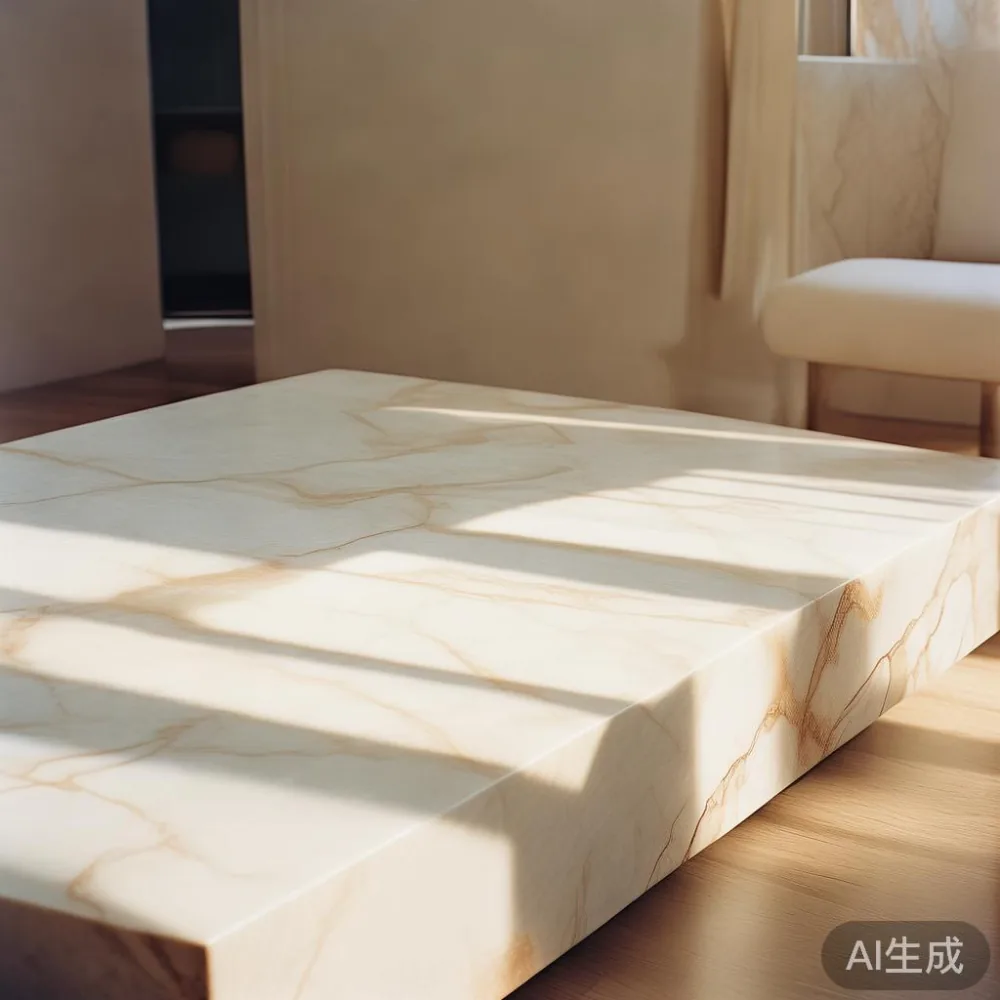
What you want to avoid is what I call the "hotel lobby trap" — buying a marble dining table, a marble coffee table, a marble console, and a marble TV console because they were on sale. In a 92 sqm flat, four marble surfaces read as cold, not warm. Warm minimal is about restraint. Stick to one or two pieces, and let wood do the rest. The solid wood bed frame, the solid wood dining table, and the nightstand should all be in a similar tone — light oak, ash, or natural beech — so the marble accent feels like punctuation, not a foreign language.
For Singapore specifically, pick marble with a honed or leathered finish, not polished. Polished Carrara shows every kopi-O ring, every fingerprint, every splash from steamy fish soup. Honed marble hides the small marks and ages into a softer patina. Seal it once a year with a dry-wax sealant — costs around SGD 28 for a tin and takes 20 minutes. I do mine every Chinese New Year, which is easy to remember.
What is the difference between French provincial bed frame and modern furniture?
A French provincial bed frame is built in 18th-century French countryside tradition, with cabriole legs, hand-carved details, often painted in cream or distressed ivory, and usually paired with tufted headboards and ornate trims, while modern furniture favors straight lines, exposed joinery, lower profiles, and matte natural finishes, so the two styles sit at opposite ends of the design spectrum and are rarely mixed in one room. In a warm minimal interior, you borrow only the softness of French provincial — the curved lines, the sense of weight — and leave the carvings behind. That is why French light luxury works as a positioning term: it keeps the romance, drops the fuss. A modern light-luxury bed frame might have a gently curved headboard, tapered solid wood legs, and a single line of stitching — none of the rosettes or scrolls.
My colleague almost bought a French provincial dresser for SGD 2,400 in a Balestier shop. Pretty piece, but in his 3.6 m × 3.2 m bedroom it would have eaten the entire wall and left no breathing room. He switched to a 1.8 m modern wardrobe in light oak with push-open doors and a slim brass handle — SGD 1,650, including installation. The room now reads as warm minimal with a quiet French accent, which is exactly what he wanted.
Get the Wood Tone and the Wall Tone to Agree
The single most common mistake I see in Singapore HDB interiors is the wall-wood mismatch. A warm white wall (something like Nippon Paint 9016 or Dulux 30YY 83/026) pairs with light oak, ash, or beech. A cool white wall pairs with grey-toned woods like smoked ash or walnut. If you mix them — warm wall with grey wood, or cool wall with orange beech — the room never feels settled. My colleague's flat had cool-white walls from the previous owner. We repainted two of the rooms with a warm white at SGD 14 per litre, two coats, which added about SGD 280 to the project but changed everything.
For solid wood pieces, ask about the lacquer. High-gloss lacquer reflects ceiling lights and reads as modern and cold; matte or open-pore lacquer lets the grain breathe and reads as warm. Most good suppliers will let you see a sample panel under both finishes. Bring a piece home for 24 hours and look at it at noon and at 7pm — the warm interior lights of an HDB flat shift the color significantly after dark.
A note on solid wood versus veneer: in Singapore humidity, solid wood moves. A solid wood bed frame made of 4 cm-thick ash will expand and contract by 2-3 mm across the year. That is normal. What you do not want is a thin 0.6 mm veneer over MDF, which peels at the corners within two years. Check the edges and the back of every panel. If you can see the layers, it is veneer. If the grain runs continuously, it is solid.
Plan for the Lift, the Corridor, and the Lift-Up Day
Every Singapore furniture delivery has three choke points: the ground-floor loading bay, the lift, and the corridor outside your flat door. Older HDB blocks in Bedok and Ang Mo Kio often have lifts that are 1.2 m deep × 1.5 m wide with doors that are 80 cm. Newer BTOs in Punggol have larger lifts, 1.5 m × 1.8 m, with 90 cm doors. A solid wood dining table longer than 1.6 m usually will not fit the older lifts. A wardrobe taller than 2.0 m will not clear the corridor ceiling if the corridor is 2.3 m high. Measure first.
Delivery fees in Singapore vary widely. For a single solid wood bed frame from a local supplier, expect SGD 60-120 for standard delivery, free above SGD 350 for most showrooms. For a full living-dining-bedroom set, expect SGD 250-450 depending on the floor. Above the 15th floor, some movers add an SGD 80 high-floor surcharge. Saturday deliveries cost 20% more. If you can take a Wednesday or Thursday slot, you save around SGD 40-60 and the lift is usually empty.
Installation is its own line item. A wardrobe typically costs SGD 180-280 to install, including wall anchoring. A dining table is usually self-assembly at no charge, but the legs arrive in a separate box and you will need a power drill. I tell every Tampines client to budget an extra 8-10% of the furniture total for delivery, install, and small accessories like felt pads and wall hooks. For a SGD 6,000 furniture set, that is roughly SGD 540-600 of "extra" — not optional, just hidden in the plan.
Care, Refinishing, and the 10-Year Question
Singapore humidity is brutal on wood. A solid wood bed frame that is well-made should last 15-20 years with basic care: wipe with a dry microfiber cloth weekly, polish with a beeswax-based product every three months, keep the room between 22-28°C and 50-70% humidity if you run a dehumidifier. The dehumidifier matters more than people think. Running a small 12-litre unit in the bedroom four hours a day during the December and June monsoon seasons adds about SGD 18 per month to your electricity bill and roughly doubles the life of the wood.
Most quality solid wood furniture in Singapore now comes with a 10-year structural warranty against frame cracking, joint failure, and major warping. Surface scratches, water marks, and sun fading are usually not covered. Ask to see the warranty card before you pay. If the seller cannot produce a written warranty, walk away. A good supplier — and I have seen this from MIDHILL's Foshan factory floor — will also offer lifetime refinishing for an SGD 80-150 fee per piece, which means they sand and re-lacquer the piece every 8-10 years. That is cheaper than buying new and keeps the wood out of the landfill.
What About GST, 14-Day Returns, and Hidden Costs?
All furniture sold in Singapore carries 9% GST, shown as a separate line on your invoice. For a SGD 5,000 set, that is SGD 450, included in the displayed price at most retailers. Some cash-only small workshops quote without GST to look cheaper — ask. Reputable suppliers register GST and give you a tax invoice, which matters if you are furnishing a rental property and claiming business expenses.
Returns: every credible Singapore furniture seller offers a 14-day return window for pieces that arrive damaged or significantly not as described. Custom-made pieces — a wardrobe cut to a specific alcove, a dining table in a non-standard length — are usually non-returnable unless defective. Read the return policy before you customize. Color variation between showroom sample and delivered piece is normal for solid wood and usually not grounds for return. Cracked marble, chipped lacquer, and structural wobble are grounds for return or replacement.
Hidden costs I have seen over the years: disposal of old furniture (SGD 80-150 per item), wall reinforcement for wall-mounted wardrobes (SGD 120-200), custom-cut back panels for non-standard walls (SGD 60-120 per panel), and felt floor protectors for every chair leg (SGD 25 for a pack of 50). Add these in early or you will be surprised at the cashier.
Building the Set: What to Buy First and What to Wait On
If you are furnishing a whole HDB flat on a budget, the order I recommend is: bed frame first, then dining table, then wardrobe, then nightstands, then the marble accent piece. The bed is non-negotiable. The dining table is daily-use. The wardrobe is a long-term fixture. Nightstands can wait one or two months. The marble table or marble console is the finishing touch — buy it after you have lived in the space for at least six weeks, so you know where the eye actually rests.
For a typical 92 sqm HDB in Tampines or Punggol, a complete warm-minimal set in solid wood plus one marble accent lands at roughly SGD 7,500-11,000 before GST. A queen-size solid wood bed frame: SGD 1,400-2,200. A 1.4 m dining table with four chairs: SGD 2,000-3,200. A 2.0 m wardrobe: SGD 1,800-2,800. Two nightstands: SGD 500-800. The marble side table or marble dining-table alternative: SGD 900-1,800. Add delivery (SGD 250-450), installation (SGD 360-560), and accessories (SGD 150-250), and you land around SGD 8,800-13,000 all-in. Yes, you can do it for less with veneer and engineered wood, but you will replace it in 4-6 years instead of 15.
One last piece of practical advice. If you are buying solid wood furniture from a Foshan or overseas factory — and many Singapore retailers source from there — ask specifically about the Nordic solid wood missing parts policy. A reliable supplier will ship replacement dowels, slats, and small hardware within 7-10 working days at no charge when the occasional component goes astray in the container. It is a small detail, but it tells you a lot about how the supplier handles problems after payment clears. MIDHILL, for example, includes a complete spare-parts kit in every shipment and a 10-year structural promise, which is one reason they have shipped to 15+ countries since 2008 without needing a showroom on every street corner.
Warm minimal is not about stripping your home down to nothing. It is about choosing pieces that hold their own without shouting — a solid wood bed frame that ages into honey color, a dining table that survives twenty weekends of steamboat, a single marble table that catches the light at 5pm. Get the wood and the wall to agree. Measure the lift. Plan for the monsoon. Buy one marble piece, not five. The rest is just waiting for the right delivery slot.