How to Style a Small Singapore Apartment Without Making It Feel Crowded
Last month I visited a 65-square-metre three-room HDB flat in Tampines with my colleague Cheryl, who had just taken over the tenancy. The previous tenant left behind a bulky L-shaped leather sectional, a 1.8-metre six-seater dining table, and two tall wardrobes pushed against the only window. The corridor outside the unit measured 1.2 metres from wall to wall, the lift cab was 1.4 metres deep, and the service yard door opened directly into the kitchen. Within forty-eight hours, Cheryl and I cleared 11 pieces of furniture out of the flat, brought in six new ones, and the same apartment felt 30 percent larger to walk through. None of it involved tearing down a wall or hiring an interior designer. Most of it involved replacing the wrong pieces with the right ones, and a surprising number of those right pieces happened to be solid wood or marble furniture, finished in a French light luxury palette of warm cream, soft walnut, and pale travertine.

This guide is written for anyone living in a Singapore HDB flat, a Punggol executive condo, or a compact Bedok resale apartment whose rooms sit between 9 and 16 square metres. It is built around the practical limits of our housing stock: a 900-millimetre standard door, lift openings of roughly 900 by 2100 millimetres, the 7 percent GST applied to imported furniture, and the very real consequence of every additional kilogram you bring up the staircase. Every centimetre, every dollar, and every delivery window has been measured against what the lift can actually carry.
Why small apartments feel smaller than they are
A room does not feel crowded because of its floor area. It feels crowded because of three measurable things: the visual weight of the furniture inside it, the number of surfaces that compete for attention, and the amount of floor that remains visible. A 3-seater solid wood sofa with a 90-centimetre depth, a 1.4-metre marble coffee table, and a 45-centimetre-wide nightstand can weigh more visually than a 3-metre modular sofa, because the first set has three separate materials, three separate heights, and three separate shadows.
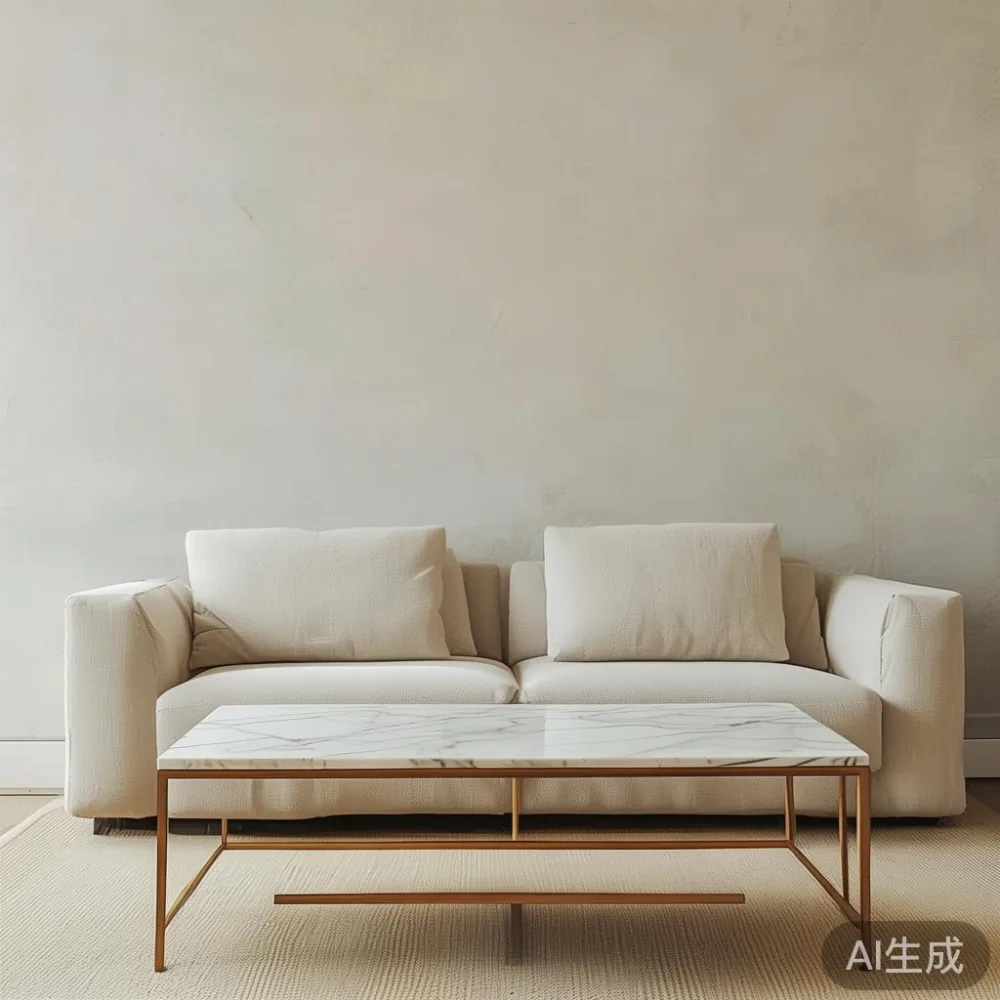
In Cheryl's Tampines flat, the single change that made the biggest difference was removing one of the two wardrobes. Replacing it with a 60-centimetre-deep open shelving unit on the side wall freed up 0.7 square metres of floor, and because the eye could now travel from the door to the window without interruption, the bedroom read as 12 square metres instead of 10. The trick is not to own less; it is to allow each object a buffer of empty space around it. A 1.2-metre dining table needs at least 70 centimetres on every side for someone to pull out a chair. A queen-size bed frame needs at least 60 centimetres on both sides to make the bed without bumping into a wall.
Singapore's lift corridors are also unforgiving. A standard HDB service lift inside the block is around 1.6 metres wide and 1.8 metres deep, with a 1500-kilogram load limit. A solid wood dining table heavier than 120 kilograms usually requires two men and the goods lift, not the passenger lift, which means a 2-to-5-day delivery window from a warehouse in Tuas or Jurong East. That delivery window is a hidden cost you should plan around, especially when buying a dining table over SGD 1,500, where a missed delivery slot costs the supplier real money and may push your next slot out by a week.
The big-ticket pieces: sofas, beds, and dining tables sized for Singapore rooms
For a living room between 12 and 18 square metres, a 2-to-2.4-metre three-seater sofa is the largest single piece that will not overwhelm the room. Anything longer will hit the wall before you can place a coffee table in front of it. A solid wood sofa in the 2-to-2.2-metre range typically weighs between 65 and 95 kilograms, fits through a standard 900-millimetre door, and can be carried by two delivery men using the passenger lift. Look for a seat height of 42 to 45 centimetres and a frame depth of 85 to 95 centimetres; anything deeper will force you to perch cushions against the back wall.
Beds are the second-most expensive item after the sofa. For a master bedroom of 11 to 14 square metres, a queen-size bed frame at 1.52 by 1.88 metres leaves roughly 60 centimetres of walking space on each side, which is the minimum for changing sheets and for two people to pass each other in the morning. A solid wood bed frame in oak or ash typically weighs 45 to 70 kilograms and can be flat-packed to fit through the lift door. A king-size frame is risky in any room under 14 square metres; the bed swallows the room, and you lose the nightstand on at least one side. Stick to queen unless you have a dedicated 16-square-metre bedroom.
Dining tables are where Singapore households overspend most often. A 1.4-metre table seats four comfortably and weighs between 35 and 55 kilograms in solid wood, which makes it lift-friendly. A 1.6-metre table seats four to six and is the practical maximum for any flat under 90 square metres. Going to 1.8 metres is rarely justified; you will spend the next ten years squeezing past chair backs to reach the kitchen. Marble dining tables above 1.6 metres, by the way, are a real concern: a 1.6-metre marble top can weigh 110 to 140 kilograms and almost always requires the goods lift, plus a two-man team and protective blankets. Allow an extra 3 to 7 days for delivery and check whether the supplier uses a crane for the final floor.
Where marble furniture earns its place in a small flat
Marble furniture gets a bad reputation in compact homes because people assume it is heavy, cold, and only suited to landed property. None of that is true if you choose the right pieces and the right sizes. A 90-centimetre round marble side table weighs 18 to 25 kilograms, fits through any door, and reads as a single quiet surface in a room full of wood. A 1.2 by 60-centimetre marble console table against the dining wall can hold keys, mail, and a single table lamp without adding visual noise. A marble-topped nightstand at 45 by 40 centimetres gives the bedroom a different material to lean against, which is one of the cheapest ways to make a small bedroom feel composed rather than cramped.
The reason marble furniture works in a small Singapore apartment is contrast. When the dominant material is solid wood (warm, grainy, absorbent of light), one cool marble surface acts as a counterweight. A solid wood sofa in cream bouclé, paired with a pale travertine marble coffee table, is a French light luxury combination that photographs well and reads as intentional rather than accidental. A solid walnut bed frame with one Carrara marble nightstand on either side reads as American light luxury, which leans heavier and more grounded. Both work, both are under SGD 4,500 if you shop mid-range, and both keep the floor visible because marble tops are usually thin (15 to 18 millimetres) and sit on slim metal or solid wood bases.
One practical note for Singapore humidity: marble tolerates our 80-percent-average humidity well, but it will mark if you place a wet glass directly on it. A set of coasters costs SGD 12 to SGD 25 and prevents the kind of etching that no amount of refinishing will remove. Travertine is more porous than Carrara and may need a sealant refresh every 18 months; budget SGD 80 to SGD 150 for a professional reseal if you choose that stone.
The pieces most people forget: wardrobes, nightstands, and the slim dining bench
Wardrobes are the single biggest mistake in small bedrooms. The default purchase is a 180-centimetre-wide three-door unit that pushes against the door frame, blocks the air-con return grille, and leaves a 30-centimetre gap on one side that collects dust. A 150-centimetre-wide two-door wardrobe, placed on the wall opposite the bed frame, leaves a clean line and gives you 30 more centimetres of usable floor. Solid wood wardrobes in the 150 to 180-centimetre range weigh 90 to 130 kilograms; most suppliers will deliver them flat-packed, but you should confirm the package dimensions before booking the goods lift.
Nightstands are the easiest win. A 40 to 50-centimetre-wide nightstand with one drawer and one open shelf is enough for a phone, a book, a glass of water, and a small lamp. Anything wider than 55 centimetres will compete with the bed frame and eat into the walking aisle. The post-modern light luxury look — a slim brushed-brass frame supporting a 12-millimetre marble top — fits this size perfectly, and a pair costs between SGD 480 and SGD 900 depending on the stone.
The slim dining bench is the unsung hero of small dining rooms. A 1.2-metre bench seats two adults and a child, slides completely under a 75-centimetre-deep table when not in use, and frees up the 70 centimetres of circulation space that two individual chairs would consume. A solid wood dining bench weighs 12 to 18 kilograms, costs SGD 220 to SGD 450, and is one of the few furniture pieces you can carry into a flat by yourself through a passenger lift.
How do I choose a mid-century modern for a small apartment?
Choose a mid-century modern piece by checking four numbers on the spec sheet before you check the photo: total width, total depth, seat or surface height, and the clearance you need around it.
For a living room under 16 square metres, a mid-century modern solid wood sofa should sit between 1.8 and 2.2 metres wide, 85 to 90 centimetres deep, and 80 to 85 centimetres tall at the back. Anything wider will eat the room; anything deeper will push you away from the cushions. Tapered solid wood legs that lift the frame 18 to 22 centimetres off the floor are non-negotiable in a small flat, because the visible floor underneath the sofa is what makes the room read as open. A mid-century dining table should measure 1.2 to 1.4 metres long, 75 to 78 centimetres tall, and 75 to 80 centimetres deep, with legs no thicker than 6 centimetres so the eye can pass through them. Finally, reject any mid-century piece whose legs are joined by a solid apron lower than 15 centimetres from the floor, because that apron blocks the visual floor and adds 8 to 12 kilograms of unnecessary weight.
Light luxury, plain English: what the term actually buys you
French light luxury, American light luxury, and post-modern light luxury are three names for one idea: high-craft furniture without gold leaf, marble columns, or any surface that screams. French light luxury leans on cream bouclé, pale travertine, and walnut with a satin finish. American light luxury leans on darker oak, brushed brass, and full-grain leather in cognac or chestnut. Post-modern light luxury mixes the two with curved corners, geometric marble inlays, and slim metal frames in champagne or matte black.
In a Singapore apartment under 90 square metres, French light luxury is usually the safer choice because the lighter palette reflects our tropical daylight and keeps rooms from feeling cave-like. American light luxury works in larger master bedrooms, where the heavier walnut absorbs light rather than reflects it. Post-modern light luxury is the most expensive per piece, because the curves and inlays require CNC routing that costs SGD 200 to SGD 500 per component, but a single accent piece — for example an Italian light luxury cherry wood armchair in the corner of a reading nook — is enough to carry the style without committing the whole room to it.
Expect to pay SGD 1,800 to SGD 3,500 for a French light luxury three-seater solid wood sofa, SGD 1,200 to SGD 2,200 for a queen-size solid wood bed frame in oak, SGD 900 to SGD 1,800 for a 1.4-metre solid wood dining table, and SGD 600 to SGD 1,400 for a marble-topped coffee table in 1.2 by 60 centimetres. These prices include 7 percent GST and standard door-to-door delivery above SGD 350, which most suppliers (including MIDHILL, the Foshan-based workshop that ships solid wood and marble pieces to Singapore with a 10-year structural warranty) offer without an extra surcharge.
Delivery, warranty, and the hidden cost of cheap furniture
Singapore buyers often underestimate the last 10 percent of a furniture purchase: delivery, packaging removal, and what happens when something fails. A standard delivery from a Jurong warehouse to a Tampines flat costs SGD 60 to SGD 120 and takes 3 to 7 working days; a delivery from an overseas supplier to the same flat takes 25 to 45 working days by sea plus 7 to 14 days for customs clearance and last-mile delivery, and you should budget between SGD 250 and SGD 480 for shipping on a single dining table or bed frame. Add 7 percent GST on the landed cost, and a SGD 2,000 imported dining table becomes SGD 2,140 at the door.
Warranty matters more in Singapore than in most markets because humidity attacks untreated joints and veneers. A 10-year structural warranty on a solid wood sofa or bed frame covers joint failure, frame warping, and load-bearing cracks; it does not cover finish wear, fabric pilling, or marble staining. Lifetime refinishing — offered by a small number of Foshan workshops that export to 15-plus countries, including MIDHILL — covers sanding, re-staining, and re-sealing the wood surface every 7 to 10 years for a flat fee of SGD 180 to SGD 380 per piece, which is roughly the cost of replacing a mid-range sofa. Over a 20-year horizon, refinishing a SGD 2,500 solid wood sofa three times costs less than buying two new sofas at SGD 1,800 each.
Free returns within 14 days are useful but rarely used honestly. Most buyers keep 80 to 90 percent of what they order. The 10 to 20 percent they return is almost always the wrong size or the wrong colour, which is why the spec-sheet check in the previous section matters more than the return policy.
A simple room-by-room checklist before you click buy
Measure the wall, the door, and the lift. Tape the floor where the piece will sit. Walk the tape path from the lift to the room and check for tight corners. Confirm the piece weight against the lift limit. Confirm the package dimensions against the lift door. Confirm the delivery window and the corridor access (some HDB blocks restrict furniture moves to 9 a.m. to 5 p.m. on weekdays). Check the warranty in writing, including what counts as "structural" and what is excluded. Check whether refinishing is offered and what it costs. Check the return window, the restocking fee (usually 10 to 20 percent), and who pays the return shipping. Finally, photograph the empty room with the tape outline and live with it for 48 hours before you commit.
Cheryl's Tampines flat, after the changes, holds six pieces instead of eleven, costs about SGD 7,400 in furniture (sofa, bed frame, two nightstands, dining table, dining bench) plus a SGD 420 Italian light luxury cherry wood armchair she picked up because she could not resist it. The lift made one trip per piece, the corridor stayed clear, and the floor reads as floor, not as furniture warehouse. That, more than any styling trick, is what makes a small apartment feel like a home.