Singapore Furniture: Veneer vs. Solid Wood Cost Comparison Over 5 Years
Last month I helped my colleague Priya furnish her new 4-room HDB in Punggol. She had S$4,500 to spend on a dining table, a bed frame, and a wardrobe, and she genuinely believed the "solid wood" tag at a Tampines mega-store meant she was buying the real thing. The price tag said S$2,200 for a dining set. Two winters of Singapore humidity later, two of the chair legs had split along the grain and the tabletop had a visible bow in the middle. The store had closed its Bedok branch. That experience is the reason this comparison exists, because the choice between veneer and solid wood in Singapore is rarely about the sticker price alone. It is about what a dining table, a bed frame, or a wardrobe actually costs you over five years of daily use in 32°C weather, 80% humidity, and a lift lobby that is 1.1 m wide.
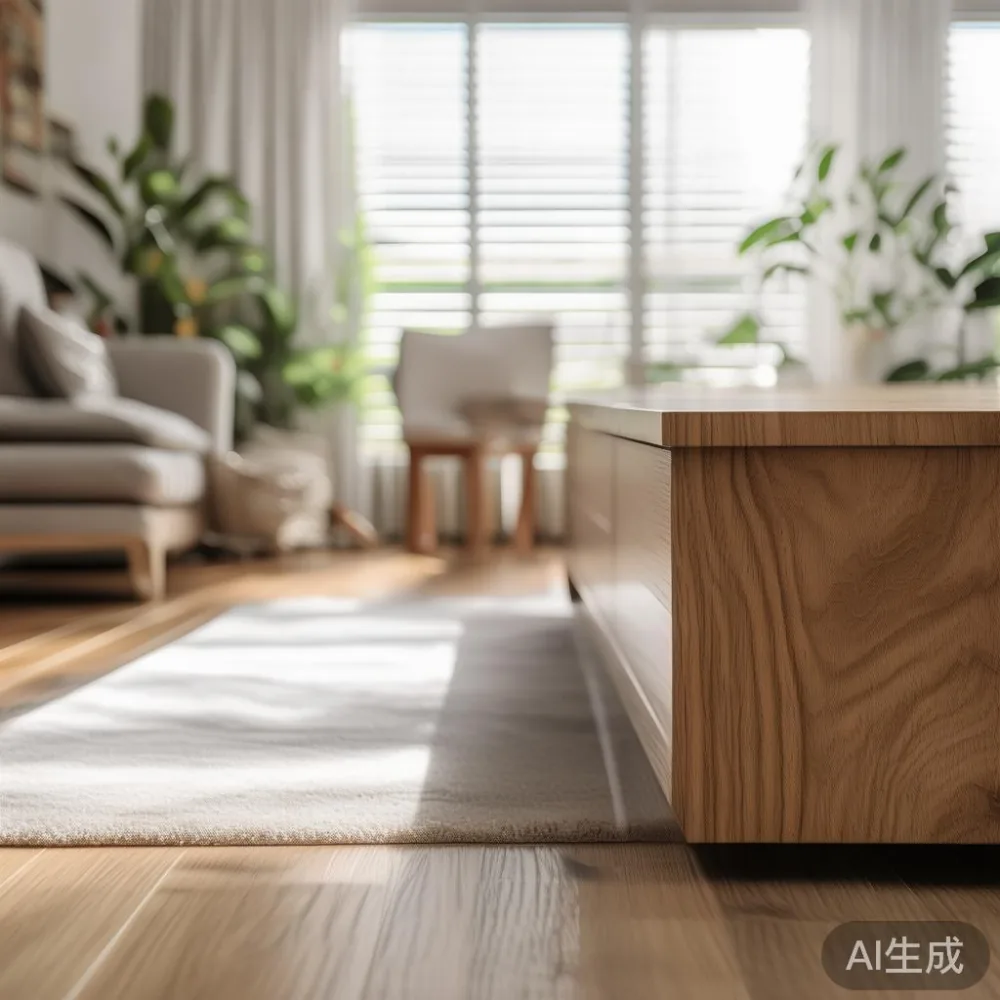
What is the real difference between veneer and solid wood in Singapore?
A veneer piece is a thin layer (usually 0.5 mm to 2 mm) of real wood glued onto a substrate of MDF, particleboard, or plywood. The substrate does the structural work; the veneer only shows the colour and grain. A solid wood piece is cut from a single piece of timber, top to bottom, end to end. At MIDHILL in Foshan, every solid wood sofa, bed frame, dining table, wardrobe, and nightstand is kiln-dried to a moisture content between 8% and 12%, which is the range that survives Singapore's tropical climate without warping. The price you pay for that stability shows up in year one, and it keeps paying you back in years two through five.
How much does veneer furniture actually cost in Singapore over 5 years?
Let us walk through a realistic HDB scenario. A veneer dining table (1.6 m, six-seater) from a Punggol or Tampines retailer costs between S$650 and S$1,100. Add four matching veneer chairs at S$80 to S$140 each, and you are at roughly S$1,050 to S$1,660. That looks like a win. Now layer on what actually happens:
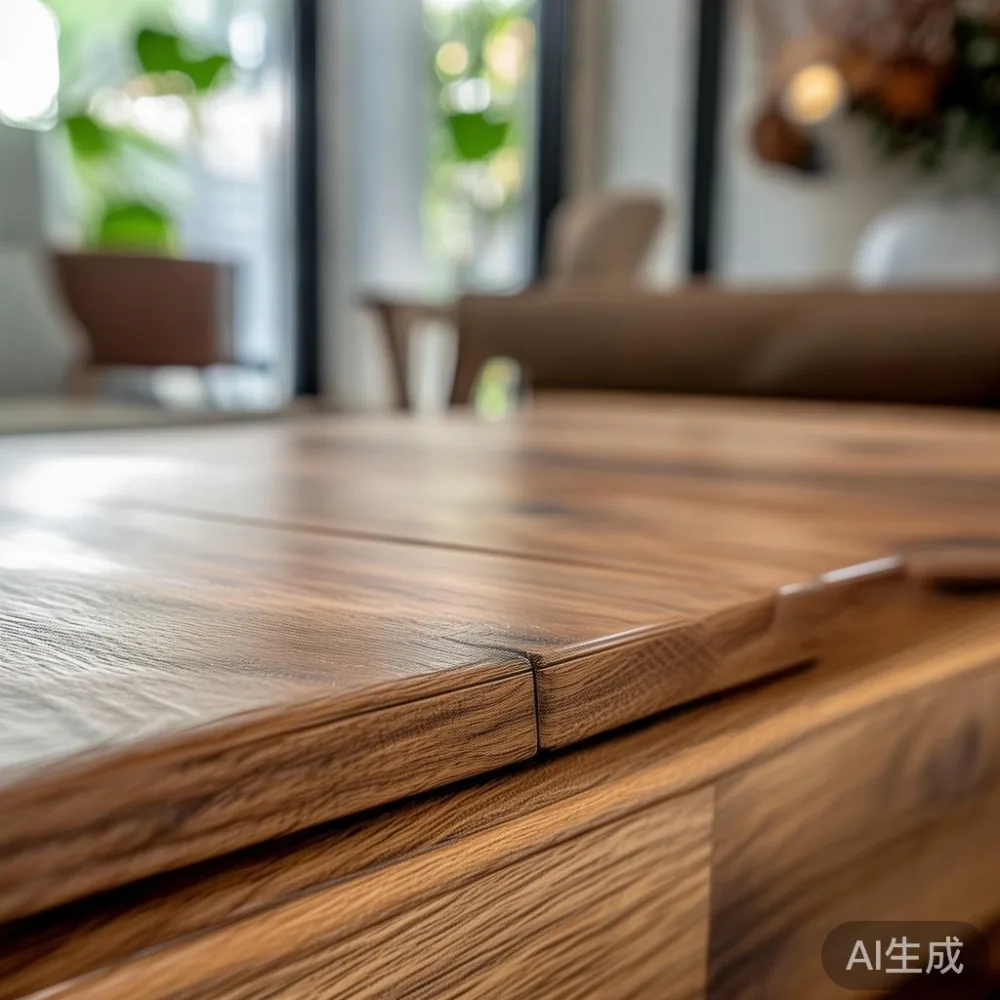
- Year 1: The substrate absorbs moisture through every cut edge. You may notice the tabletop bowing 4-6 mm by month eight.
- Year 2: Edge banding starts lifting, especially on the side facing the air-con vent. A repair quote runs S$120 to S$220 per panel.
- Year 3: A chair leg snaps at the dowel joint. Replacement chairs are no longer in stock, so you buy a mismatched pair for S$180 to S$280.
- Year 4: The veneer on the tabletop delaminates in a 30 cm strip near the window. You cannot refinish it because the wood layer is too thin to sand. Total replacement: S$1,100 to S$1,600.
- Year 5: You buy a second set or you live with the damage.
Add it up: a S$1,200 veneer dining set in year one becomes S$2,600 to S$3,400 by year five, before you count your time, your frustration, or the weekend you spent driving from Punggol to Marina Square looking for a matching chair.
How much does solid wood furniture cost in Singapore over 5 years?
A solid wood dining table in oak, ash, or walnut from a Foshan maker such as MIDHILL, shipped to a Singapore HDB, lands between S$2,400 and S$4,200 for a 1.6-1.8 m six-seater. Four solid wood chairs add S$720 to S$1,400. Year one outlay: S$3,120 to S$5,600, roughly 2.5x the veneer price. Here is what changes over the next four years:
- Year 1: Nothing happens. Kiln-dried timber sits still.
- Year 2: A 200 ml red wine spill on the tabletop. You wipe it off with a damp cloth. No mark, no swelling.
- Year 3: Your son drags the chair across the tile floor and gouges a 1.5 mm deep scratch. A furniture touch-up pen from Tampines Hub costs S$12.
- Year 4: The tabletop has dulled from daily use. A local sanding and re-oiling service quotes S$280 to S$400.
- Year 5: The table looks slightly worn and considerably more characterful. Resale value on Carousell: S$900 to S$1,400.
Five-year net cost of the solid wood dining set: S$2,500 to S$4,600 minus S$900 resale, so S$1,600 to S$3,700. You paid more in year one, you spent less in years two through five, and you still own a functional table at the end.
Is a sofa guide worth the price in Singapore?
A sofa guide is absolutely worth the price in Singapore if the alternative is a S$1,400 veneer-framed sofa that sags within 18 months in our humidity, because the frame is what fails first and frames cannot be reupholstered for less than the cost of a new piece. A 3-seater solid wood sofa frame from a Foshan maker such as MIDHILL, in oak or ash with a kiln-dried moisture content of 8-12%, costs S$2,800 to S$4,600 delivered to your HDB in Bedok or your condo in Tanjong Pagar. Add the upholstery fabric (S$400 to S$900 for a performance linen or top-grain leather) and your five-year outlay sits between S$3,200 and S$5,500. A comparable veneer-framed sofa starts at S$1,400 and ends at S$2,800 to S$3,600 once you count frame replacement in year three. The 7-day delivery to Singapore doorsteps, including free shipping above US$350 (roughly S$470), means you wait one week, not three months.
Why does veneer fail faster in Singapore HDB flats and condos?
Three local facts make veneer a poor bet here. First, Singapore sits on the equator and humidity hovers between 70% and 85% for most of the year. MDF and particleboard absorb moisture through every cut edge, and a typical HDB dining set has 14 to 22 cut edges per piece. Second, most HDBs and condos run the air-con at 23-25°C while humidity outside stays at 78%. That 3-5°C swing across a single tabletop creates expansion and contraction cycles the glue was never rated for. Third, lift lobbies in older HDB blocks are 1.1 m wide and service lift doors are 0.9 m, so you cannot bring up a replacement solid wood dining table larger than 2.1 m without splitting it. That is why modular solid wood dining sets, delivered flat-packed and assembled in your living room, are the practical answer for Tampines, Bedok, and Punggol flats.
Bed frames, wardrobes, and nightstands: where solid wood actually wins on price
The case gets stronger when you move to large pieces. A queen-size solid wood bed frame in oak runs S$1,800 to S$3,200 delivered to a Singapore HDB. A queen-size veneer bed frame runs S$650 to S$1,100. The gap is roughly S$1,500 to S$2,100. Over five years, the veneer frame typically needs one slat replacement (S$120 to S$180) and one headboard re-laminating (S$200 to S$350), or full replacement by year four at S$650 to S$1,100. The solid wood frame, by contrast, accepts sanding and re-oiling at year five for S$200 to S$350, and the frame itself keeps going. A 2.4 m solid wood wardrobe with three doors sits at S$3,800 to S$6,200. A 2.4 m veneer wardrobe sits at S$1,400 to S$2,200. The solid wood wardrobe uses solid oak dovetail drawer boxes that survive 50,000 open-close cycles, which is the rough equivalent of opening a sock drawer four times a day for 34 years. A matching solid wood nightstand is S$380 to S$620 and lasts the same 34 years without complaint.
What about marble furniture and light-luxury styles?
Marble furniture pairs naturally with solid wood because the stone needs a frame that does not move. A marble-top dining table on a solid ash or walnut base is the centrepiece of French light luxury living rooms, where the stone provides the visual weight and the timber provides the structural honesty. Post-modern light luxury takes the same pairing and strips the silhouette back: a 1.2 m round marble table on three slender solid oak legs, no carving, no ornament, just proportion. American light luxury leans warmer, with a marble-topped coffee table sitting on a solid walnut base in a honey finish, paired with a boucle-upholstered solid wood sofa. In all three styles, the marble furniture only looks correct when the wood underneath is the real thing, because the stone shows every wobble in the frame. Foshan makers such as MIDHILL have spent fifteen years refining these combinations, kiln-drying oak, ash, and walnut to 8-12% moisture content so the marble top sits on a frame that will not telegraph movement through the stone within the first two Singapore wet seasons.
How do warranty, shipping, and GST affect the real price?
The headline price on a Singapore furniture website excludes three line items that matter over five years. Shipping: free above US$350 (about S$470), S$80 to S$180 below that threshold, which most sofas, bed frames, dining tables, wardrobes, and nightstands comfortably exceed. GST: 9% on all imported furniture since January 2024, added at checkout. Warranty: a 10-year structural warranty on solid wood frames means the maker replaces a cracked rail or a warped leg at no cost, while a 6-month warranty on a veneer piece covers almost nothing by the time the failure appears. A lifetime refinishing service on solid wood, available from makers such as MIDHILL, turns the S$280 to S$400 sanding quote from year five into a bundled right rather than an out-of-pocket surprise. Stack these against the 14-day return window that applies to both categories, and the solid wood number starts to look like the cautious one, not the expensive one.
What about a French provincial dining chair uae buyer importing into Singapore?
A French provincial dining chair uae buyer is usually shopping for the same silhouette Priya ended up choosing: a carved solid beech frame, a hand-caning back, and a linen drop-in seat. The same chair ships from Foshan to a Singapore HDB in 7-10 days for S$280 to S$460 each, which is roughly 35-45% less than the same chair retailed through a Singapore showroom in Tiong Bahru or Tanglin. The catch is quality control on the carving and the caning, which is why buying direct from a Foshan maker with fifteen years of export experience and a 10-year structural warranty is a quieter bet than a generic Alibaba listing that promises the moon and delivers MDF.
Which should you buy if your budget is under S$3,000?
If your budget is under S$3,000 for one room, spend it on the largest solid wood piece you can afford and accept mid-range everything else. A S$2,400 solid wood dining table with four S$150 veneer chairs (replaced in year three for S$600) outperforms a S$1,200 veneer dining set replaced twice in five years. A S$1,900 solid wood bed frame with a S$200 IKEA nightstand outperforms a S$900 veneer bed frame that creaks from month ten. The maths only flips when you are furnishing a rental unit you plan to leave in 18 months, and even then a S$1,400 solid wood sofa frame holds 45-55% of its value on Carousell while a S$700 veneer sofa holds 10-15%. Over five years in a Singapore HDB or condo, solid wood is the cheaper answer in eight of ten room layouts, and it is the calmer answer in the other two.