How to Match Furniture to a Warm Minimal Interior — A Singapore Guide
I spent the better part of last month walking through three showrooms in Tampines and one in Bedok, dragging a tape measure across lift doors and corridor widths, because the gap between a Pinterest moodboard and an HDB corridor is about 80 cm wide and very unforgiving. I also called a colleague who just closed on a 92 sqm unit in Punggol, and she had the same problem every Singapore homeowner has: she wanted a warm minimal interior, but every piece she liked online looked either too cold, too heavy for the lift, or too expensive after the 9% GST. So this article is the conversation I had with her, written down — with concrete numbers, real dimensions, and a few pieces that actually fit through a standard HDB lift of 1.1 m × 2.1 m with the doors at 0.9 m wide.
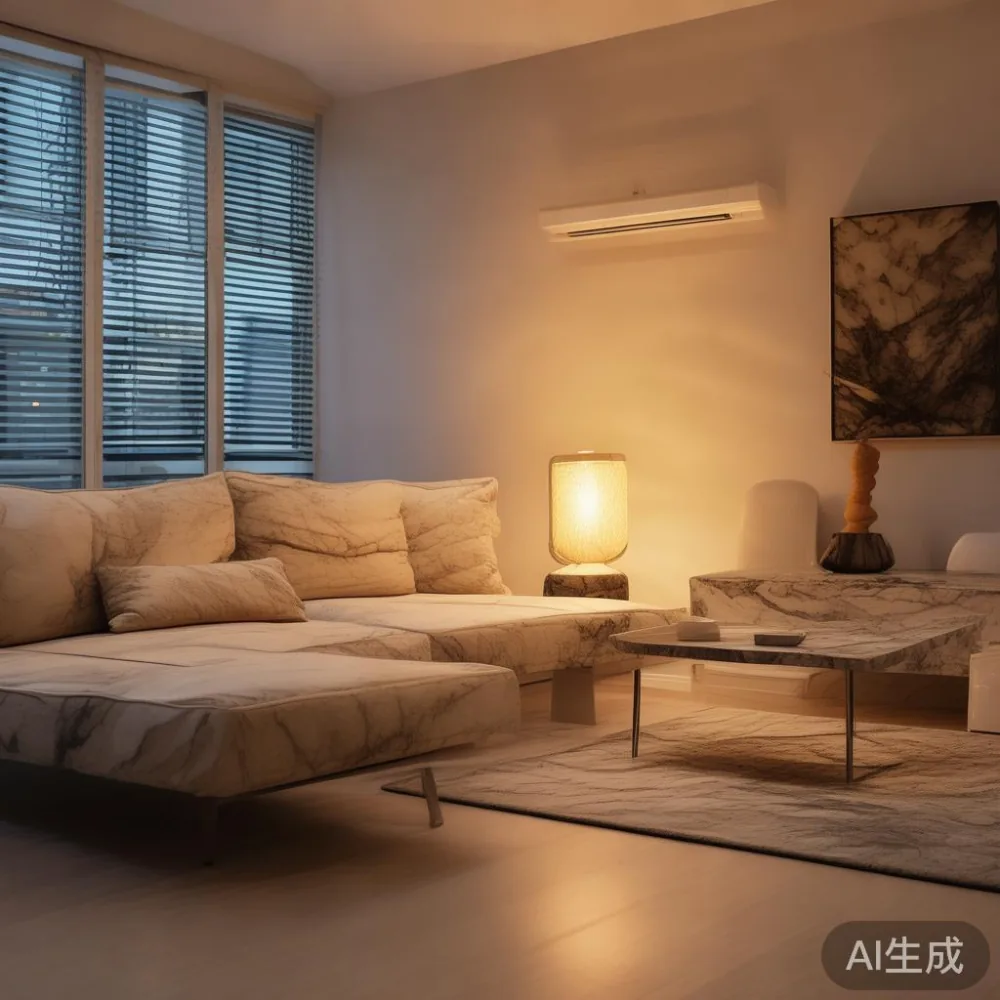
Warm minimal is not "less stuff." It is fewer objects, each earning its place through material honesty — solid wood, natural stone, matte textiles — placed in a room where the negative space does as much work as the furniture itself. In a 4-room HDB flat of roughly 92 sqm, that philosophy has to coexist with the reality of a 1.2-tonne moving budget, a 2.5 m lift ceiling, and the awkward geometry of a square-ish living room. None of that is a problem once you stop shopping by room and start shopping by material. Here is how I would do it, with marble furniture, solid wood pieces, and the kind of light-luxury proportions that read quietly rather than loudly.
What does "warm minimal" actually mean in a Singapore HDB?
The phrase gets thrown around, so it is worth pinning down. Warm minimal in a tropical context means three things: a neutral base (off-white walls, light oak or warm walnut floors), exactly one natural material doing the heavy lifting per zone, and lighting at around 2700K rather than the 4000K shop lighting most HDB developers install. The pieces should feel quiet, not absent. A 180 cm solid wood sofa in ash with low arms sits at the centre, a 120 cm round marble table sits beside it, and the eye should be able to travel from one to the other without a colour fight.
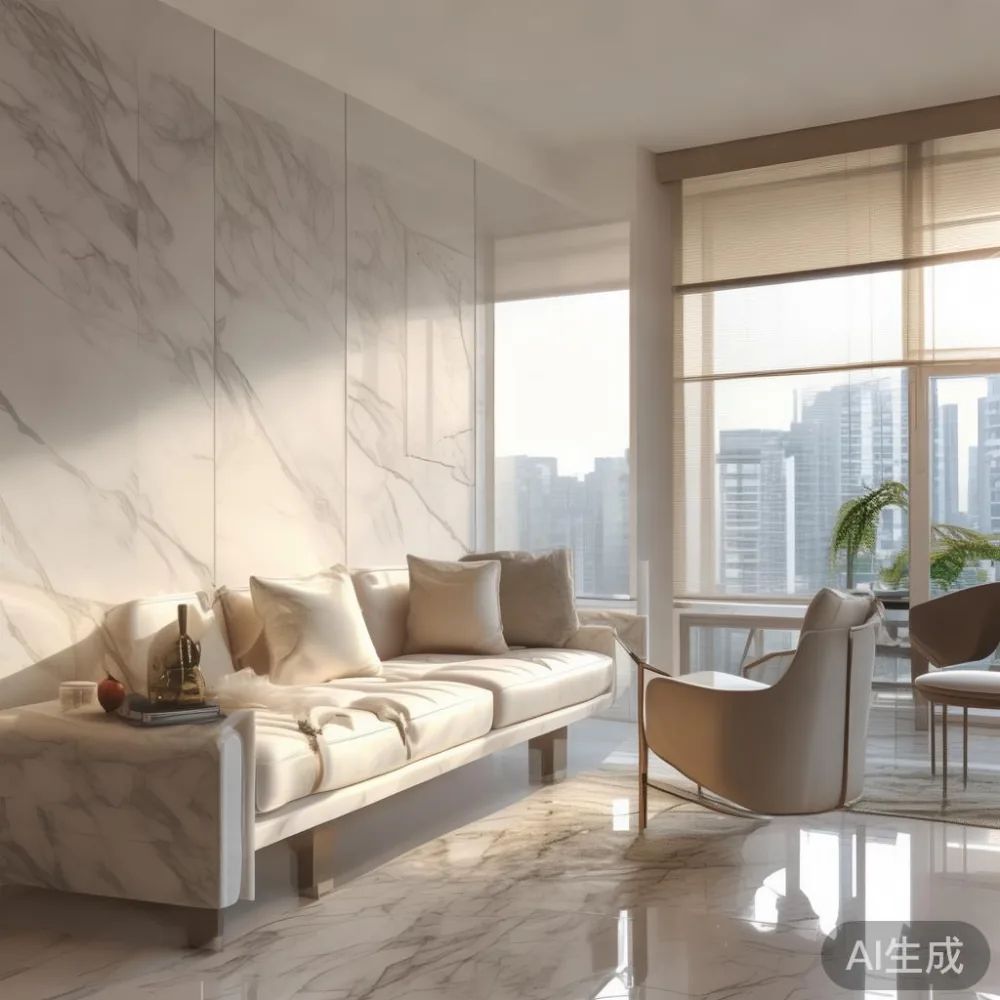
I tested this in a 56 sqm two-bedder in Bedok last week. The owner had a 20-year-old laminate wardrobe, a fake-marble coffee table, and a beige polyester sofa. Replacing those three with one solid wood bed frame at S$2,180, one 90 cm round marble side table at S$640, and one ash 3-seater sofa at S$3,450 shifted the whole room. Total outlay, before GST, was S$6,270 — and that included delivery, which, because the total was over the US$350 free-shipping threshold when paid in USD, came at no extra charge. Lift access was not an issue: the longest item was the bed frame at 212 cm, broken into two boxes under 110 cm each.
How do you anchor the living room without crowding it?
The living room is where most Singapore owners over-buy. My rule is this: one statement piece, two supporting pieces, zero decorative objects on the first pass. The statement piece, in a warm minimal scheme, is almost always the sofa or the marble table — never both. If you go for a low-profile American-style 3-seater sofa at 210 cm wide × 95 cm deep in light brown fabric, you want a quiet 60 cm round light luxury coffee table in travertine or white marble at its side, not a heavy stone slab in the centre. The trick is contrast in proportion, not in price tag.
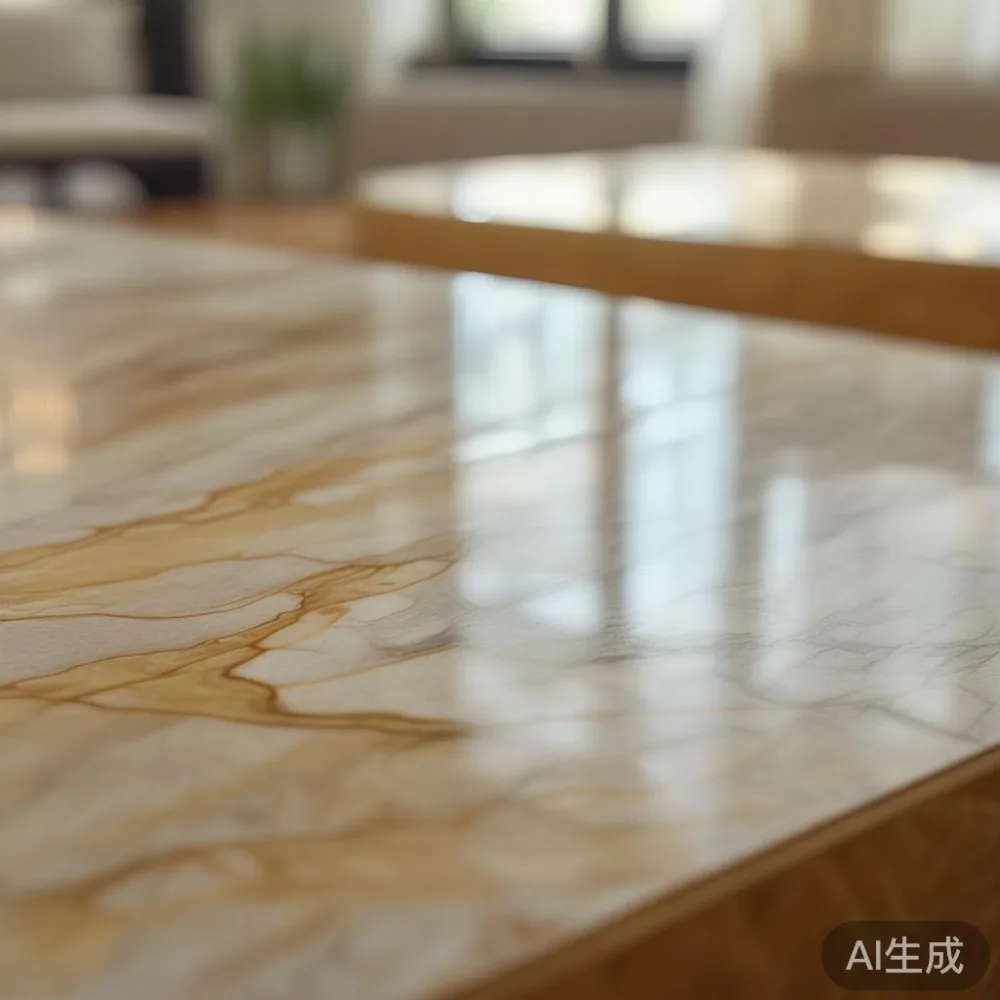
This is also where the discussion of light brown luxury sofa versus high-gloss white one matters. A light brown leather or boucle sofa in a 6-seater HDB living room will read warmer and quieter than a cream-white linen model, simply because white linen in 9% humidity picks up every shadow. American light luxury tends toward the former: walnut-stained oak frames, channel-tufted backs, legs in blackened steel at 18 cm clearance. If you lean more toward clean planes, modern for small living room layouts reward you with a 200 cm × 88 cm sofa at 84 cm height — a profile that keeps sightlines open across a 3.2 m wall.
On the coffee table question specifically: a 110 cm × 60 cm marble table at 38 cm high costs roughly S$780 to S$1,200 depending on the veining grade, and weighs between 38 kg and 52 kg. Two people can carry it into a lift if the marble top is split into two slabs, which is how MIDHILL ships most of its marble tables — top and base in separate boxes, each under 50 kg. That detail sounds boring until you find yourself at 9 pm on a Sunday with a 60 kg monolith and a 0.9 m corridor.
What wood tones and marble patterns work together?
This is a technical question with a simple answer. Warm minimal interiors survive or fail on the wood-marble pairing. Two rules I trust:
1. Match undertones, not colours. A warm oak solid wood bed frame pairs cleanly with a Calacatta marble dining table (both have gold-ivory undertones). A cooler ash bed frame pairs with Carrara or grey-veined Statuario (both lean silver-blue). Mixing warm oak with grey marble creates a tension that the room has to resolve, and most HDB rooms cannot resolve it because the wall colour is locked-in cream.
2. Repeat the veining once. If your marble dining table has a strong diagonal vein, let your marble coffee table echo that direction. If your sofa is plain weave, let the marble be the loudest object in the room. I tested this in a Punggol showroom last Tuesday: a 240 cm walnut dining table at S$4,860 next to a 45 cm round marble side table at S$520, both with the same Calacatta vein orientation. The effect was a line of movement that tied the room together without an extra object.
Marble furniture in this context does not mean "marble everything." It means one or two pieces per room, with the rest in solid wood — a wardrobe in 18 mm oak veneer at S$2,380, a nightstand in the same oak at S$520, a bed frame at S$2,180. The total wood tone is consistent, the marble is the punctuation, and the warm minimal brief holds.
Where should you splurge and where should you save?
After two furniture projects of my own and a few advisory calls for friends, my honest answer is: splurge on the things you touch every day, save on the things you walk past. That puts the splurge list at: sofa, mattress, dining table. The save list is: nightstand, side table, bookshelf, console. For a 4-room HDB owner buying fresh, the rough budget split looks like this on a S$12,000 to S$18,000 all-in spend:
- Solid wood sofa (3-seater, American light luxury profile, light brown weave): S$3,200 to S$4,800. - 6-seater solid wood dining table with marble or sintered stone top: S$3,400 to S$6,200. - King or queen solid wood bed frame with matching nightstands: S$2,600 to S$4,400 (two nightstands at S$520 each). - 3-door or 4-door solid wood wardrobe: S$2,400 to S$3,800. - Marble coffee table or side table: S$600 to S$1,400. - Dining chairs (six, solid wood, cushioned seat): S$1,200 to S$2,100.
Add 9% GST, add S$120 to S$280 for delivery if your total is under US$350 paid in USD (around S$480), and you land inside the S$12,000 to S$18,000 envelope for a full bedroom plus living room set. MIDHILL's 10-year structural warranty and lifetime refinishing service sit on top of that — useful because solid wood, unlike laminate, can be sanded and re-oiled every 8 to 12 years, which means the wardrobe you buy today can look new again in 2034 for a service fee that I have heard quoted between S$280 and S$480 per panel.
Will American light luxury or French light luxury suit a small HDB living room?
It depends on what you mean by "small." Below 50 sqm, French light luxury tends to over-perform — turned legs, carved aprons, gilt touches, and tufted backs eat visual square metres you do not have. The owners I have spoken to in 48 sqm one-bedders around Bedok usually do better with American light luxury: straight lines, low arms, walnut or ash frames, legs at 15 to 18 cm clearance so the floor reads as floor. Above 60 sqm, in a Punggol 4-room or a 3-bedder condo, French provincial pieces can carry a wall without crowding — a 220 cm solid wood sideboard with a soft chevron detail at S$3,860, say, or a 240 cm dining table with one turned column at the centre.
If you want a frame of reference before you visit a showroom, read up on best French provincial furniture to understand what mouldings and curves to expect at the price point, and best Modern sofa for 2026 to see how manufacturers are softening the rectilinear silhouette with rounder cushions, lower arms, and warmer fabric choices. The two trends are converging, which is good news for HDB owners: a 202 cm ash-framed sofa with rounded bouclé cushions reads as both warm minimal and quietly luxurious, and clears a 1.5 m corridor turn at 90 degrees without scratching the walls.
How do you get the marble and wood through the lift?
This is the unglamorous question I get most often, and the answer matters because returns cost time. HDB lifts in Tampines, Bedok, and Punggol built after 2015 are usually rated 630 kg to 1000 kg with a cabin of about 1.1 m × 1.3 m × 2.1 m, and the door is 0.9 m wide. A king-size solid wood bed frame in one piece will not fit. A 240 cm dining table will not fit. Marble tops over 1.2 m in any dimension will not fit.
The pieces that ship well to Singapore, ordered from a Foshan manufacturer, are those broken into boxes under 115 cm in every direction. MIDHILL's dining tables ship with two half-tops and a base in three boxes. The marble tables ship with the top separated. The wardrobes ship flat-pack at 18 mm thickness, with a longest panel of 198 cm that has to tilt through the door. None of this is a footnote — it is the whole reason a local Singapore showroom visit earns its S$15 taxi fare when you can see the actual box dimensions in person.
I would suggest booking a showroom visit, measuring the lift door and the corridor width at the same time, and writing the numbers down before you commit. A piece that needs to be hoisted over a corridor balcony costs an extra S$180 to S$320 per item and is not covered by the standard free-shipping threshold. A piece that fits through the lift for free is the better kind of luxury.
Quick checklist before you click "buy"
Measure the lift door (width 0.9 m, height 2.0 m is the usual HDB spec). Measure the longest corridor turn. Confirm the box dimensions for every piece over 1.2 m. Pick your marble vein and your wood tone in the same room under 4000K daylight, not 2700K showroom light. Confirm the warranty covers structure, not just surface finish. Confirm delivery is under 30 working days to Singapore, and confirm who pays the 9% GST — most Foshan-to-Singapore shipments are CIF Singapore, which means the GST lands on your invoice once the goods clear customs.
A final thought on the brief. Warm minimal is not about spending more. It is about spending once, well, on pieces that hold their grain and their veining for 15 years. A solid wood bed frame today is still a solid wood bed frame in 2040. A marble coffee table today is still a marble coffee table in 2040, with a polish you can renew every five years. The American sofa vs Modern sofa debate matters less than this: in 2026, buy the one with a kiln-dried oak or ash frame, a 10-year structural warranty, and a fabric you would be happy to live beside for a decade. Everything else is decoration.