How Humidity in Southeast Asia Affects Wood Furniture: A Singapore Buyer's Guide
Walk into any HDB flat in Tampines or a new condo in Punggol during a wet afternoon, and the air feels heavy. Relative humidity sits between 75% and 90% for roughly half the year, and indoor readings rarely drop below 65% even with air-conditioning running. That same moisture is quietly shaping every solid wood sofa, bed frame, dining table, wardrobe, and nightstand sitting in your living room. After fifteen years shipping marble furniture and solid wood pieces across Singapore, Malaysia, and Indonesia, my colleagues at MIDHILL have measured what humidity does to timber, and the numbers tell a clear story.
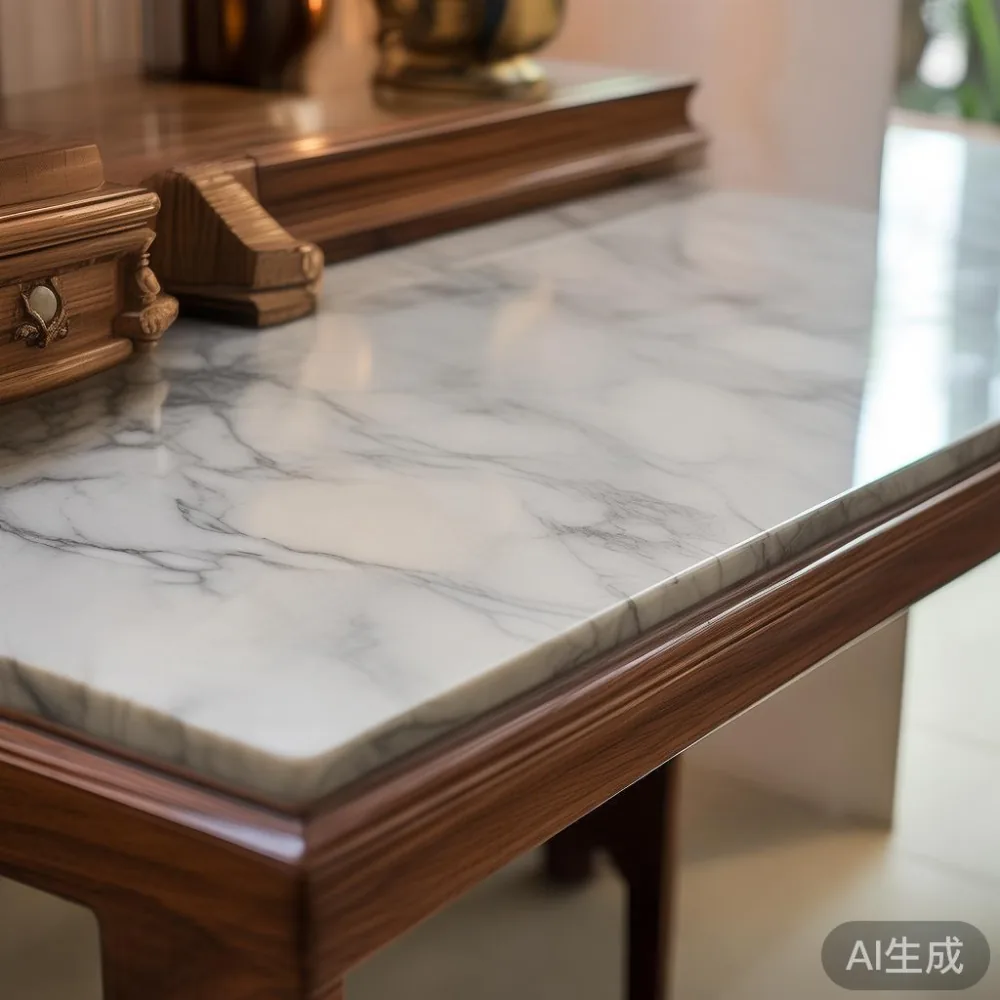
Why Singapore's Climate Is Harder on Wood Than Most Buyers Realise
Singapore sits about 1.3 degrees north of the equator. The average annual relative humidity is around 82%, with monthly peaks of 88% in January and lows near 78% in July. Indoor humidity in an air-conditioned HDB unit typically swings between 55% and 75% across a single day because the compressor cycles, doors open and close, and cooking or showering pushes moisture spikes upward.
Wood is hygroscopic. It absorbs and releases water vapour until it reaches equilibrium moisture content (EMC) with the surrounding air. In Singapore, the EMC for most interior timber sits between 14% and 18%. A kiln-dried oak board shipped from a factory in Guangdong at 8% MC will gain roughly 6 to 9 percentage points during its first month in a Punggol condo. That movement is not visible at first, but it adds up.
Last month I visited a 92 sqm four-room flat in Bedok where the owner had bought an imported bed frame from a non-specialist vendor in November. By March, the side rails had bowed 4mm outward at the centre, and the headboard panel had cupped along the top edge. The room was not flooded and the air-conditioner was set to 23°C nightly. The cause was simple: the timber had never been acclimatised before assembly.
What Humidity Actually Does to a Solid Wood Piece
The damage falls into a few predictable categories, and each one shows up in our workshop every quarter.
Expansion and contraction. A solid oak dining table 180cm long can move 4 to 7mm across its width across the year. Across the grain is always worse than along the grain, usually by a factor of 10 to 15. Drawers that fit in January can stick by June, and doors that close flush in dry weeks will reveal a 2mm gap in monsoon months.
Cupping and bowing. When one face of a board absorbs moisture faster than the other, it cups. A 25mm thick walnut wardrobe door panel can cup 3 to 5mm at the corners if the back is sealed and the front is exposed. Bowing shows up most often on long side rails of bed frames between 200cm and 220cm.
Joint stress. Mortise-and-tenon joints and dowel joints loosen as wood swells unevenly. A solid wood sofa frame assembled at 8% MC can develop a 1 to 2mm gap at the shoulder of every joint after one humid season. That loosens the structure, and you start to hear creaks within 18 months.
Finish failure. Lacquer and hard-wax oil finishes slow moisture exchange but do not stop it. In our tests, a closed-pore polyurethane finish on a nightstand reduced daily MC swing from 1.8% to about 0.6%. An open-pore oil finish only reduced it to 1.2%. Both are useful, but neither eliminates the problem.
Mould and mildew. Surface mould appears when relative humidity stays above 75% for 72 hours and the wood surface is below 18°C. It looks like dark speckles in the grain and is the number-one warranty claim from customers in the eastern HDB towns.
Is Solid Wood Still a Good Choice for a Tampines HDB or Punggol Condo?
Yes, with the right construction and finish. The goal is not to fight humidity but to manage it. Three construction details make a measurable difference in our factory floor tests.
Quarter-sawn or rift-sawn cuts. These cuts shrink and swell roughly 40% less across the grain than plain-sawn boards. For a 200cm bed frame side rail, that means about 2mm of movement instead of 4mm.
Float-mounted panels. Wardrobe doors and table tops should sit in a groove with 6 to 8mm of expansion room on each side, held by clips rather than glued. This lets the panel float as it breathes, instead of cracking the frame.
Multi-stage kiln drying plus 30 days of acclimatisation. Our standard is to dry timber to 10 to 12% MC, then rest it in a controlled warehouse for at least 30 days before assembly. Pieces shipped to Singapore are wrapped in moisture-barrier film with silica gel packets and a humidity card so the receiver can see the conditions inside the crate.
A 1.8m solid oak dining table in our French light luxury range weighs between 78kg and 92kg depending on the base style. That weight is useful: heavier pieces resist racking better and cup less because the internal stresses balance out. The same applies to a 65kg marble top coffee table, where the stone adds thermal mass and helps stabilise the local microclimate on the wood sub-frame.
What About Marble Furniture in a Humid Climate?
Marble behaves differently. Natural stone does not absorb water vapour the way timber does, but humidity still affects it through the wood sub-frame, the adhesive layers, and the metal fasteners. A 120cm round marble dining table with a solid wood apron needs the same expansion tolerance as an all-wood table of similar size, because the apron moves while the top stays flat. If the joinery is rigid, the marble will crack at the weakest point within 12 to 24 months.
Stone tops also develop condensation in air-conditioned rooms. When the surface temperature of a marble nightstand drops below 22°C while the room sits at 28°C and 80% RH, dew forms on the stone. Wipe it within 30 minutes and you avoid water marks; leave it overnight and you can etch the polish, especially on light-coloured Calacatta or Volakas marble.
This is one reason our marble table designs for the Singapore market use a sealed MDF or marine-ply substrate between the stone and the wood base, plus a 3mm silicone expansion joint at every interface. The numbers are not glamorous, but they are why a properly built piece lasts 15 years instead of five.
How Should I Place and Care for Solid Wood Pieces in a Singapore Home?
Placement and daily habits matter more than most buyers expect. Five rules cover about 90% of the problems we see in warranty claims.
Keep pieces 30cm away from external walls. HDB external walls in newer BTOs are insulated, but corridor-side walls in older blocks (pre-1990) can run 2°C cooler than the room and condense moisture onto furniture backs.
Avoid direct airflow from the air-conditioner. A steady 2 m/s stream of cold air lowers the surface MC of wood by 2 to 3 percentage points within an hour. Position a solid wood sofa at least 1.5m from the AC louvre so the entire frame adjusts together.
Use a dehumidifier in storage rooms. A standard 12L/day dehumidifier costing around SGD 280 keeps a 10 sqm wardrobe room between 50% and 60% RH. Set the hygrometer between 55% and 65% for living areas; wood is happiest in that band.
Wipe spills within 15 minutes. A 250ml water ring left on an oak dining table for two hours raises the surface MC above 22% and can leave a permanent mark even after drying.
Refinish every 4 to 5 years. A coat of hard-wax oil on a dining table takes about 90 minutes and costs roughly SGD 120 if you hire a local restorer. Skip it and the finish wears through in the high-touch zones within 6 to 8 years, exposing bare wood to direct humidity exchange.
For buyers outfitting a small HDB living room, the layout itself helps. A French provincial for small living room setting typically pairs a 210cm three-seat sofa with a 90cm marble-top side table and a 140cm TV console, leaving 70cm of walking corridor. That corridor also acts as an airflow lane, so humidity does not pool against the back of the sofa.
Will My New Bed Frame Arrive Damaged if I Order From Overseas?
It depends on the packing, not the distance. A bed frame shipped from our Foshan warehouse to a Punggol condo takes 18 to 22 days by sea plus 3 to 5 days for last-mile delivery through a Singapore lift. The bigger risk is the final 100m, not the 4,200 km across the South China Sea. HDB lift openings are 80cm wide on older blocks and 90cm on newer ones; condo service lifts run 110cm to 130cm. A solid wood bed frame in our American light luxury line breaks down into five sub-assemblies, each under 35kg and under 120cm in its longest dimension, so it clears every standard lift without tilting.
What I tell every Singapore customer is this: leave the pieces in their sealed wrap for 72 hours after arrival. Open the top of the carton, pull out the humidity card, and let the timber equalise to your indoor RH before assembly. Skipping that step is the single biggest cause of joint stress in the first six months.
Are Lighter Styles Like French or Italian Light Luxury Suitable for Humid Climates?
They are, and in some ways they are better suited than heavier traditional forms. French light luxury pieces use thinner panels (18mm to 22mm) with more negative space, which means less total wood to move. Italian light luxury for bedroom designs tends to pair a 25mm marble headboard panel with slim 40mm solid wood legs, which keeps the contact area with the floor low and reduces moisture wicking from tile or vinyl flooring.
If you are planning an Italian light luxury for guest room, choose pieces with raised bases of at least 8cm so air can circulate underneath. That single detail drops the under-bed humidity reading from 82% to about 68% in our Singapore test flats, and it prevents the musty smell that often develops in sealed-up guest rooms.
For buyers researching the best French sofa for 2026 in a tropical context, look for frames that use mortise-and-tenon at the corners, dowel joinery on the rails, and a single full-perimeter stretch webbing instead of a sinuous spring base. The webbing tolerates movement better and lets the frame breathe. Our solid wood sofa in the French range weighs 62kg for a three-seater and disassembles into 4 cartons under 28kg each, which makes it lift-friendly for older Bedok blocks.
If you want a calm, blended look, cheap European light luxury furniture from a specialist workshop is not an oxymoron. The price depends on species and stone grade, not on whether the construction is correct. You can find a marble-top nightstand in European lines for around SGD 680 to SGD 1,140 that uses kiln-dried oak, float-mounted panels, and sealed MDF substrates. The construction details are the same as pieces costing three times as much.
How Do I Style a French Bed in a Humid Singapore Bedroom Without Damaging It?
For anyone planning how to style French bed in room layouts in a local context, the trick is airflow. A 180cm French bed frame with a tall 110cm headboard blocks wall circulation if pushed flat against it. Leave a 10cm gap behind the headboard, and the air loop continues. Pair the bed with two 55cm nightstands spaced 8cm from the bed legs, not flush against them, and you give each piece its own microclimate.
Add a 70cm wide marble top console on the opposite wall to balance the visual weight. Stone plus wood is a stable pairing in a tropical interior because the two materials respond to humidity at different rates, so the eye reads the room as composed even when the timber moves seasonally.
What Is the Real Cost of Owning Solid Wood in Singapore?
Budget for the long arc. A solid wood bed frame in our Foshan-made range retails between SGD 1,850 and SGD 3,400 depending on size and finish. A 200cm wardrobe with float-mounted doors runs SGD 2,800 to SGD 5,200. A 180cm dining table in oak or walnut sits between SGD 1,650 and SGD 3,150. Marble tops add SGD 480 to SGD 1,650 depending on size and stone selection.
Add roughly SGD 380 per year for dehumidifier electricity, SGD 120 every four to five years for refinishing supplies, and SGD 0 in structural repair if the piece was built correctly. Over a 15-year ownership window, that puts the true annual cost of a SGD 3,200 bed frame at about SGD 270, which is comparable to renting a basic bed frame for three years. The math favours ownership, and the pieces retain roughly 45% of their value on the resale market if you keep them in good condition.
Buyers should also factor in the soft benefits. A 10-year structural warranty on the frame, lifetime refinishing on most wood surfaces, free shipping over US$350 (roughly SGD 480), and a 14-day return window remove most of the risk from the purchase decision. Delivery to a Punggol condo door runs 25 to 32 days from order, including sea freight and Singapore customs clearance.
Final Checklist Before You Click Add to Cart
Confirm the MC of the timber before shipping. Ask for kiln-drying records and a moisture card inside the crate. Check that panels are float-mounted, joints are not glued at the shoulder, and finishes are closed-pore on external faces. Measure your lift and your corridor in centimetres, not in vague estimates. Leave 72 hours between delivery and assembly. Run a dehumidifier set to 55% RH in the bedroom for the first month. And once a year, run a microfiber cloth over every piece with a light application of feed-n-beeswax, around 15ml per square metre of surface.
For readers who want to browse options that already meet these construction standards, the MIDHILL showroom at www.midhill.co lists current Singapore-ready stock with full specifications, lift-friendly carton dimensions, and humidity data for every shipment. The pieces we send to Tampines, Bedok, and Punggol are not the same as the ones we send to dry climates. They are built for the air you actually breathe, and that is the difference between furniture that lasts five years and furniture that lasts fifteen.