Price Dynamics of Solid Wood Furniture in Singapore: What Affects the Cost?
Two dining tables sit side by side in a Tampines HDB showroom. One is S$1,290. The other is S$4,800. They look almost identical from three metres away — same rectangular top, same warm walnut tone, same six chairs tucked underneath. Pick up a chair from each, though, and the difference is immediate. The cheaper one weighs 3.2 kg and flexes under your palm. The heavier one weighs 6.8 kg, and the grain under the lacquer feels like the surface of a river stone. The price gap is real, and it is built from a handful of specific decisions made long before the piece reached the lift lobby on the 14th floor of your Punggol condo block.
Wood Species: The Biggest Single Lever
Solid wood furniture starts with the log, and the species sets a price ceiling or floor before any other factor matters. Rubberwood, plantation-grown across Southeast Asia and commonly kiln-dried in Johor, is the most affordable route — a dining table set in rubberwood typically lands between S$1,100 and S$1,900 in Singapore retail. White oak, imported from the Appalachian region in the United States and air-dried for 6 to 18 months before machining, commands roughly three to four times the raw-material cost per cubic metre. Walnut, often sourced from Northern Italy or the American Midwest, sits higher still.
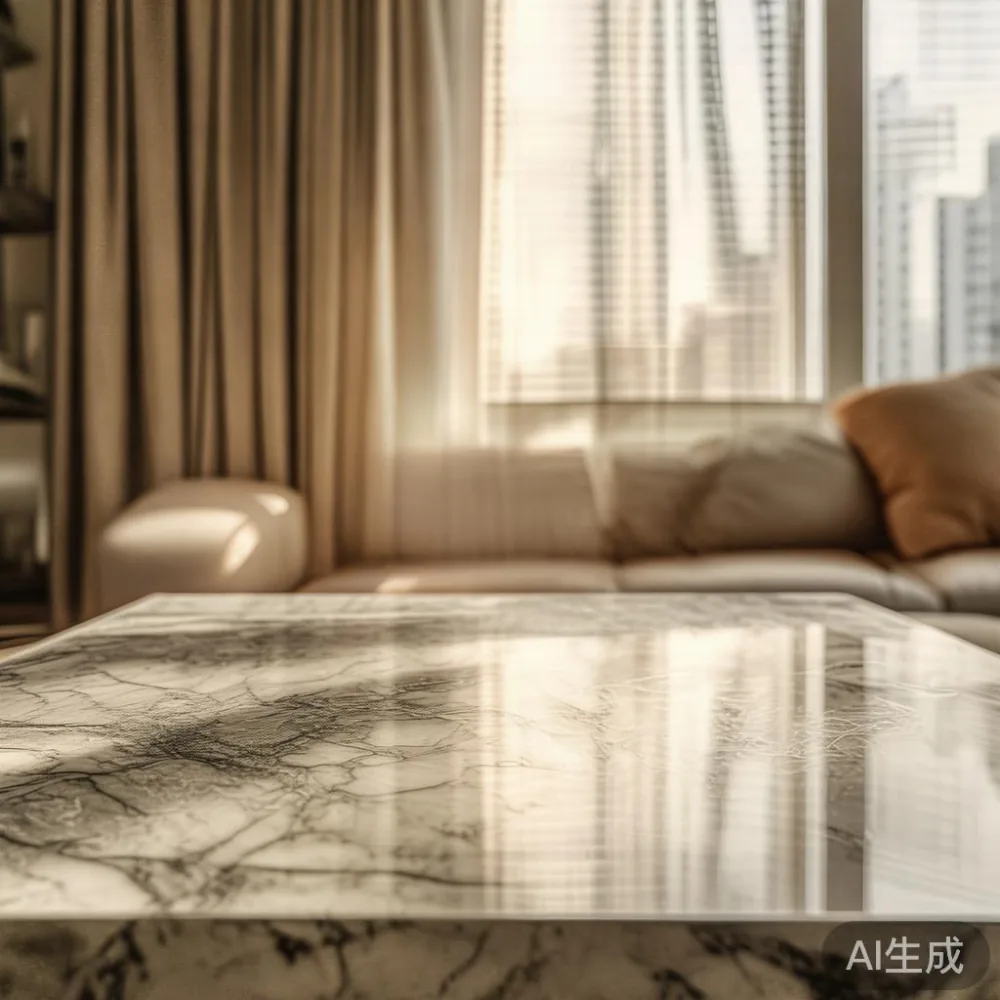
Last month I visited a workshop in Foshan where a foreman showed me two offcuts from the same shipment of European oak — both pieces measured 60 cm long, 20 cm wide, 4 cm thick. One had tight, vertical grain and eight growth rings per centimetre; the other had wide, irregular grain with two rings per centimetre. He pointed at the wider-grain piece and said it would be cut into smaller components, while the tight-grain piece was reserved for a 2.4 m marble table top base that would retail in Singapore above S$5,200. Same species, same supplier, same kiln — different grade. Grade dictates yield, and yield dictates price.
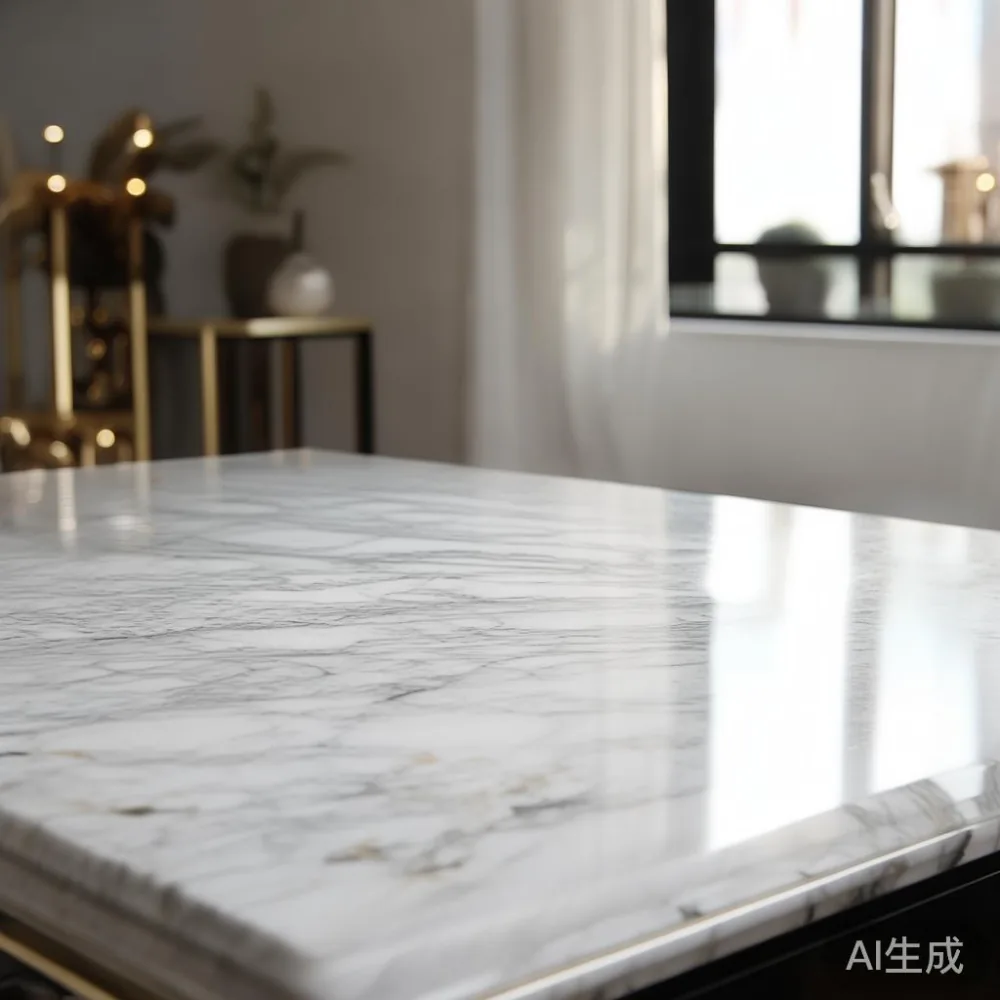
There is also the question of how much of each log actually becomes a finished piece. A rough-hewn slab of oak might lose 35 to 45 percent of its volume through planing, joinery cuts, and sanding. A slab destined for a marble furniture top — where the wood is reduced to a structural frame because the stone does the visual work — can lose 50 to 55 percent because the shaping is so precise. Higher waste means higher cost per visible square centimetre.
Joinery, Hardware, and the Hidden 30 Percent
The visible surface of a solid wood bed frame or sofa gets all the attention, but a surprising share of the manufacturing cost lives inside the piece. Traditional mortise-and-tenon joinery on a wardrobe takes roughly 45 minutes per corner from a skilled cabinetmaker; a cam-lock and dowel system takes 6 minutes. The first method adds about S$220 to a 2 m wardrobe in labour alone. The second method adds about S$30.

Drawers tell a similar story. A solid wood nightstand with full-extension soft-close Blum runners — 100,000-cycle rated, made in Austria — costs S$48 to S$62 per drawer in hardware. A basic single-rail runner costs S$4 to S$7. Over a five-drawer dresser, that gap alone exceeds S$200. Slide a drawer in each version, and your hand knows the difference within three seconds.
Finishes follow the same logic. A polyurethane sealer applied in two coats over a primer costs the workshop roughly S$3 per square metre in materials. A hardwax oil from a German supplier — rubbed in by hand, buffed, then repeated — runs S$11 per square metre in materials and roughly four times the labour. The hardwax surface ages visibly and can be refreshed every 8 to 10 years with a light sanding and one new coat. The polyurethane surface is harder to repair and tends to crack or yellow at year 12 to 15 under Singapore's UV index, which averages 9 to 11 year-round.
Size, Thickness, and Engineering Constraints
Numbers matter more than aesthetics once a piece has to survive a Singapore move. A typical HDB corridor is 1.2 m wide; a typical lift door is 0.9 m wide with a cabin depth of 1.5 m. A solid wood dining table longer than 1.8 m usually cannot pivot through either without disassembly, so designers either build it in two bolted halves or restrict it to 1.6 m. The bolted version requires twice the machining and at least one more hardware set; the shorter version restricts your guest list to six instead of eight.
Thickness drives weight, and weight drives freight. A 2.2 m x 1.0 m marble table top in Carrara, polished to 2 cm thick, weighs roughly 130 kg. The same top in 3 cm thick weighs 195 kg. Freight from a Foshan workshop to a Singapore condominium at current rates — sea freight plus GST plus last-mile white-glove delivery to, say, a unit on the 22nd storey of a Bedok tower — runs about S$480 for the 2 cm top and S$620 for the 3 cm top because two delivery personnel are mandatory above 80 kg and three above 150 kg, by the Singapore workplace safety guideline.
For wooden components, the same physics applies. A solid wood bed frame in king size (183 cm x 190 cm) using 4 cm-thick side rails weighs about 62 kg; one using 6 cm-thick rails weighs 92 kg. The thicker frame costs more in raw material and more in shipping, but it also resists the kind of seasonal movement that cracks slats in air-conditioned HDB bedrooms where humidity swings from 40 percent during the day to 70 percent at night.
What Does MIDHILL Actually Do Differently?
MIDHILL has been producing solid wood pieces in Foshan since 2008 and now exports to more than 15 countries, with a 10-year structural warranty and lifetime refinishing on qualifying items. The company's standard free-shipping threshold of US$350 (around S$475) covers most bedroom and dining sets to a Singapore address, and a 14-day return window applies to stocked items. I spoke with a colleague who specified a 2.4 m marble table with a French light luxury profile — fluted legs, soft brass-tip corners, a single thick vein of grey running across the stone — and the quote was roughly 18 percent below two other Foshan suppliers she had approached with the same brief. The saving came mainly from shorter machining lead times on the frame and a direct shipping lane that bypassed a regional distributor.
What stood out to her was not the number but the specification sheet. The marble table came with documented thickness (18 mm ± 0.5 mm), documented steel-reinforced frame members at 60 cm intervals, and a clear note on which wax oil had been applied and at what coverage. Most competing quotes she received simply said "marble top" and left the rest to interpretation. The difference between a documented specification and a vague one is the difference between a piece that lasts 20 years and one that cracks at the first thermal shock.
How do I style a European dressing table in a small apartment?
Choose a dressing table no deeper than 40 cm and no wider than 90 cm, mount a mirror that sits 5 cm above the back edge rather than a full-height hinged unit, and keep the surface 80 percent clear so a single tray can hold your daily items.
Singapore studio apartments and compact condo bedrooms — think 9 to 11 sqm bedrooms in Punggol or Sengkang — punish bulky furniture. A European dressing table in this context means something closer to a post-modern light luxury piece: a slim oak frame on tapered legs, a single shallow drawer with a soft-close runner, and a marble or marble-look top no more than 12 mm thick to keep weight around 18 kg total. Push it flush against a wall 60 cm from the window, hang a round mirror with a thin brass rim centred 150 cm above the floor, and add one articulated reading lamp on the wall rather than a table lamp that eats surface area.
Storage lives in the drawer, not on top. Lip balm, two brushes, a small tray for rings — that's the daily kit. Everything else stays in a closed container inside the wardrobe. The dressing table becomes a stage, not a shelf, and the room reads larger because the eye sees only one or two objects at a time.
The Role of Stone in Marble Furniture
Marble furniture carries a price premium that goes well beyond the cost of the slab. A 1.8 m round dining table in solid walnut without any stone might retail at S$3,400; the same design with an inlaid travertine centre can reach S$5,800. The premium covers three things: the stone itself (S$600 to S$1,400 depending on quarry and grade), the precision cutting required to fit an irregular natural surface into a geometric wood frame (often 4 to 6 hours of CNC time per piece), and the reinforcement needed beneath the stone so it does not crack under a heavy elbow or a dropped pan.
Reinforcement is the part most buyers never see. A proper marble table top sits on a sub-frame of moisture-resistant plywood or steel cross-members spaced at 25 to 30 cm intervals, with a thin layer of closed-cell foam between the stone and the frame to absorb thermal expansion. Skip the foam and the marble develops hairline fractures within 18 months under Singapore's humidity cycle. Build the sub-frame right and the same marble furniture piece can outlive the warranty by a decade.
Is Light Luxury Just a Marketing Term?
American light luxury, in furniture terms, refers to a restrained material palette — one stone, one wood species, one metal accent — applied with generous proportions and minimal ornament. A solid wood sofa in this style might pair a 3-seater oak frame in a 240 cm width with two Belgian linen cushions in oatmeal and a single brushed brass foot on each front corner. The French equivalent pushes slightly more curvature and a cooler wood tone, while post-modern light luxury leans into asymmetric bases and mixed metals.
None of these labels is purely decorative. They signal specific material decisions that drive cost. A piece labelled post-modern light luxury with a brushed brass foot is telling you that the brass is solid, not plated, and that the foot has been turned on a lathe rather than cast — both choices that add S$35 to S$60 per leg but last 25 years without flaking. A piece with the same label and a plated foot will peel within 36 months in Singapore's humidity.
What About a Nordic Sectional Sofa in the Same Conversation?
Buyers comparing a solid wood sofa to a Nordic sectional sofa usa often notice the price gap first — a Nordic-style modular in fabric typically lists between S$2,200 and S$4,800 for a four-seat configuration, while a solid wood-framed sofa in the same footprint starts around S$3,600. The gap narrows once you account for frame material: a Nordic sectional sofa usa is usually built on a plywood or metal frame with high-resilience foam wrapped in down-proof fabric, while the solid wood alternative uses kiln-dried oak or ash with webbed suspension and removable covers. Longevity profiles differ — the wood frame carries a 10 to 15 year service life under daily use, the plywood frame roughly 8 to 12 years — so the per-year cost often converges within S$40.
How Long Should a Quality Piece Actually Last?
A well-built solid wood dining table in Singapore should serve a family of four for at least 15 years before the first refinishing, and 25 to 30 years before any structural concern. The same timeline for a marble table top is 12 to 18 years before resealing, depending on usage. Wardrobes and bed frames typically outlast two decades of daily use because the joinery carries the load rather than the surface finish. Nightstands, with their small drawers and frequent handling, usually show wear on the hardware between years 6 and 9 — which is exactly why soft-close runners and replaceable glides matter when you are comparing two quotes that look similar on paper.
The price of solid wood furniture is not a single number. It is the sum of species, grade, joinery, hardware, finish, dimension, reinforcement, and freight — and each of those decisions leaves a fingerprint you can feel with your hand within thirty seconds of touching the piece. The cheapest option in any showroom is rarely the best value per year of use, and the most expensive is rarely worth the premium unless the specification sheet proves why.