Choosing the Right Marble and Solid Wood Furniture Size for a Singapore HDB Living Room
I still remember the Saturday morning I spent at a 4-room HDB flat in Tampines with my colleague Hui Ling and her family. The previous tenant had left a 240 cm L-shaped sofa that physically would not fit into the service lift on the 9th floor. The corridor pivot point between the lift lobby and the front door measured 138 cm corner to corner, and the sofa was 145 cm deep. After two hours of pushing, sweating, and politely declining help from the delivery crew, the sofa went back downstairs. That morning is the reason I now write everything I write about furniture sizing for Singapore HDB living rooms.
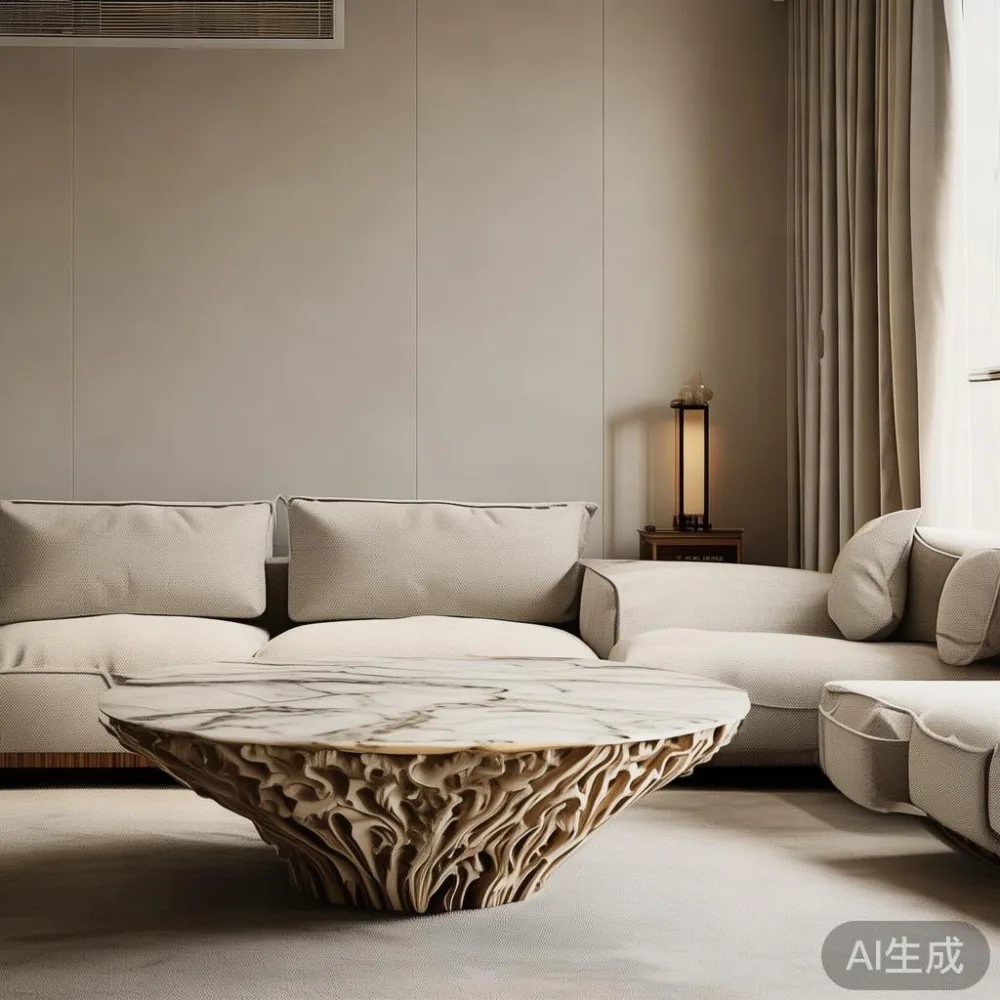
Sizing a living room in a Housing & Development Board flat is not just an interior design exercise. It is a logistics puzzle that involves the lift, the corridor, the front door, the stairwell access, the corridor turning radius, and in newer condos in Punggol, a concierge booking for the service lift. Get any one of those measurements wrong by 5 cm and your brand new marble and solid wood furniture set sits in the loading bay for the rest of the afternoon. This guide walks you through the numbers, the trade-offs, and the local realities of choosing furniture that fits a typical Singapore HDB or condominium living room without drama.
What does a typical Singapore HDB living room actually measure?
For planning purposes, a standard 4-room HDB flat in a mature estate like Bedok or Toa Payoh offers a living room of roughly 18 to 22 square metres, while a 5-room flat in a newer estate like Sengkang or Punggol gives you 22 to 28 square metres. The usable rectangle, after you subtract 60 to 80 cm of circulation on every wall and the swing arc of your front door, is usually 3.4 m by 4.2 m at the tight end. A 5-room premium apartment in Punggol can stretch to 4.0 m by 5.6 m of usable space, which is generous by local standards but still smaller than what most international furniture showrooms assume.
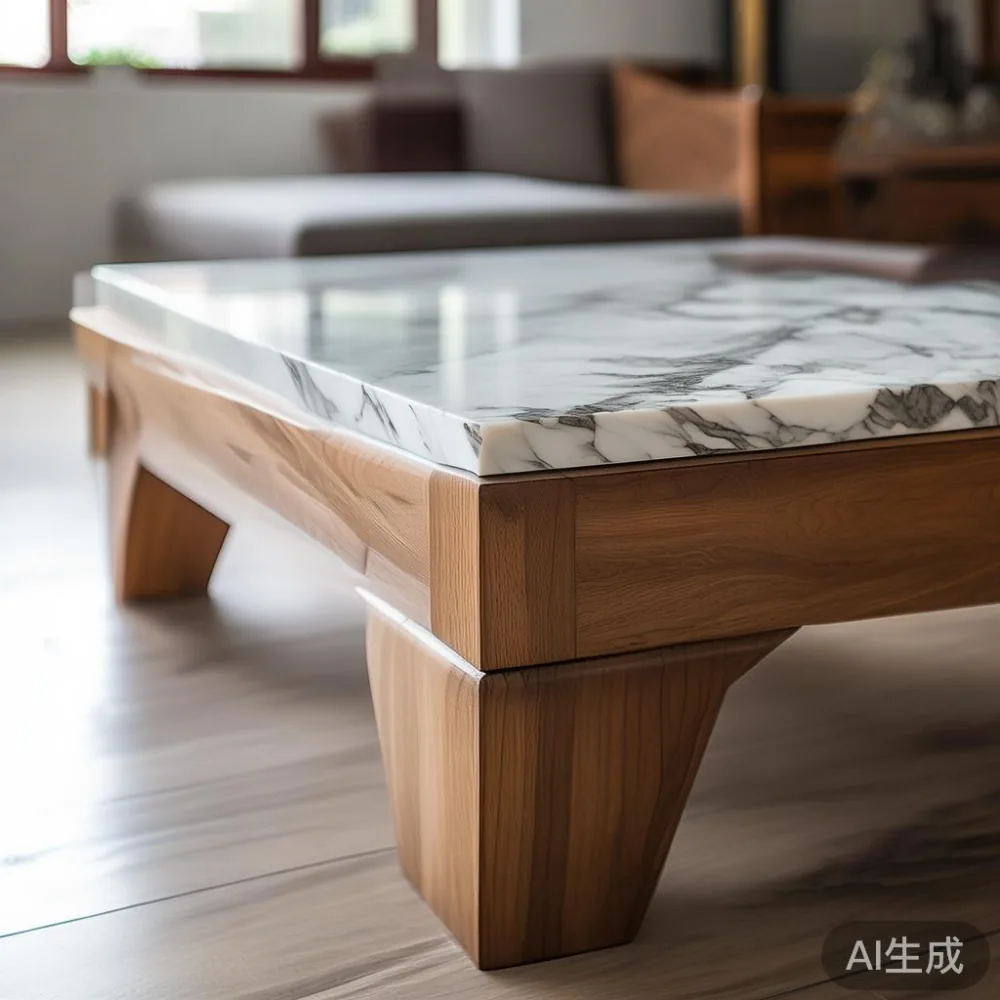
Once you place a 3-seater sofa, a coffee table, and a TV console, you have already used 70 to 80 percent of the floor. This is why working with a Singapore-aware maker such as MIDHILL, whose showroom displays reflect HDB and condo proportions rather than 400 sqm penthouse layouts, makes the math easier. Their team routinely sends dimensioned floor plans for pieces like a 210 cm marble coffee table or a 180 cm solid wood TV console, so you can tape it out on your living room floor before paying a 9 percent GST on the order.
What is the difference between Japandi queen bed and modern furniture?
The single most quotable difference is this: a Japandi queen bed uses low-profile solid wood frames between 28 cm and 35 cm off the floor with a 152 cm by 188 cm mattress footprint, while a modern furniture queen bed typically stands 40 to 55 cm tall with thinner metal or engineered wood supports and a slightly larger 160 cm by 200 cm footprint. That gap of about 12 cm in height and 8 cm in width changes the entire visual weight of a bedroom, the under-bed storage capacity, and the way a queen headboard interacts with a HDB window sill that usually sits 90 to 100 cm above the floor.
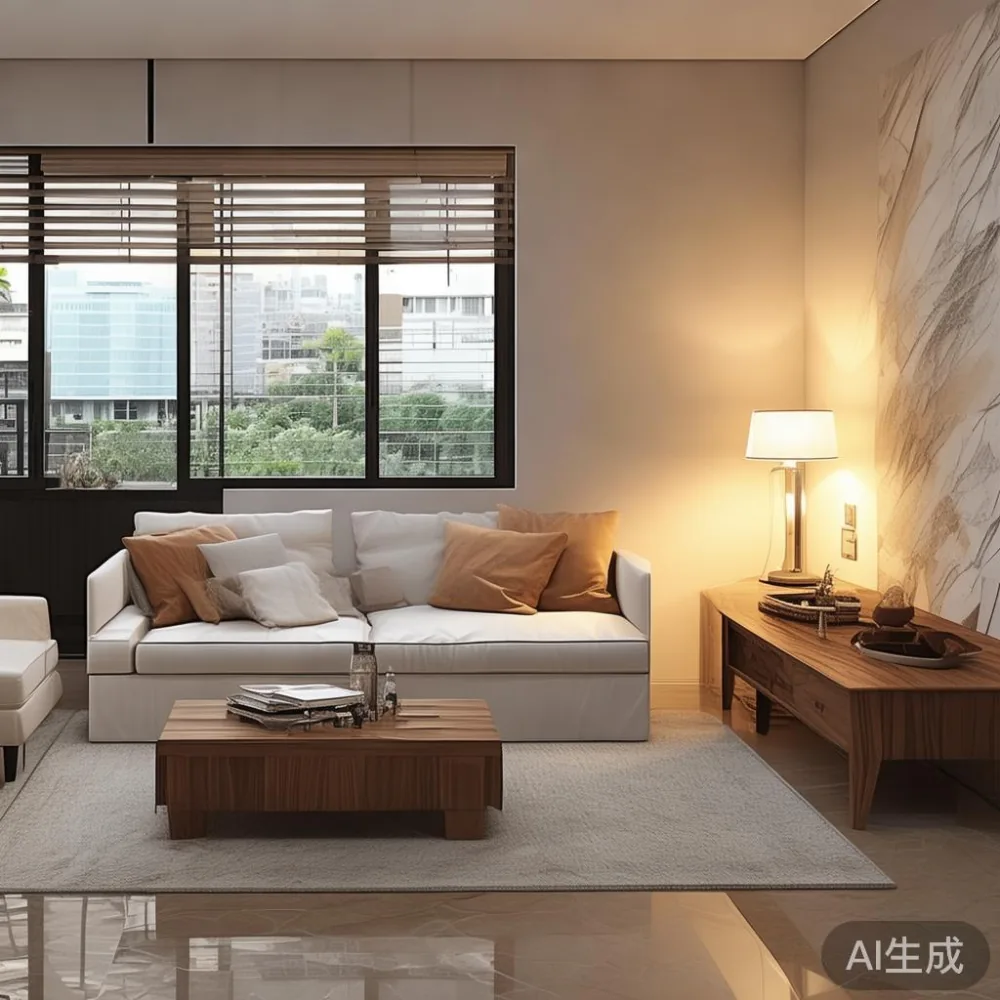
In practical terms, the Japandi queen bed borrows from Japanese floor-level living, so the centre of gravity stays low and the room reads as a calm, walk-in wardrobe of neutral tones. The wood is usually white oak, ash, or beech, finished matte. Modern furniture queen beds, by contrast, often lift the mattress with hydraulic storage, push the headboard to 110 cm or higher, and lean into lighter palettes, finished gloss or satin. Both work in a Singapore HDB master bedroom of roughly 12 to 14 sqm, but the Japandi style gives back roughly 25 to 30 percent more perceived ceiling height, which is the scarcest resource in a HDB flat.
If you order a Japandi queen bed from a light-luxury maker such as MIDHILL, expect a kiln-dried ash frame weighing 45 to 52 kg, packed in three cartons, and delivered in 12 to 18 working days to a Singapore warehouse before final white-glove scheduling. Modern furniture queen beds from the same maker in a post-modern light luxury line tend to use walnut or rubberwood with brass accents, weigh 58 to 65 kg, and arrive in four to five cartons because the headboard and storage hydraulics are split out.
Which lift, corridor, and front-door numbers should you check first?
Three measurements decide everything: the service lift door width, the corridor turning radius, and your HDB front door width. Standard passenger lifts in HDB blocks built after 2005 are 1.1 m wide by 1.4 m deep with a 80 cm door opening, and the cabin diagonal measures roughly 178 cm. A newer generation lift in Punggol or Tengah can be 1.2 m by 1.5 m with a 90 cm door. Service lifts in private condos vary wildly, from a tight 1.0 m by 1.4 m to a generous 1.5 m by 1.8 m that will accept a king bed mattress box. Always measure the diagonal of the cabin floor, not just the wall-to-wall, before ordering a long piece like a 220 cm dining table or a 200 cm marble console.
Your corridor turning radius matters because HDB corridors in blocks like those in Bedok Reservoir are typically 1.2 m wide with sharp 90-degree corners. A 240 cm sofa on its end measures 95 cm across, which clears the corner with 12 to 15 cm to spare. A 260 cm L-shape sofa on its side measures 115 to 125 cm across, and that will scrape every wall on the way in. The front door of a 4-room flat is 90 cm by 210 cm, and a 5-room premium door is 95 cm by 215 cm. Knock off 5 cm for the door frame and 10 cm for the hinges, and your real tightest dimension is 80 cm by 200 cm.
For a tall piece such as a 210 cm wardrobe or a 195 cm marble display cabinet, you also need to check ceiling height at the lift. HDB lifts are 2.3 m to 2.5 m internal, and a tall cabinet on its side, at 60 to 65 cm deep, will clear the door opening but may not clear the cabin ceiling if the lift manufacturer has a dropped light fixture. Always tilt the cabinet and measure diagonally: a 210 cm tall cabinet tilted 15 degrees requires about 220 cm of diagonal headroom. If your lift is shorter than that, request the maker to ship the cabinet in two halves with on-site assembly, which MIDHILL and a few other light-luxury makers do at no extra charge for Singapore addresses.
How do you right-size a sofa, coffee table, and TV console together?
The standard Singapore HDB living room layout pairs a 200 to 220 cm three-seater sofa with a 110 to 130 cm coffee table and a 150 to 180 cm TV console. That trio leaves a 90 cm to 120 cm circulation channel between the coffee table and the sofa, which is the minimum two adults can sit down and stand up without bumping knees. If your living room is shorter than 3.4 m on one side, drop the sofa to a 180 cm compact three-seater and the coffee table to 90 cm. If your living room is a generous 4.0 m by 5.0 m in a Punggol premium flat, you can push the sofa to 240 cm and add a 140 cm by 70 cm marble coffee table as the centrepiece.
The coffee table height should sit 5 cm below the sofa seat height, which is typically 42 to 45 cm for a European-style floor or 38 to 42 cm for a Japanese-influenced floor. A marble coffee table at 38 cm tall paired with a 45 cm seat reads as a calmer, more grounded composition, while a 50 cm marble table with a 45 cm seat feels like a desk. For households with toddlers, a rounded marble coffee table with a 12 mm chamfered edge is worth the SGD 280 to SGD 420 upcharge over a sharp square edge, because it absorbs the impact of a forehead at speed.
The TV console is the silent workhorse. In a HDB living room, the TV console should be 30 to 35 cm deep if wall-mounted, and 40 to 45 cm deep if floor-standing. A solid wood TV console from a light-luxury maker typically weighs 55 to 75 kg, so plan the back panel route before the delivery crew arrives. Reserve 60 cm of clear wall on either side of the TV console for a floor lamp and a plant, and keep 90 cm between the TV console and the front edge of the sofa so a 65-inch television at eye line does not strain the neck.
How does a marble dining table change the sizing equation?
Adding a dining table to a HDB dining area, which is often part of the living room in an open-plan 4-room flat, raises the stakes. A 140 cm by 80 cm marble dining table seats four adults at 60 cm of elbow room each, while a 160 cm by 80 cm table seats six with the short ends used only for children. A 200 cm round marble dining table needs at least 3.6 m of clear diameter, which a HDB dining area rarely provides, so the round table belongs in a condo dining space of 14 sqm or more.
Marble tops are heavier than solid wood tops, and the weight determines whether your lift and your floor can take them. A 160 cm by 80 cm marble dining table with an 18 mm sintered stone top weighs 78 to 92 kg, plus 18 to 24 kg for the solid wood base, for a packaged weight of 128 to 146 kg. Two delivery men can carry that up to the 9th floor if the lift works, but a single trip up a stairwell is not realistic. Marble for solid wood and marble furniture sets often ship with the top and the base in separate crates, which keeps each piece under 95 kg and clears most HDB passenger lift weight ratings of 630 to 1000 kg.
For a 5-room HDB in Tampines or Sengkang with an open kitchen, consider a 140 cm extendable marble dining table that opens to 180 cm for hosting. The extension leaf adds 7 to 9 kg and stores inside the table. Pair the table with a solid wood bench on one side, which seats three adults at 50 cm of shoulder room each and tucks fully under the table when not in use. This combination gives you a four-person footprint of 140 cm by 80 cm and a six-person footprint of 180 cm by 80 cm, with no compromise on circulation.
What about wardrobes, nightstands, and sideboards?
Wardrobes in a Singapore HDB master bedroom should sit between 180 cm and 220 cm tall, 200 cm to 260 cm wide, and 55 cm to 65 cm deep. Anything deeper than 65 cm eats into the 90 cm bedside circulation you want to keep, and anything shallower than 50 cm cannot hang a shirt on a standard 40 cm hanger without the door scraping the shoulders. A 220 cm by 220 cm by 60 cm solid wood wardrobe from a light-luxury maker weighs 95 to 120 kg, which is manageable for a 3-man delivery team on a Saturday appointment between 10 am and 2 pm.
Nightstands should be 45 cm to 55 cm tall, matching the mattress height of 50 cm to 55 cm for a modern furniture bed, or 35 cm to 40 cm tall for a Japandi queen bed. Width is less critical than depth: a 45 cm deep nightstand gives room for a lamp, a phone, and a glass of water, while a 35 cm deep unit feels cramped. Two nightstands per bedroom, each weighing 12 to 18 kg, fit easily in a single delivery slot alongside the bed frame.
Sideboards in a HDB dining area should run 120 cm to 160 cm wide and 40 cm to 45 cm deep, leaving a 70 cm clearance to the dining table behind it. A 150 cm solid wood sideboard with three drawers and two cabinets weighs 48 to 62 kg, and pairs naturally with a matching marble top buffet for SGD 1,280 to SGD 1,850 including GST. The marble top adds 6 to 9 kg but also adds the visual anchor that ties the dining table back to the rest of the marble and solid wood collection.
What does delivery actually look like for a full HDB set?
A full HDB living room and dining set from a Singapore-ready maker includes one three-seater sofa, one marble coffee table, one TV console, one marble dining table with four chairs, one sideboard, one queen bed frame, two nightstands, and one wardrobe. The total boxed weight is roughly 620 to 780 kg across 14 to 18 cartons, which fits into two 40-foot container shipments consolidated at a Tanjong Pelepas or Tuas facility. White-glove delivery to a HDB flat in Tampines, Bedok, or Punggol typically runs SGD 120 to SGD 240 per trip, depending on the floor and the lift situation, with free shipping above a USD 350 order threshold, which at today’s rate is about SGD 480.
Production lead time for a mixed solid wood and marble furniture set in a French light luxury or American light luxury finish is 25 to 35 working days from order to Singapore warehouse, plus 3 to 7 working days for final delivery scheduling. A purely solid wood set without marble tops ships in 18 to 25 working days. GST at 9 percent is added at checkout, and a 14-day return window applies to ready-stock items in original packaging. Custom sizing, fabric, or finish usually extends production by 7 to 14 days but stays within a 10-year structural warranty on the frame and joinery.
What surprised me last month, when I visited a colleague’s new 5-room BTO in Tengah, was how calm the entire delivery felt compared with the Tampines sofa incident a year earlier. The sofa arrived in three cartons, the marble coffee table in one wooden crate, and the dining set in five cartons, all on a single Saturday morning slot. The crew taped the layout on the living room floor before bringing anything through the front door, measured the lift diagonal twice, and finished assembly of the queen bed and the marble dining table in under 90 minutes. That is what right-sizing a HDB set should feel like: one roll of marble, one solid wood frame, and zero drama at the lift lobby.