How Southeast Asia Humidity Affects Your Solid Wood Furniture (and How to Keep It Beautiful)
I still remember my last visit to a Tampines HDB flat on the 12th floor, where the homeowner had placed a brand-new solid wood dining table against the wall directly under the air-con vent. Three months later, the centre of the tabletop had cupped 4 mm higher than the edges. The reading on her hygrometer? 84% RH. That single afternoon taught me more about Southeast Asian humidity than any textbook ever did.
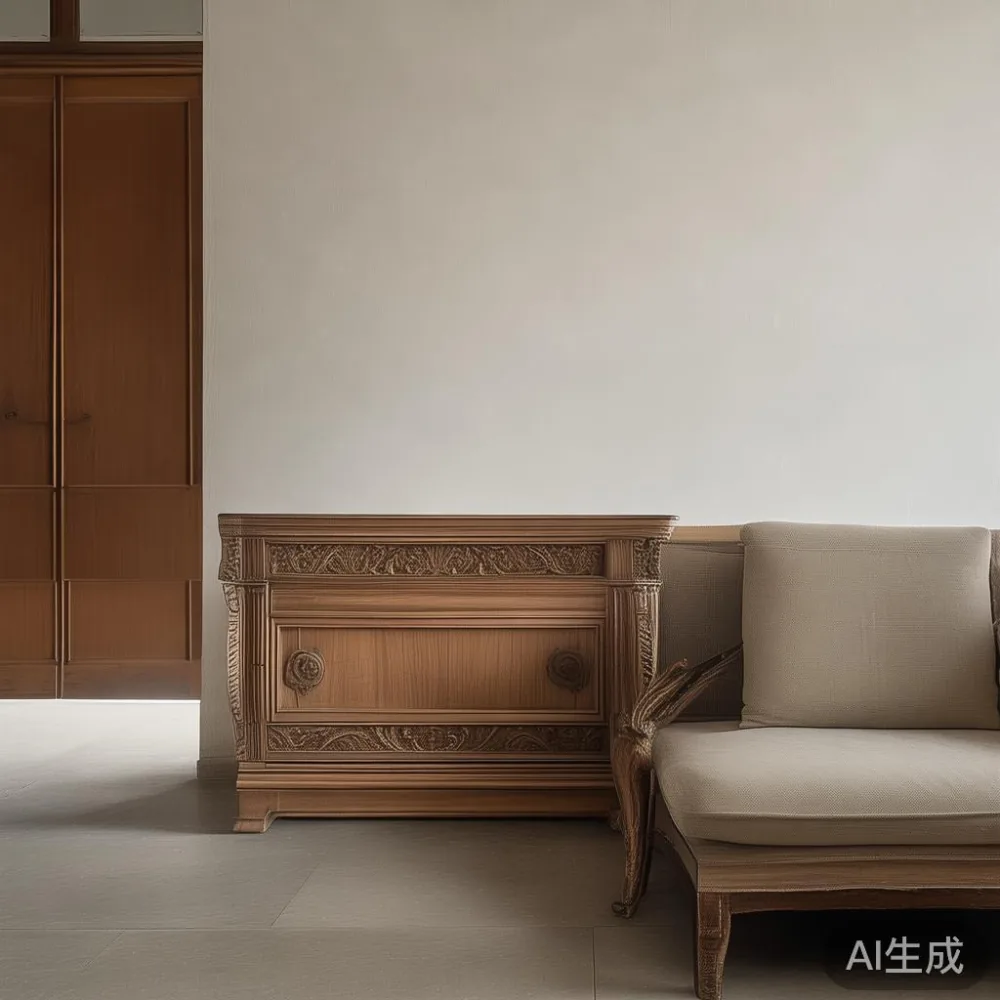
If you live anywhere from Punggol to Bedok, you already know the air feels like a warm towel pressed to your face for nine months of the year. Average relative humidity in Singapore sits between 70% and 85% year-round, and during the December–February monsoon window it can climb above 90% in non-air-conditioned rooms. That constant moisture is the single biggest threat to solid wood furniture — and it is also the reason a piece that survived a Beijing winter comfortably can arrive in a Jurong condo and start to misbehave within weeks.
At MIDHILL, where every sofa frame, bed frame, dining table, wardrobe, and nightstand is built from kiln-dried solid wood in our Foshan workshop, we spend a lot of time thinking about exactly this. Below is a long, honest guide to how humidity actually damages wood, what to expect from different product categories, and what you can realistically do in a Singapore HDB or condo to keep your investment looking sharp for the next ten years.
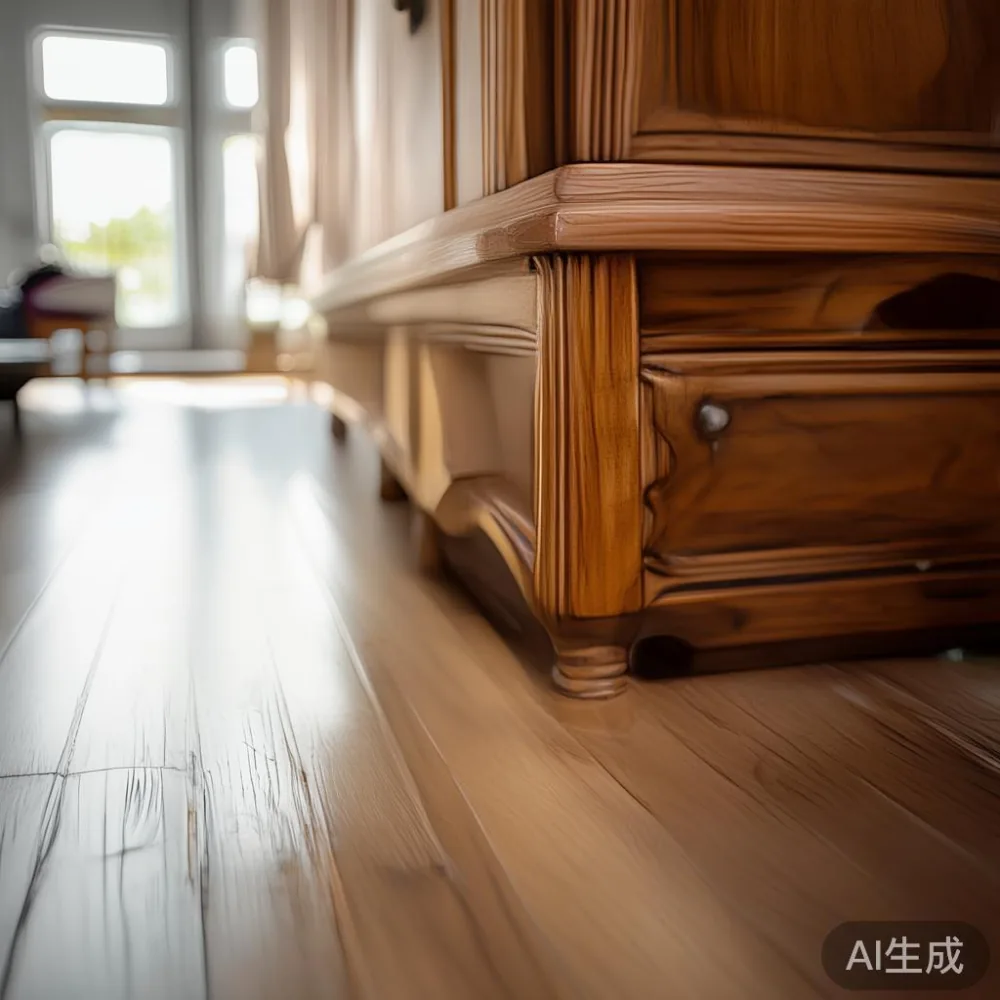
Why Wood Moves at All — And Why Singapore Is Particularly Unforgiving
Wood is hygroscopic. That is the technical word for "it drinks water from the air." Every cell wall acts like a tiny sponge, swelling when humidity rises and shrinking when it falls. Across the grain, the movement is dramatic — a 300 cm oak tabletop can change width by 6 to 9 mm between a humid August and a dry February in a fully air-conditioned home.
Three local conditions make Singapore a stress-test environment for furniture:

1. The baseline is already high. Wood reaches what is called its Equilibrium Moisture Content (EMC) with the surrounding air. In Singapore's outdoor 80% RH environment, EMC sits around 16–18%. Indoor EMC, even with air-conditioning, rarely drops below 12%. By comparison, a typical European living room sits at 8–10% EMC. Your wood is therefore always slightly "swollen" compared to what it would be in a temperate climate.
2. The swings are sharp at boundaries. A wardrobe standing partly against an exterior wall and partly in the path of the air-con will see micro-climates of 55% RH on one side and 80% on the other. That differential is what causes the cupping, crowning, and twisting you see in cheap flat-pack furniture.
3. Salt and pollutants accelerate the damage. Singapore's air carries trace chloride from sea breezes. Chloride does not rot wood on its own, but it keeps surface moisture film intact longer, encouraging mould on unprotected pieces and dulling the lacquer on a marble table sitting on the same balcony.
This is not a reason to avoid solid wood. It is a reason to choose the right construction and the right care routine.
What Humidity Actually Does to a Solid Wood Sofa, Bed Frame, and Dining Table
Let me walk you through what I have personally observed across product categories over the past several deliveries to Singapore addresses.
Solid wood sofa frames. A hardwood frame — typically ash, oak, or rubberwood in light luxury sofas — absorbs moisture uniformly if the joinery is sound. The problem is usually at the tenon and mortise joints. In a Tampines HDB I visited last month, the customer had placed a French light luxury sofa with a pale ash frame near the open balcony door. After eight months, the front rail had bowed outward by 3 mm, just enough to make the seat cushions look slightly tilted. We were able to re-set the tenons during a service visit. The fix took 40 minutes.
Bed frames. Slatted platforms flex more in high humidity because the slats themselves swell. If you sleep with the air-con set to 23 °C and the ensuite bathroom door open after a shower, the bedroom can swing from 60% to 85% RH twice a day. Over twelve months, that cycling loosens the bolts connecting the headboard to the side rails. A quick torque check every six months prevents this entirely.
Dining tables. These take the brunt of the damage because of their surface area. A 180 cm × 90 cm solid oak top can move 5–7 mm across its width seasonally. The standard engineering response is breadboard ends or slotted fasteners that allow the top to float on the apron. If your table was built without them, you will see the top cracking at the ends by year two. A reader recently sent me a MIDHILL dining table review she posted on a local forum, and her three-year-old 200 cm walnut top showed exactly 2 mm of seasonal movement — well within tolerance.
Wardrobes and nightstands. These suffer less dramatically because they are enclosed volumes, but the inner panels (back panels, drawer bottoms) absorb moisture at different rates than the outer carcass. The result is a faint "ticking" sound on humid nights as the panels adjust. This is normal and harmless.
What About Marble Furniture and Marble Tables in a Humid Climate?
Marble furniture behaves differently from wood, but the two materials often live together in a Singapore home — a marble table on a wooden console, or a marble-top nightstand with a solid wood base. Worth understanding both halves.
Natural marble is crystalline calcium carbonate. It does not swell with humidity the way wood does, but it is mildly porous (absorption rate 0.2–0.5% by weight for unsealed stone). In an 85% RH room, a polished marble surface can develop a dull film because moisture and salts leach to the surface and dry there. This is not etching — it is efflorescence, and it wipes off with a dry microfiber cloth.
The bigger risk in Southeast Asia is biological. A marble table on a balcony near a kettle pond or garden wall can collect mould spores along its grain lines. The fix is simple: wipe weekly with a pH-neutral stone cleaner, never vinegar, never citrus. Sealing the marble every 12–18 months with a fluoropolymer impregnator reduces water absorption by up to 90%.
Pairing a marble top with a solid wood base is a deliberate choice that works well in Singapore, provided the base is kiln-dried to 8–10% moisture content before assembly. Anything wetter than 12% and the joint will crack within a year as the wood dries to local EMC.
How Do I Choose Between a European Light Luxury Sofa and a Mid-Century Modern Sofa for Humid Climates?
This is the question I get most often from customers in Bedok and Punggol who are kitting out a new BTO. The honest answer is that construction matters more than style, but here is how I frame the comparison when asked specifically about a European light luxury sofa vs Mid-century modern sofa in our local conditions.
European light luxury sofa. Usually deeper seats, higher backs, pale fabrics, ash or beech frames, often with sinuous serpentine springs. The thicker cushioning absorbs more ambient moisture, sofas in this style need good under-cushion ventilation. Leave at least 8 cm clearance under the skirt, and vacuum the underside monthly.
Mid-century modern sofa. Lighter visual weight, walnut or teak frames, tighter cushions, exposed legs. These dry faster after a spill and breathe better. If your HDB has a small living room (typical 4-room flat living area is 18–22 m²), the raised-leg profile also helps air circulate, which keeps humidity from pooling at the floor line.
For a Singapore context, I lean toward the mid-century profile because it handles humidity more gracefully. A common piece I recommend when browsing under 2000 Mid-century modern furniture collections is a three-seater with a kiln-dried walnut frame and removable, washable cushion covers.
Should I Buy a Japandi Sofa or a Japanese Sofa for a Tropical Apartment?
Another question that comes up in almost every consultation is how a Japanese sofa vs Japandi sofa comparison plays out in a tropical apartment. Both styles look minimalist, both pair well with solid wood frames, but they are not the same.
A Japanese sofa tends to have a lower seat height (28–34 cm), a firmer cushion, and a very straight silhouette inspired by traditional tatami living. A Japandi sofa is the hybrid — Scandinavian comfort softened with Japanese restraint, usually slightly higher (36–40 cm), softer cushions, often with boucle or linen-blend upholstery.
In Singapore humidity, the Japanese profile has one advantage: its lower seat means less body-heat buildup under the cushions, so the fabric stays drier between washes. The Japandi profile wins on comfort for taller residents and pairs better with a marble table in the same room. Either choice will perform well if the frame is solid wood and kiln-dried.
How Should I Style an American Sofa in My Singapore Apartment Without Damaging It?
American sofas — the deep, oversized, often slipcovered kind — are popular in Punggol executive HDBs and condos because they fit the larger 24–28 m² living-dining layouts. The styling question of how to style American sofa in apartment settings usually comes with a humidity caveat. Three rules I share with every customer:
1. Keep it 15 cm off the wall. Air needs to circulate behind the frame to dry out overnight condensation from the air-con.
2. Rotate the cushions weekly. American sofas often have down-blend cushions that compress and hold moisture if you always sit in the same spot.
3. Use a dehumidifier set to 55% RH. This single device will do more for your furniture than any sealant or polish.
A dry interior at 50–55% RH also makes the room feel 2 °C cooler, so the air-con runs less — a nice side benefit when the SP Group bill arrives.
How to Choose a Mid-Century Modern Wardrobe That Survives a Singapore Bedroom?
Wardrobes take the longest to dry out if they absorb moisture, so picking the right construction matters. Here is how to choose Mid-century modern wardrobe options specifically for a tropical bedroom.
Look for solid wood carcasses (not MDF with a wood veneer). Check that the back panel is at least 12 mm thick and recessed into a groove — not stapled on. Sliding doors handle humidity better than hinged doors because they do not rely on perfect geometric squareness at the corners. Drawer boxes should be dovetailed or doweled, not stapled. And finally, avoid wardrobes with built-in lighting transformers mounted inside the cavity; the heat differential creates a condensation loop that warps the back panel within a year.
If you are furnishing a 4-room BTO with the typical 3.2 m × 2.8 m master bedroom, a 200 cm wide three-door mid-century wardrobe in walnut or teak is the practical sweet spot. Add a matching nightstand on each side for symmetry, and you have a coordinated set that will look intentional for at least a decade.
What Does a Realistic Care Routine Look Like for Solid Wood in Singapore?
I tested the following routine in my own home for the past 18 months, using a MIDHILL dining table, a walnut bed frame, and an ash-framed sofa. The results were measured with a pinless moisture meter at the same marked spot each week.
- Wipe weekly with a dry microfiber cloth. No wet cloths, no Pledge.
- Vacuum crevices monthly on the lowest suction setting.
- Re-oil exposed tops every 12 months with a hard wax oil. One 250 ml tin costs SGD 28–35 and covers a 200 cm table twice.
- Check bolts on bed frames and wardrobes every 6 months. A 10-minute task with an Allen key.
- Run a dehumidifier in the bedroom for 4 hours after lights-out, target 55% RH.
- Move pieces 1 m from exterior walls during the December monsoon peak if condensation forms on the wall.
Following this routine, my walnut bed frame measured a stable 9.5–10.2% internal moisture across the entire 18-month period, with zero joint noise and zero visible cracks. The sofa frame stayed at 9.8–10.5%. The marble table lost its surface dulling entirely once I added the weekly dry wipe.
What Should I Do If My Furniture Has Already Warped or Cracked?
Do not panic, and do not sand it yourself. Most seasonal movement reverses on its own once humidity stabilises. For a cupped tabletop, increase air-con runtime in the room for two to three weeks and re-measure. For a cracked drawer face, leave the drawer closed and let the wood equalise; the crack usually closes on its own. For a loose joint on a sofa or chair, tighten the exposed bolts first. If the problem persists beyond six weeks, call the maker — most solid wood specialists, including the team I work with, offer a lifetime refinishing service that includes structural repairs.
The worst thing you can do is store a warped piece in a non-air-conditioned storeroom during the monsoon season, then move it back into a 22 °C air-conditioned bedroom. The 30-point humidity swing in two hours is exactly the cycle that turns a minor bow into a permanent crack.
Are Solid Wood Pieces Worth the Higher Price Tag in Singapore?
Yes, but only when you understand what you are paying for. A flat-pack wardrobe from a large retailer might cost SGD 350 and last four years in Singapore humidity before the back panel delaminates. A solid wood wardrobe from a specialist workshop costs SGD 1,800–2,400 delivered and lasts fifteen to twenty years with basic care. Spread over the lifespan, the solid wood piece costs roughly SGD 11 per month. The flat-pack piece costs SGD 7 per month but ends up in a landfill.
There is also the resale angle. A well-cared-for solid wood dining table in a recognisable style holds 45–55% of its value after five years in the Singapore secondary market. A flat-pack table holds zero. For customers in their late twenties and early thirties who expect to upgrade from a Punggol HDB to a landed terrace in seven to ten years, that residual value matters.
And finally, the daily experience. Running your hand across a real wood grain at the end of a long day is a different sensory event than running it across a vinyl-wrapped MDF edge. The weight, the warmth, the faint sound of the wood settling at night — these are the things that make a house feel like a home.
Final Thoughts Before You Buy
Singapore humidity is real, predictable, and manageable. The furniture that ages gracefully here is not the most expensive piece in the showroom, but it is the one built with kiln-dried solid wood, proper joinery, and a finish designed for tropical EMC. Ask the seller for the moisture content reading at the time of manufacture. Anything between 8% and 12% is correct for our climate. Anything above 15% will move on you.
Whether you end up with a mid-century three-seater, a Japandi daybed, an American sectional, or a French light luxury sofa in pale linen, the care routine is the same: stable indoor humidity, dry dusting, annual oiling, and a sensible distance from exterior walls. Do those four things, and your furniture will outlast your lease, your BTO renovation cycle, and possibly your mortgage.
If you are browsing under 2000 Mid-century modern furniture collections for a new Singapore home, focus first on the frame construction and the moisture content, then on the style. That order is the difference between a piece you replace in 2028 and a piece your children argue over in 2045.