How Humidity in Southeast Asia Affects Solid Wood Furniture
Last October I delivered a Burmese teak dining table to a fourth-floor walk-up in Bedok. The lift was 1.1 m wide, the corridor turned at 90 degrees after 4.5 m, and the table top alone weighed 62 kg. The buyer, a teacher named Mr. Lim, told me the same piece of furniture had already failed twice in his previous home — once a particleboard console that swelled at the edges after the December monsoon, and once an MDF wardrobe whose doors would not close by February. When I unpacked the solid wood top and ran a moisture meter across the underside, it read 9.4%. His hallway ambient was 82%. That gap is the entire story of wood furniture in Singapore.
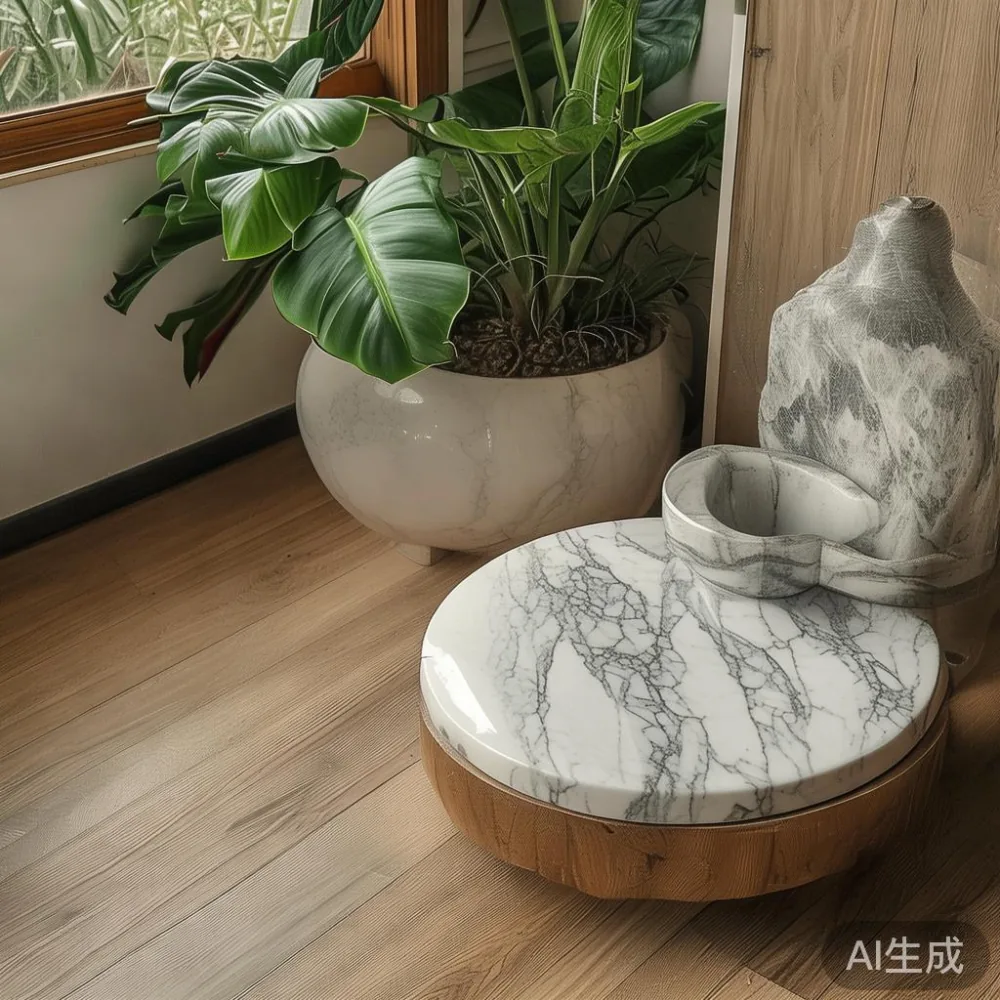
Why does humidity in Southeast Asia cause solid wood furniture to move?
Solid wood is a hygroscopic material. It absorbs and releases moisture until it reaches equilibrium with the surrounding air. In Singapore, outdoor relative humidity averages 78–85% year-round, and indoor humidity in non-air-conditioned HDB flats sits between 70% and 80% for at least nine months of the year. When a 200 cm dining table built in a drier factory (8–10% moisture content) enters a Tampines condo at 78% RH, it slowly drinks in water. The cells on the underside — shaded from airflow — swell faster than the top. Over six to twelve months, that imbalance shows up as cupping, a 2–4 mm bow across the width, hairline splits at the end grain, and sticky drawers. The wood is not defective; it is doing exactly what physics says it should.
What humidity range is safe for a solid wood sofa, bed frame, or wardrobe?
Most kiln-dried hardwoods used for furniture — oak, ash, walnut, teak, rubberwood — are stable between 40% and 60% relative humidity, with a target wood moisture content of 8% to 12%. Singapore's ambient air lives well above that band, which is why a piece crafted without climate adaptation will always struggle. Two design choices make a measurable difference. First, quarter-sawn cuts move roughly half as much as plain-sawn boards in the tangential direction, so a quarter-sawn oak dining top will cup less than a plain-sawn one of the same width. Second, frame-and-panel construction on wardrobe doors and dining table leaves allows the central panel to float inside a groove and expand or contract without splitting the frame. At MIDHILL's Foshan workshop, we set our dry-room target to 10% MC and re-check every batch with a pin meter before packing for export to Singapore, which keeps the initial swing small once the crate is opened.
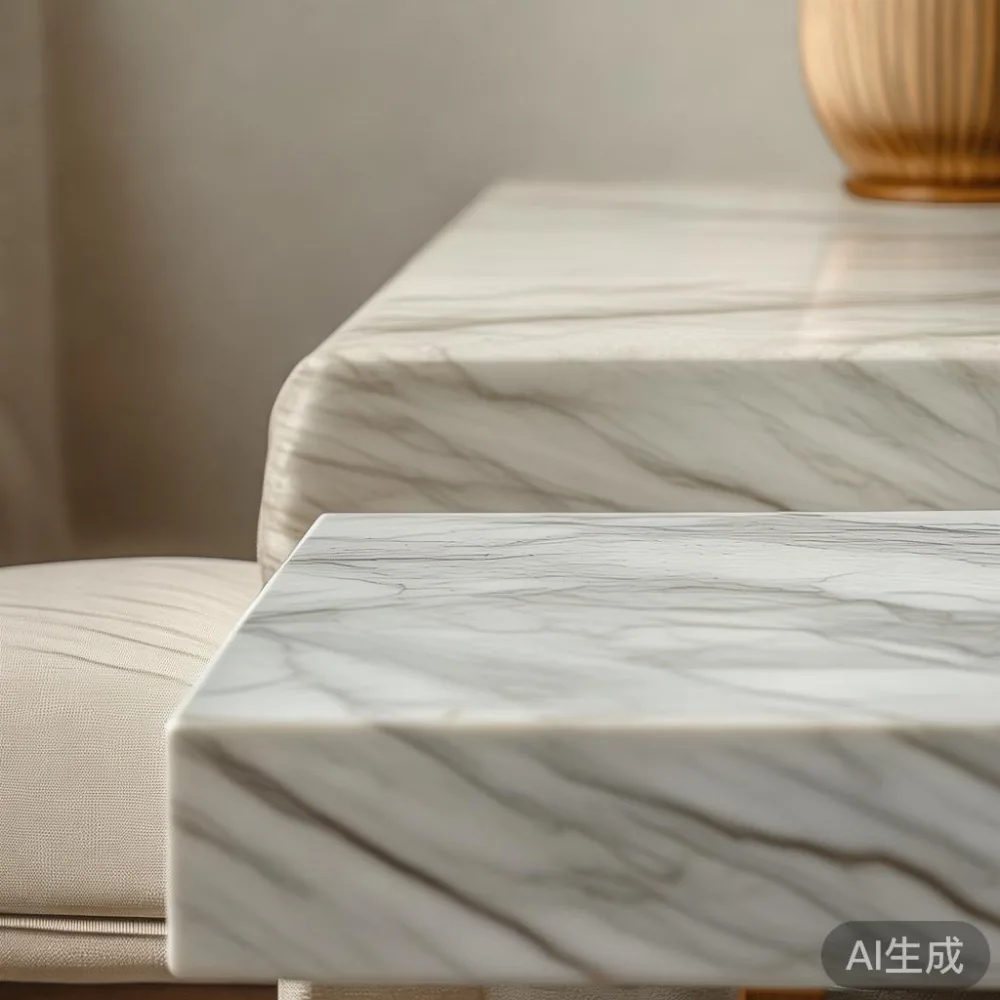
Is air-conditioning enough to protect a marble table or wooden nightstand in a HDB flat?
Partial, and only if you are consistent. Running the AC to 24°C with the fan on auto usually drops indoor RH to 55–65% in a 90 sqm BTO, which is acceptable. The trouble starts when owners turn the unit off during the day. Eight hours of 80% nighttime air is enough to push surface moisture back up, and the wood cycles daily. Over months, that cycling opens micro-cracks along the grain. My own rule of thumb, after eight years of fitting out Tampines and Punggol interiors: keep RH between 55% and 65% for at least 18 hours a day. A SGD 40 hygrometer on the nightstand tells you whether the AC is actually doing its job, because the wall thermostat lies about moisture even when it is honest about temperature.
How does humidity affect a marble table paired with a solid wood base?
The marble table behaves differently from the wood around it. Marble does not absorb water vapor, but it does wick liquid through its pores and will develop a dull patch where a coaster was missed during a dinner party. The bigger risk in a Singapore home is at the join. A 140 cm round marble top on an oak base expands almost nothing on its own, while the wood base can move 3–5 mm across the grain through the wet season. If the mounting holes are too tight, the stone cracks at the boss; if they are too loose, the top shifts when you lean on it. The fix is oversized clearance holes with rubber grommets, plus a felt pad under each leg. The same logic applies to a marble-top nightstand or a console in the entryway — the stone is stable, the wood is alive, and the design has to forgive that difference.
How do I choose a outdoor patio for a balcony?
Choose an outdoor patio for a balcony by matching three numbers to your specific unit: balcony load capacity (most HDBs allow 150 kg per sqm, some newer condos 250 kg), measured width of the sliding door (standard 1.2 m, narrow 0.9 m), and the corridor and lift dimensions from your floor to the lobby (typical Singapore condo lift is 1.1 m wide by 2.1 m deep, corridor 1.5 m). Once those numbers are on paper, you can shortlist pieces that fit physically. For wood, insist on kiln-dried teak or eucalyptus with a documented moisture content below 12%, because balcony humidity swings wider than indoor air and the wood will move more. For upholstery, pick quick-dry foam wrapped in solution-dyed acrylic, since ordinary foam traps moisture and grows mildew within one monsoon. For hardware, 304 stainless steel or aluminum will outlast powder-coated steel in salt-air districts like Sentosa or Marine Parade. If you want the look of an Italian light luxury sofa bed australia buyers often request for indoor-outdoor flow, the safer move is to keep the genuine leather piece inside and place a teak-and-performance-fabric sofa bed on the balcony itself, sized so each module clears your lift door by at least 5 cm on every side.
Which wood species actually survive a Singapore condo without warping?
Teak is the most forgiving. Its natural oils resist both humidity and the occasional insect, which is why marine decks have used it for two centuries. Burmese teak at 10% MC, finished with a hardwax oil rather than a thick polyurethane, will move less than 1.5 mm per linear meter across a full year in a Punggol condo. White oak and ash are acceptable if quartersawn and sealed on all six sides. Walnut is the riskiest of the common options; it moves aggressively with humidity and shows every scratch, so I only recommend it for master bedroom pieces that stay in air-conditioned rooms year-round. Rubberwood is widely available in Singapore at friendly SGD prices, often 30–40% below imported hardwood, but it must be properly kiln-dried to below 10% MC or it will twist within the first wet season. Avoid engineered cores with thin veneers for anything wider than 80 cm; the veneer will check and lift at the seams by month eight.
What finishes hold up best against Tampines-level humidity?
Penetrating oils and hardwax oils breathe with the wood, so they do not crack when the substrate moves. They need reapplication every 12–18 months in Singapore, which is a fair trade for the way they age. Polyurethane and conversion varnish sit on the surface like a plastic skin; they look glossy on day one and look terrible by year three because any micro-movement of the wood underneath telegraphs through as white fracture lines. For a dining table that sees daily use, two coats of hardwax oil plus a felt-footed bottom on every chair is the practical combination. For a wardrobe in a less-air-conditioned corridor zone, a matte water-based lacquer with a flexible additive will outlast a high-gloss rigid finish by several years. Whatever you choose, finish the underside and the back of every panel — skipped surfaces absorb moisture faster and pull the piece out of balance.
How should a solid wood bed frame or wardrobe be acclimated after delivery?
Open the crate the day it arrives, not a week later. A sealed wooden crate in a Bedok corridor traps moisture against the wood and creates the very cupping you are trying to prevent. Wipe every surface with a dry microfiber cloth, then leave the pieces spaced apart in the bedroom with the AC running for 48 to 72 hours before assembly. This lets the wood equalize to your indoor climate instead of your indoor climate to the factory. Once assembled, keep the bed frame 8–10 cm off the wall so air moves behind the headboard. For wardrobes, leave a 2 cm gap behind the carcass using felt spacers and never push the unit flush against an external wall, which sweats in the early morning hours. These small clearances cut the moisture differential between front and back panels by more than half.
Daily habits that extend the life of a marble table or wooden nightstand
Use coasters under every glass, including cold water on a marble table — the condensation ring is real and it is permanent without a polish. Rotate a nightstand lamp and any decorative objects every fortnight so the wood tones evenly under changing UV. Vacuum upholstered dining chairs weekly with a soft brush; Singapore dust is hygroscopic and holds moisture against the fabric, which is the recipe for mildew odor. Wipe spills within ten minutes rather than at the end of the meal. And keep plants off solid wood tops unless the pots are on a waterproof tray with a 5 cm air gap underneath, because the soil continuously evaporates water into the wood surface below.
What does a realistic care schedule look like for the first two years?
Months one to three: daily wiping with a dry microfiber cloth, weekly check of any drawer runners or door hinges for swelling. Months four to twelve: monthly application of a thin coat of hardwax oil to horizontal surfaces, quarterly inspection of marble table edges for chips. Year two: light sanding and re-oiling of high-wear dining and coffee tables, re-touching of any joint that has opened more than 1 mm. A solid wood dining table bought for SGD 1,800 to SGD 3,200 from a Foshan workshop should give 15 to 25 years of service under this kind of routine. A solid wood bed frame or wardrobe in the SGD 2,500 to SGD 6,500 range, similarly cared for, will outlast the mortgage on most HDB flats. That ratio of cost to years of service is the real case for buying solid wood furniture in Singapore rather than replacing a particleboard piece every four years when the wet season wins.
How does MIDHILL approach humidity from the factory floor to the Singapore doorstep?
On my last factory visit in March, I walked through the dry room at MIDHILL's Foshan site, where stacks of oak and ash boards rest for 21 to 28 days at a controlled 18% RH until their core moisture sits between 8% and 10%. Every export order destined for Singapore includes a 2 mm extra expansion tolerance on table leaves, and the wrapping uses breathable Tyvek rather than plastic shrink film for the final layer. The shipping route by sea to Singapore takes 7 to 10 days, during which the crates sit in a container that can hit 90% RH at the Port of Tanjong Pelepas. The breathable wrap is what prevents the catastrophic surface mold that ruined my client's previous two purchases. Once a piece is delivered to a Tampines or Punggol address, the same acclimation steps above apply, and the lifetime refinishing service that ships with every MIDHILL order means a worn dining top from year twelve can be sent back, sanded, re-oiled, and returned for a fraction of replacement cost.
Quick checklist before you buy any solid wood piece in Singapore
Confirm the factory moisture content in writing (target 8–12%). Ask which cuts are used — quarter-sawn beats plain-sawn for stability. Check the finish on all six sides, not just the top. Measure your lift, corridor turns, and front door before ordering a wardrobe taller than 180 cm. Confirm the warranty covers structural movement beyond 3 mm, not just manufacturing defects. And plan the first 72 hours of acclimation before the delivery van arrives, because the most expensive furniture in the world will fail in a Tampines bedroom if it is unboxed straight onto a wet floor. Done with care, a solid wood sofa frame, bed frame, dining table, wardrobe, or nightstand becomes one of the few things in a Singapore home that genuinely improves with age — quiet, heavy, and patient through every monsoon the island throws at it.