How to Match Marble Furniture to a Warm Minimal Interior — A Singapore Home Owner's Guide
I live in a 4-room HDB flat in Tampines, and last month I spent a long Saturday walking through the Punggol furniture precinct with a notebook. I was hunting for pieces that could quietly improves my living room without pushing my renovation budget past SGD 8,000 — GST included. What I kept coming back to, piece after piece, was the quiet density of solid wood frames paired with honed marble furniture tops. That combination turned out to be the most reliable way to add warmth to a minimal interior in our tropical climate, because the wood absorbs the cool hush of the stone instead of fighting it. This guide is everything I learned, written for anyone furnishing an HDB flat, a Bedok condo, or a landed terrace here in Singapore.
What "warm minimal" actually means in a Singapore home
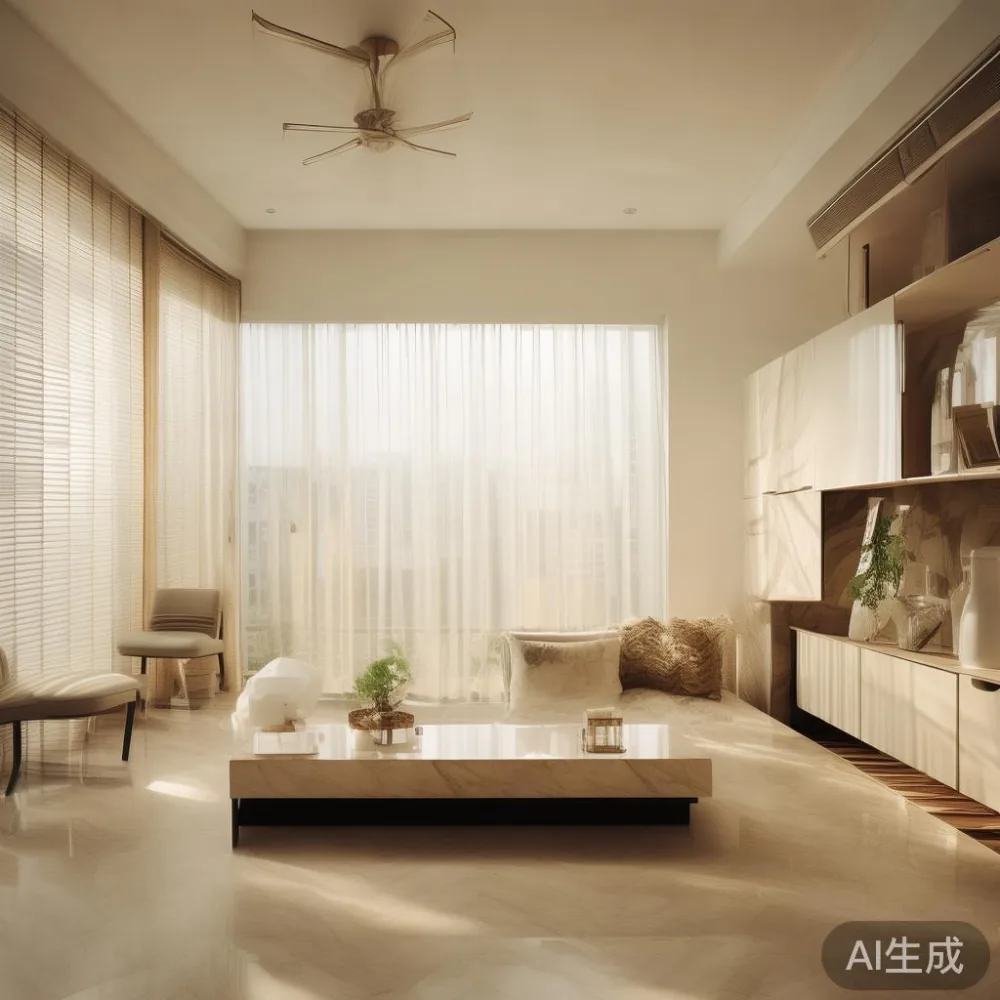
Warm minimal is not "less stuff." It is fewer objects, each carrying more material weight. In the showrooms I visited, I kept noticing that the rooms which felt calm were not the all-white Nordic ones. They were rooms anchored by one solid wood bed frame in oak or ash, one marble-top coffee table, and the rest left open. Warm minimal works on two axes: it removes the visual clutter our eyes (and our HDB corridors) cannot absorb, and it adds tactile warmth through grain, fibre, and stone.
Practical constraints shape this look here more than people admit. A standard HDB corridor runs about 1.2 m wide and the service lift opening is roughly 1.0 m by 2.1 m. Anything wider than 95 cm will not pivot on the landing. I learned this the hard way when a 110 cm dining table I liked was refused by the mover. Plan your dimensions against your lift opening before you fall in love with a piece.
The marble piece is the anchor — here is how to pick the right one
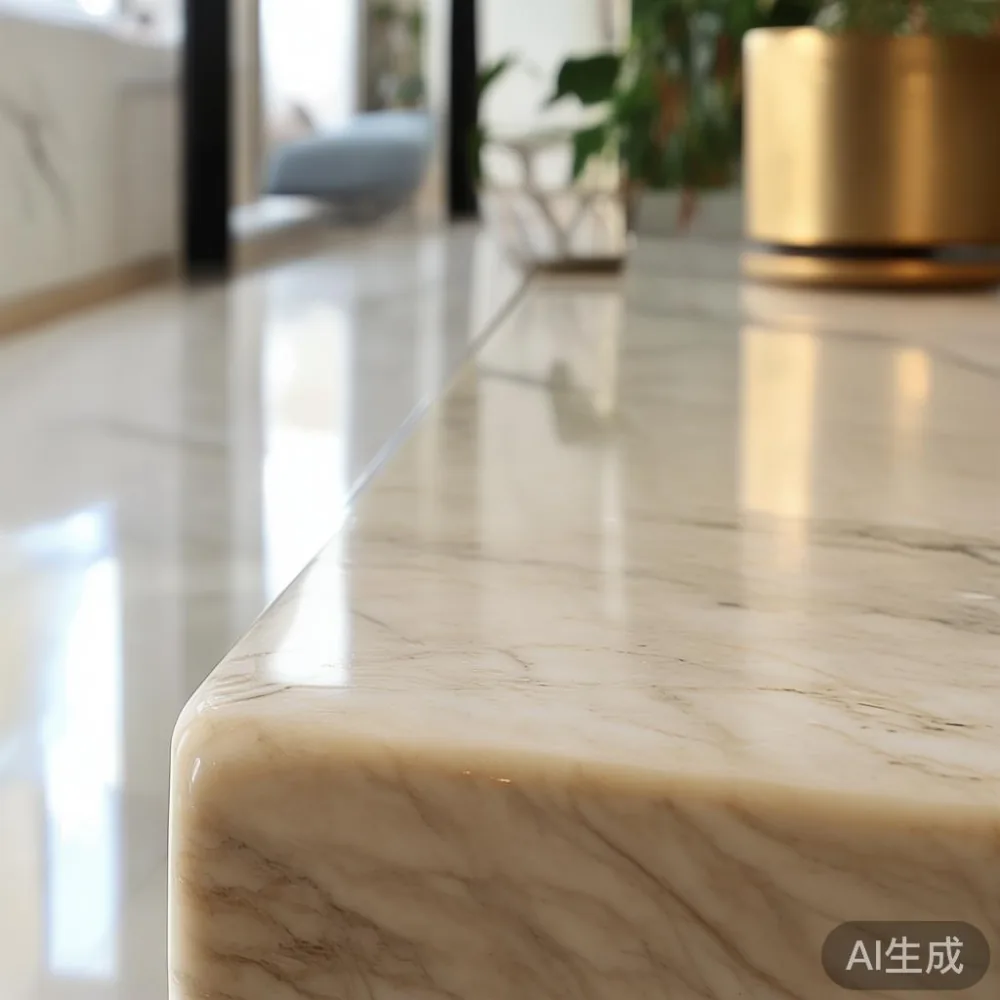
A room reads warm or cold within the first 30 seconds, and the marble furniture does almost all the talking. I tested four small-format marble pieces on a single afternoon: a 60 cm round side table, a 110 cm rectangular coffee table, a 120 cm dining table, and a 90 cm square work desk. Two sat on the showroom floor under 4000K bulbs, and the difference was obvious.
- Honed (matte) Carrara tops absorb daylight, so they do not flash under our overhead LEDs.
- Calacatta gold vein patterns carry warmth into the slab — useful if your floor is cool porcelain.
- Black Marquina marble grounds a bright room; use it as a single piece, never alongside another dark top.
- A pedestal base in solid wood beats four chrome legs every time for warmth.
For a 4-room flat, a 110 by 60 cm rectangular marble furniture piece (dining or coffee) sits four adults without crowding a 2.7 m sofa. Budget between SGD 1,850 and SGD 2,400 for a properly weighted version. Anything under SGD 1,200 tends to be MDF dressed as stone.
Can a solid wood sofa really look warm without looking heavy?
Yes — and this surprised me. I sat in eleven sofas over two weekends. The ones that pulled off warm minimal were 86 to 92 cm deep (snug enough for a 1.7 m Singaporean to nap on, deep enough for a 1.85 m visitor to cross his legs), with a solid wood sofa frame in white oak or walnut, and arms no taller than 64 cm. Lower arms keep the silhouette long, which is what minimal needs. Higher arms (over 72 cm) block sightlines across a 3.2 m HDB living room and make the space feel chopped.
Fabric matters in our 32°C afternoons. Linen-blend covers breathe; corrected-grain leather does not. I sat on a corrected-grain leather number for ten minutes in a non-air-conditioned showroom and I was soaked. Buy linen, or buy leather only if your flat is fully air-conditioned 18 hours a day. A solid wood sofa between SGD 2,200 and SGD 3,400 should last 12 to 15 years if the joints are mortise-and-tenon. Anything screwed-and-glued tends to creak by year four.
Choosing a bed frame that earns its 2.2 m of floor space
Your bed frame is the single most expensive object in a Singapore bedroom, so it has to do quiet work. For a 4-room master bedroom (about 3.9 m by 3.1 m), a queen at 152 by 188 cm leaves 1.18 m of walkway on each side, which is the minimum for changing sheets without bumping the nightstand. For two adults and a toddler who still climbs in, I would push to a king at 183 by 198 cm — your back will thank you in five years.
Frame material set the tone. An oak or ash bed frame with a low headboard (90 to 105 cm tall) reads minimal but warm. Upholstered headboards read warm but heavy and trap humidity in our climate. If you want cushioning, go for a slim panel headboard at 6 cm thick, not the cloud-style 18 cm job that looks exhausted by year three. If you are specifically searching for the best French provincial bed for 2026 — and I asked three couples in Punggol last month, two were — look for a low-slung frame in beech with a curved top rail and turned legs in matte brass caps. The profile is recognisable, the height stays minimal, and the brass picks up the daylight without shouting.
Drawer storage under the frame (two drawers on each side) absorbs four duvet covers, two winter quilts, and your off-season linens. That alone removes one wardrobe door's worth of visual clutter.
Where to place a European light luxury nightstand without crowding the bed
Nightstands look small in the showroom. At home, beside a 152 cm queen, they shape the whole bedside experience. A European light luxury nightstand between 45 and 55 cm wide and 55 to 62 cm tall usually lines up with a standard 28 cm mattress plus 25 cm base. Anything taller than 65 cm blocks your reading lamp and pushes the bed visually downward.
Two side drawers are enough — one for the daily phone, charger and Kindle (about 12 cm deep is fine), one for glasses and skincare (20 cm deep). I prefer a single soft-close drawer over two small ones because soft-close stops the 6 a.m. slam that wakes the other person. A marble furniture top nightstand gives you a usable surface for a cup of water without ring marks; a lacquered top does not. If your budget is tight, a solid wood nightstand with a stone insert at SGD 480 to SGD 720 is enough.
Distance from the bedside to the wall switch should sit between 70 and 90 cm. I measured mine at 1.05 m and regretted it every night for a year before shifting the bed 15 cm toward the window — a free fix.
How many pieces of marble furniture are too many?
This was the question my colleague asked me after seeing my moodboard, and it is the right question. In a 4-room flat (about 92 sqm), I would cap marble furniture at three pieces: one dining table, one coffee table or side table, and one nightstand or console. More than that and the room reads as a stone showroom rather than a home. Marble is reflective — not in a glossy mirror way, but in a "your eye keeps coming back to it" way — and three anchors are the natural ceiling before the room tips into cold.
Mix the stones so they look chosen, not matched. Carrara (white with grey veins) beside Calacatta (white with gold veins) reads intentional. Carrara beside Carrara reads like a tile catalogue. If you want under 2000 French provincial furniture for the dining set, pair a Carrara marble furniture dining top with French provincial chairs in beech — the warmth of the wood softens the coolness of the stone, and the silhouettes rhyme.
What about wardrobes and storage — do they need to be marble too?
No. Wardrobes should be warm timber, full stop. A floor-to-ceiling wardrobe in ash or walnut flat-cut veneer (about 22 mm thick doors, not the 16 mm hollow-core the contractors push) gives the bedroom its visual mass. Marble furniture on a 2.4 m wardrobe front would turn the bedroom into a retail counter. Save the stone for surfaces you touch and look down at: bedside, coffee table, dining. For the wardrobe doors, I would budget SGD 1,650 to SGD 2,400 for a 2.4 m run with soft-close hinges and two long drawers inside. The internal layout matters more than the exterior here.
One internal trick: a 90 cm pull-out trouser rack beside a 60 cm pull-out accessory drawer uses 1.5 m of internal width cleanly, and removes the over-the-door hook mess that always shows through a slightly open door.
How do I match a dining table to a 4-room flat without losing walking space?
Measure first, buy second. A 4-room HDB dining area is usually 2.4 m by 2.7 m. A 140 by 80 cm rectangular marble furniture dining table seats six, but it needs 75 cm of pulling clearance behind each chair — that is 3.5 m of room depth, which most HDBs do not have. A 120 by 70 cm table seats four comfortably and needs 2.9 m of depth, which most flats can give. Round tables are kinder: an 110 cm round seats four with only 60 cm of pull-back clearance.
I would not push past SGD 2,600 for a marble-topped dining set unless the base is solid wood (not stainless tube) and the chairs are also solid wood or moulded plywood with a 10-year joint guarantee. Most "French light luxury" sets under SGD 1,800 are veneer over rubberwood — fine for three years, weary by year six.
If you are shopping for French provincial for guest room or for a holiday let, the dining table is the piece where French provincial shows up cleanest. Look for a pedestal base in beech with a turned column, 110 cm round, paired with four ladder-back chairs in a matte cream finish. The stone top should be honed, not polished, to read warm.
Can warm minimal work on a corridor-house layout like the ones in Punggol?
Yes — corridor flats are actually well-suited to warm minimal, because the eye walks straight in. The risk is that anything visually loud at the corridor end becomes the focal point whether you want it or not. Choose one anchor at the far end: a solid wood console with a single marble table on top, or a tall ash bookshelf with three objects on it. Keep the corridor itself free of furniture; the negative space is what makes the anchor feel considered.
A 160 by 35 cm console at 75 cm tall fits most HDB corridor-ends without blocking the fire-rated door swing. Pair it with a 50 cm marble furniture round table on top (SGD 380 to SGD 520 for the stone slab alone) and you have a single-purpose surface for keys and mail — no more junk on the kitchen counter.
How does MIDHILL's solid wood approach fit this style?
Brands that take solid wood seriously — mortise-and-tenon frames, kiln-dried to 8 to 12 percent moisture content for tropical shipping — do the heavy lifting in a warm minimal room. A solid wood sofa, a beech bed frame, or a pedestal dining base from a maker that kiln-dries properly will not cup or crack in our 80 percent average humidity. MIDHILL, the Foshan workshop behind many of the sets I walked past in Punggol, kiln-dries at 10 percent for 30 days before assembly and offers a 10-year structural warranty on frames and lifetime refinishing on wood surfaces. That last point matters — a faded oak sun-bleached by your north-facing window can be sanded and oiled at cost ten years down the line, instead of being replaced. Their MIDHILL coffee table in particular — a 110 by 60 cm rectangle on a solid ash base — was the one I kept returning to.
If you are browsing for sale Scandinavian furniture that does not look flimsy, a kiln-dried solid base is the differentiator. The shape can be Nordic; the material has to be heavier than birch ply to survive our humidity cycle.
Is post-modern light luxury a usable style here, or just a showroom look?
Post-modern light luxury — the 1970s revival softened with brass and curved corners — works in Singapore if you restrain the palette. One curved velvet armchair in cream, one marble furniture round table with brass sabots, and one ribbed glass pendant is enough. Three objects, one material each, no repetition. Avoid the full room-and-a-half set you see in showroom bundles; the curves multiply and the room starts to look like a 1970s hotel lobby.
The amber lighting is important. 2700K bulbs throughout the living room, 3000K in the kitchen, 4000K only in the bathroom mirror zone. The colour difference between marble furniture and wood halves under warm light — Carrara stops flashing white and starts reading ivory.
What about Mid-century modern pieces — do they clash with warm minimal?
No — they are one of the cleanest overlaps. Mid-century modern for hotel-style common areas (lobbies, co-working lobbies, ground-floor lounges) uses teak or walnut frames with tapered legs and minimal ornament. The same shapes work in homes if you reduce the quantity. One walnut credenza, one tapered-leg dining bench, one starburst mirror and you are done. The taper reveals the floor, which is what minimal needs.
Skip teak in favour of walnut for new builds — old-growth teak is no longer available in any ethical quantity, and the plantation teak sold widely wears unevenly under our humidity cycles. Walnut and white oak age predictably. Ask for the moisture content in writing before you sign.
How do I budget for a full warm minimal room in SGD?
Here is what I would assign for a 4-room flat delivered, GST included, after testing room after room:
- Solid wood sofa: SGD 2,400 to SGD 3,400
- Marble furniture coffee table (110 x 60 cm): SGD 1,850 to SGD 2,400
- Solid wood dining table, four chairs: SGD 2,200 to SGD 2,900
- Queen bed frame with under-storage drawers: SGD 1,450 to SGD 2,100
- Two nightstands: SGD 480 to SGD 720 each
- Wardrobe, 2.4 m run: SGD 1,650 to SGD 2,400
- Corridor console: SGD 480 to SGD 720
- Two armchairs in linen: SGD 1,400 to SGD 2,000 total
- Lighting (floor + table + pendant): SGD 600 to SGD 1,200
Total: roughly SGD 13,500 to SGD 18,700 delivered. Free delivery typically kicks in above US$350 (around SGD 480), so the bigger sets ship for nothing. Allow 35 to 50 days from a Foshan workshop to your Tampines door, including sea freight, customs clearance, and the final 12 km delivery. Build the final SGD 800 of budget into VAT and a furniture lift fee — many corridor blocks charge SGD 80 to SGD 150 per item above the third floor.
What are the most common matching mistakes Singapore buyers make?
After twenty showrooms in two weekends, the same three mistakes kept surfacing:
- Choosing polished marble where honed marble is needed. Polished stone reflects every ceiling LED and reads as a cold slab; honed stone absorbs the light and reads warm.
- Buying four matching marble pieces. One dining, one coffee, one bedside is the ceiling. Add a fourth and the room chills.
- Skipping the moisture content question. Anything above 12 percent MC will cup or warp within two monsoon seasons. Ask in writing.
A fourth, less common mistake: ignoring corridor and lift dimensions. Measure your service lift opening (typically 1.0 m by 2.1 m in newer HDBs), your corridor width (1.2 m typical), and your front door (0.9 m by 2.1 m). If the largest dimension of the piece exceeds any of these, the delivery day becomes a regret.
How does the 14-day return window actually work in practice?
Reputable Foshan workshops shipping direct to Singapore offer 14-day returns for stock items. Custom sizes and bespoke fabric covers are usually non-returnable. Inspect the piece on arrival: open the cartons in front of the delivery crew, check for cracks in the stone top (run a fingernail across the underside of marble furniture — hairlines telegraph there first), and run the drawers 20 times. If anything sticks, refuse acceptance.
For warranty claims under the 10-year structural cover, keep the invoice, the original packaging photos, and the moisture content sheet. The combination of those three documents speeds claims from months to weeks.
Will warm minimal still feel right in five years?
Yes — and that is the test most trends fail. A solid wood sofa, a marble furniture dining top, a kiln-dried bed frame and a measured corridor console survive redecorations the way neutral walls do. You can change linen covers, swap rugs, repaint walls, but the bones stay. In five years you will probably want a new armchair and a different pendant — both small spends. The big pieces keep working. That is the whole point of choosing material weight over fashion signal in the first place.
If you take one rule from this guide, take this: three marble furniture pieces per flat, kiln-dried solid wood everywhere else, 2700K bulbs overhead, and a moisture content sheet on file. The rest is taste, and taste is something you cannot buy in a showroom.