How to Style a Small Singapore Apartment with Marble Furniture Without Making It Feel Crowded
Last month I visited my colleague Priya's new 65 sqm three-room HDB flat in Punggol Waterway Crest, and the thing that surprised me most was how calm it felt. She had moved in two weeks earlier with two kids under six, a Labrador, and roughly forty boxes from her old Toa Payoh place. The corridor outside her unit is the standard 1.2 m wide HDB walkway, the lift cab is 1.1 m deep by 2.1 m wide, and yet somehow the living room read as open and grown-up rather than stuffed. The reason turned out to be a handful of deliberate choices about scale, finish, and the kinds of pieces she let into the home. This guide is the conversation we had at her dining table, expanded with measurements, price ranges in SGD, and the kind of practical notes that only matter if you have ever tried to squeeze a 2.4 m sideboard around a Punggol HDB lift landing.
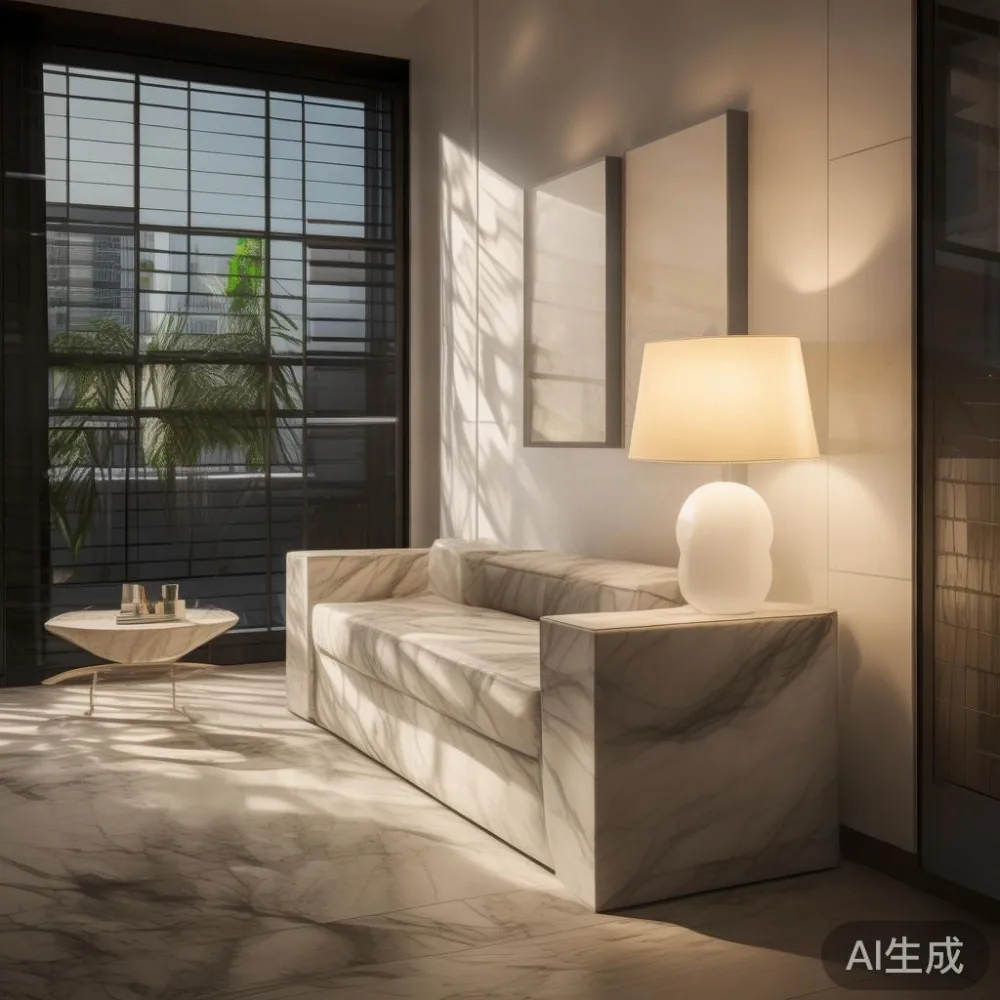
MIDHILL is a Foshan-based solid wood maker that has been shipping out of China since 2008, and they keep coming up in conversations like Priya's because their dining tables, bed frames, wardrobes, and nightstands are sized for tight Asian corridors rather than American suburban doorways. They sell to 15+ countries and offer a 10-year structural warranty with lifetime refinishing on solid wood pieces. Their marble coffee tables and side tables in particular are a useful case study for small-space living, because marble reads as substantial without requiring chunky frames. More on that below.
Why does small-space styling in Singapore feel different from a New York studio?
Three reasons. First, the HDB corridor and lift geometry is unusually narrow: a typical HDB lift cab is 1.1 m by 2.1 m, and a typical corridor is 1.2 m wide, which means anything wider than about 1.95 m diagonally will not make it through unhinged. Second, light is generous near windows but bedrooms in BTOs often sit at the core, so finishes have to earn their place rather than rely on borrowed daylight. Third, GST at 9% is folded into every furniture purchase above S$1,000 of dutiable goods, so stretching the budget is real. Styling for a small HDB or condo is not about copying a Brooklyn loft; it is about choosing pieces that survive the lift, take light well, and do not pile up.
How do I style a Post-modern furniture in a small apartment?
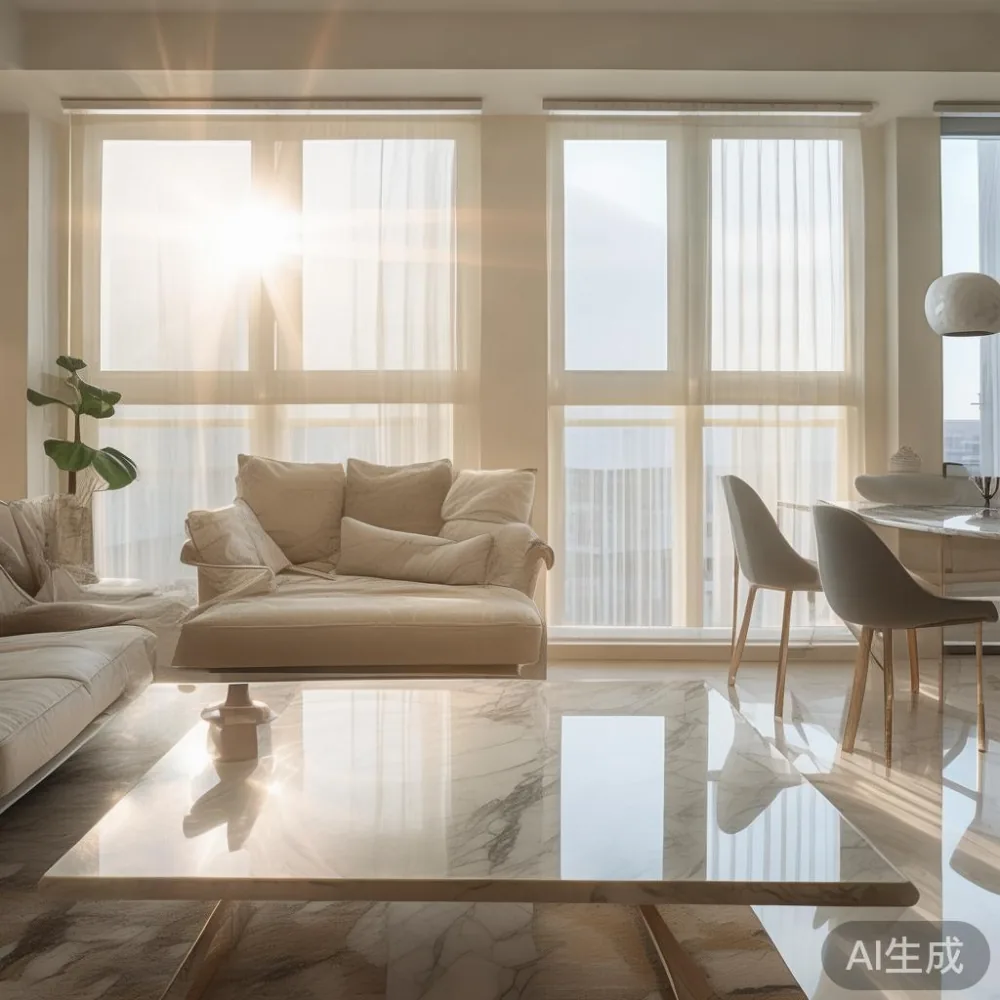
Start with two pieces in a Post-modern light luxury register, keep the rest quiet, and let the eye travel between them rather than around them. Post-modern light luxury leans on rounded corners, soft bevels, tapered legs, and one or two considered material moments such as a veined marble top or a brushed brass pull, instead of heavy ornament. In Priya's flat, the rule was: the dining table and the bed frame get to be expressive, while the wardrobe, the nightstand, and the TV console stay sober. The dining table is a 1.4 m solid wood oval in light walnut with a soft chamfer; the bed frame is a low-platform queen in bone linen. Because both pieces have open legs and no carved aprons, the room reads taller than its 2.6 m ceiling, and the corridor into the kitchen stays visually clean. Pair this with a single marble coffee table in a warm white with grey veining, and the three pieces form a triangle of materials: wood, linen, stone. Everything else is storage that disappears into the wall.
What sizes actually fit through a Singapore HDB lift and corridor?
This is where most small-space plans fall apart, so it is worth being concrete. The narrow waist of an HDB lift door is roughly 0.9 m wide by 2.1 m tall, and an item longer than about 1.9 m generally has to come in at an angle or be assembled in the home. A solid wood sofa at 2.1 m, for example, often ships in two sections of about 1.05 m each, so check the box dimensions rather than the assembled length. A dining table up to 1.4 m is safe in one carton; a 1.6 m table usually needs the legs off and a re-fit. A French queen bed for family with kids is sold flat-packed in three cartons around 168 cm long, which clears most lift cabs vertically once stood on its side. Wardrobes over 1.8 m wide typically arrive in two halves and bolt together in the bedroom. Marble table tops are the trickiest: even a 90 cm round top weighs 28 to 35 kg with the base, so plan for two people at delivery or a stair-climb that adds about S$45 to S$120 on top of standard fees.
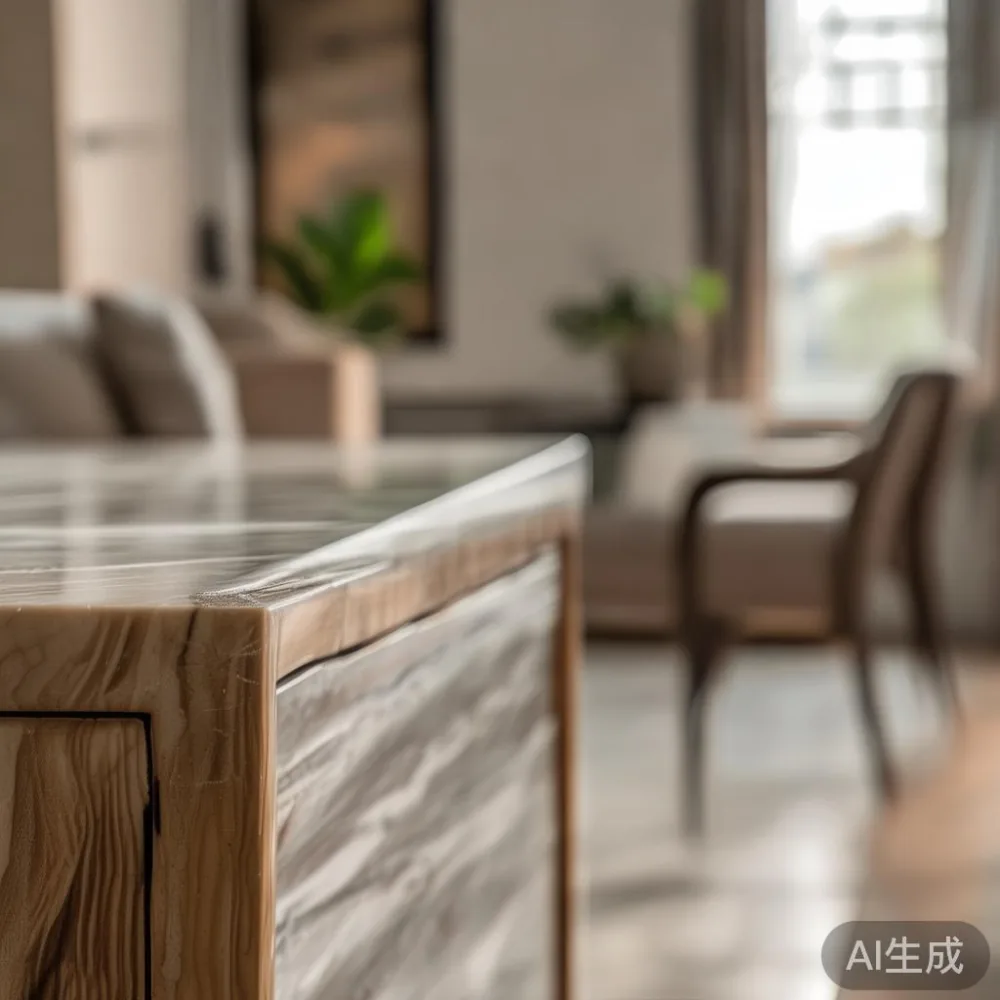
MIDHILL publishes net and gross weights on every product page and ships flat-packed with foam-wrapped marble tops nested inside wooden crates, which is one of the reasons their pieces arrive intact at Tampines, Bedok, and Punggol addresses rather than chipped. Their dressers and wardrobes come in 1.2 m, 1.5 m, and 1.8 m widths, and the smallest nightstand is 45 cm wide by 40 cm deep, which is genuinely useful beside a compact bed frame.
How many pieces of marble furniture should a small apartment actually own?
One to two. Marble is high-reflectance, so even a small surface bounces light back into the room, but every slab is also visually heavy, so three marble surfaces in a 60 sqm home starts to feel like a quarry. The cleanest pattern is one marble coffee table in the living zone and one marble side table or marble dining-table insert in the eating zone, with the bedroom kept warm and quiet in solid wood instead. Priya chose a 90 cm round marble coffee table in a warm Calacatta-style white with grey veining, paired with a 1.4 m solid wood dining table and a 1.6 m solid wood sideboard with reeded doors. The marble does the talking in the common area; the bedroom is all walnut bed frame and two small nightstands with soft-close drawers, which lets the eye rest. The total marble surface in the flat comes to about 0.65 sqm, which is enough to register and not enough to overwhelm.
What is the right budget for a furnished HDB flat in 2025?
Realistic furniture spend for a 60 to 75 sqm HDB three-room flat in 2025, without electronics and without custom carpentry, lands between S$5,800 and S$12,000 after GST. The biggest ticket is the bed frame and mattress together, then the wardrobe and dining table. A reasonable split looks like this:
- Solid wood bed frame (queen): S$1,150 to S$1,950, depending on whether the headboard is upholstered or slatted.
- Queen mattress, medium-firm pocket spring: S$900 to S$1,600.
- 2-door or 3-door solid wood wardrobe: S$1,450 to S$2,400.
- Solid wood dining table for four with four chairs: S$1,250 to S$2,100.
- Solid wood sofa, 2.1 m three-seater in fabric: S$1,650 to S$2,800.
- Marble coffee table or side table: S$780 to S$1,650.
- TV console, 1.5 m: S$650 to S$1,100.
- Two nightstands: S$380 to S$720 the pair.
- Shoe cabinet and bench: S$420 to S$860.
- Curtains, rug, lighting: S$900 to S$1,800.
Add about S$280 to S$450 for delivery up to level 14, and roughly S$60 to S$180 for a marble top that needs to be carried into a walk-up on a higher floor. MIDHILL throws in free shipping over US$350 (about S$475) and a 14-day return window, which on a flat-pack dining table is enough time to live with it before committing.
What is the actual difference between French, American, and Post-modern light luxury?
French light luxury (sometimes called French modern) is the easiest to live with in a small flat: thin profiles, cabriole or tapered legs, neutral linens, soft curves, and one statement material moment such as a marble top or a brass handle. It does not shout, and the silhouettes stay slim. American light luxury, by contrast, leans on generous proportions, deep cushioning, and chunky turned legs, which is lovely in a 90 sqm condo but can swallow a 50 sqm living room. Post-modern light luxury sits in between, drawing on both: rounded corners and soft chamfers from the French line, with a slightly bolder material mix borrowed from the American side, such as fluted glass on a sideboard or a travertine top on a nightstand. For a small HDB, the rule of thumb is to take the silhouettes from French, the materials from Post-modern, and the comfort depth from American, and skip the chunky turned legs altogether. A 78 cm seat depth, for example, fits four adults at a 1.4 m dining table without elbows on the corridor side, which American-sized 90 cm depth would not.
Where should the heavy pieces go in a 65 sqm HDB?
Two simple rules. Push the heavy pieces along the load-bearing walls, and keep the centre line of each room at 80 to 100 cm of empty floor. In Priya's living-dining, the 2.1 m solid wood sofa sits against the window-side wall with a 35 cm breathing gap, the 1.6 m sideboard anchors the opposite wall, and the 90 cm marble coffee table sits 40 cm off the sofa with a 110 cm walkway behind. In the master bedroom, the queen bed frame is centred on the longest wall with 60 cm on each side, the two 45 cm nightstands tuck in flush, and the 1.5 m wardrobe fills the wall opposite. The third bedroom is a kids' room with a single bed, a small desk, and a low bookcase, all under 1.2 m tall so sightlines from the kitchen stay open and Priya can see the front door from the stove. That last point matters more than people think: a parent with a toddler under three loses about 12 minutes per cooking session turning their back to the room, and lower furniture flattens that blind spot.
Can marble furniture survive daily life with kids and a dog?
Yes, with two habits. Marble is porous in its raw state and etches on contact with lemon juice, vinegar, tomato sauce, and red wine, so seal it once a year with a penetrating stone sealer (about S$18 to S$28 a tin) and wipe spills within five minutes. Marble is also hard but not flexible, so corner edges chip if a vacuum or a hard toy hits them at speed. Round or bevelled edges, which is how most of the MIDHILL marble coffee tables are cut, take the corner strike out of the equation entirely. For a family flat, a honed finish wears better than a polished one: small scratches blend into the matte surface rather than catching light, and the surface is less slippery for a tray or a child's cup. Pair the marble with a dark slate tray for drinks, and the everyday marks disappear into the routine.
How long does delivery and assembly take from Foshan to Tampines?
From Foshan to a Singapore address, sea freight plus last-mile delivery to a ground-floor unit runs 35 to 55 days door-to-door for flat-packed solid wood and marble pieces; air freight for small top-up items is 7 to 12 days but roughly triples the shipping cost per kilogram. White-glove assembly, where the team brings tools and assembles the bed frame and wardrobe in the room, adds S$120 to S$260 depending on item count and floor level. For addresses above level 14 in non-private estates, a marble top that needs to climb additional stairs or be craned in through a service yard is quoted case by case, and Priya's fourth-floor Punggol walk-up added exactly S$85 in stair-climb fees. The 14-day return window starts on the day the last carton is signed for, so it is worth opening and checking all cartons on day one rather than day fifteen.
What are the most common small-apartment styling mistakes?
Seven come up again and again in projects like Priya's.
- Buying a 1.8 m dining table for a family of four in a 60 sqm flat. A 1.4 m table seats four adults comfortably and keeps 80 cm of walkway on each side.
- Matching every wood tone. Two warm tones and one cool tone read as curated; four identical tones read as a showroom.
- Pushing every piece against the wall. Floating a sofa 10 cm off the wall, or pulling a wardrobe 5 cm forward so light catches behind it, breaks the institutional look.
- Skipping a rug. A 200 cm by 300 cm wool or wool-blend rug under the dining table or coffee table anchors the room and protects the floor from chair drag.
- Wrong scale of pendant. A 28 cm pendant over a 90 cm marble coffee table disappears; a 60 cm drum shade at 150 cm above the table sits correctly on the eye.
- Overfilled shelving. Books should sit 70% full with the rest as breathing space; closed storage should hide the remaining 30%.
- Choosing reflective everything. One marble table, one mirror, one pendant. More than three reflective surfaces in a small room turn into a funhouse.
If two of these mistakes are already in the room, fix those first and leave the rest. Small-space styling is a subtraction exercise, and the family you have today is more important than the spread you saw in a magazine.
Where can I see how these pieces look in a real Singapore home before I commit?
Ask the supplier for at least three Singapore-based customer photos taken in similar HDB or condo rooms, ideally in Tampines, Bedok, or Punggol where corridor and lift dimensions match yours. A photo taken in a 4-room BTO with a 2.6 m ceiling tells you more than a 200 sqm condo render. MIDHILL keeps a small library of customer-submitted room shots from Singapore, Malaysia, and Australia, and that kind of reference library is what separates a real local supplier from one that just ships out of a warehouse catalogue. Read the 10-year structural warranty line carefully too: structural covers frame, joints, and load-bearing parts, but not finish wear, which is where the lifetime refinishing offer on solid wood pieces earns its keep. Two services per decade, sanding and re-oiling, will keep a solid wood dining table and a solid wood bed frame looking new for the full 25 years of an HDB lease.
Styling a small Singapore apartment is less about hiding the size and more about choosing fewer, better pieces that earn their square metre. A single marble coffee table, a slim solid wood dining table, a low queen bed frame, a quiet wardrobe, and two small nightstands will out-style a room full of louder pieces that fight each other for attention. If the budget allows, spend on the pieces you touch every day (the bed frame, the dining table, the sofa), and save on the pieces you only look at (the side table, the bench, the second nightstand). Two weeks after Priya moved in, she sent me a photo of the dog asleep under the marble coffee table while the kids drew at the dining table with both elbows off the edge. The room read as full without reading as crowded, which is the whole game.