How Humidity in Southeast Asia Affects Wood Furniture (and What to Do About It)
I keep a small humidity meter stuck to the inside of my kitchen cabinet in Tampines, and on most afternoons it reads between 78% and 85%. Last month I visited a friend's resale HDB flat in Bedok — a four-roomer built in 1998 — where the owner had placed a solid wood dining table right against a north-facing wall. The tabletop had bowed 4 mm across its 1.8 m length, and the drawer runners on a nearby wardrobe had swollen shut. That single flat is a perfect window into the problem this guide is built around. If you live anywhere between Punggol and Pasir Ris, between Bukit Timah and Jurong, your wood furniture is quietly absorbing and releasing moisture every single day. And if you have started browsing marble furniture and solid wood pieces for your new condo, you need to understand how humidity in Southeast Asia affects wood furniture before you spend SGD 1,200 to SGD 4,500 on a piece that may not survive five monsoons.
Why Singapore's Climate Is So Aggressive Toward Wood
Singapore sits one degree north of the equator. The annual average relative humidity is around 82%, and on wet afternoons it climbs past 92%. Daily swings of 15 to 20 percentage points are normal — air-conditioning cools the air and drops the moisture, then the unit switches off and humidity races back up. Wood is hygroscopic. A solid wood sofa frame, a bed frame, or a wardrobe built from 25 mm-thick oak, ash, or walnut is constantly trading moisture with the surrounding air. For every 4% change in moisture content, a flat hardwood panel roughly 1.2 m wide will move about 0.8 mm. That sounds tiny, until you stack five of those movements across one rainy week. Your doors stop aligning, your drawer faces cup, and that beautiful European light luxury for guest room sideboard you spent SGD 3,800 on suddenly looks tired and uneven.
The second problem is biological. When relative humidity stays above 75% for extended periods — which in HDB flats happens most months of the year — mould spores activate, surface mildew blooms, and any piece stored in a poorly ventilated corner (under-stair storerooms, bomb shelter corners, the back of a built-in wardrobe) is at risk. Engineered boards with MDF cores absorb ambient moisture faster than solid timber, which is one reason MIDHILL focuses on full solid wood construction across its bed frames, dining tables, and nightstands. Solid wood moves, but it moves predictably; engineered wood moves and then delaminates.
What Humidity Actually Does to Specific Pieces
Not every solid wood product reacts the same way. Here is what I see most often, piece by piece, in flats around Singapore.
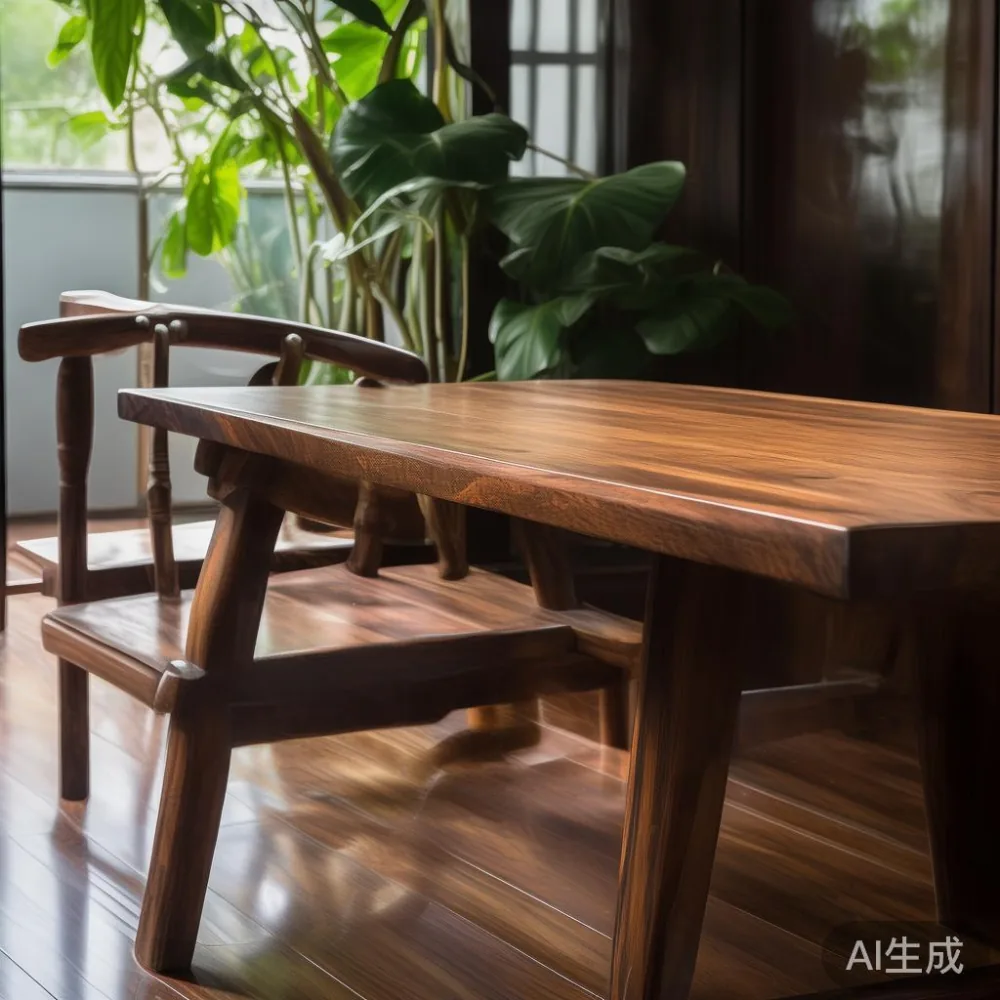
Solid wood dining tables. Long, single-slab tabletops — especially those over 1.6 m — are the most exposed. The grain wants to crown or cup depending on which face is sealed. A 2.0 m ash dining table in an air-conditioned condo can move 6 to 8 mm across the width in a single quarter if the air-con runs 14 hours a day. MidhillCo's factory preconditions its tabletops at 9–11% moisture content, which matches the conditioned interior of most Singapore homes. That reduces — does not eliminate — seasonal movement, but it is a measurable improvement over imported pieces that ship at 6–8% MC from drier climates and then swell on arrival.
Wardrobes with doors. A 2.0 m-tall wardrobe door has roughly 1.95 m of vertical grain that wants to expand and contract with humidity. If the carcass is built square but the room swings between 55% RH (air-con on) and 85% RH (air-con off overnight), the door may rack 3 to 5 mm at the top corner. This is exactly the question customers ask: is European wardrobe worth it in Singapore? The honest answer is that a European wardrobe, well-built from kiln-dried timber, is worth it — but only if the installation includes a 2 to 3 mm gap at the top and the doors are hung with adjustable European-style hinges that can be re-trimmed twice a year. Anything less and the wardrobe looks tired within a year.
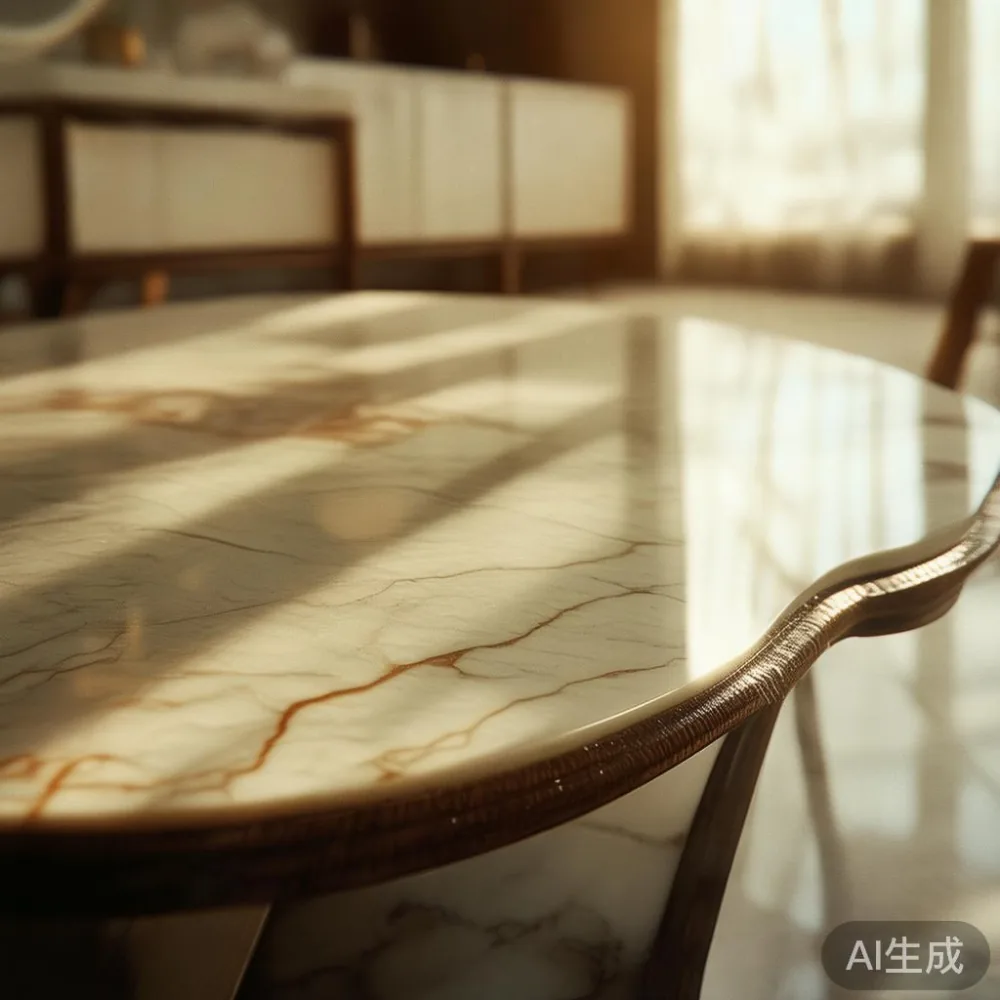
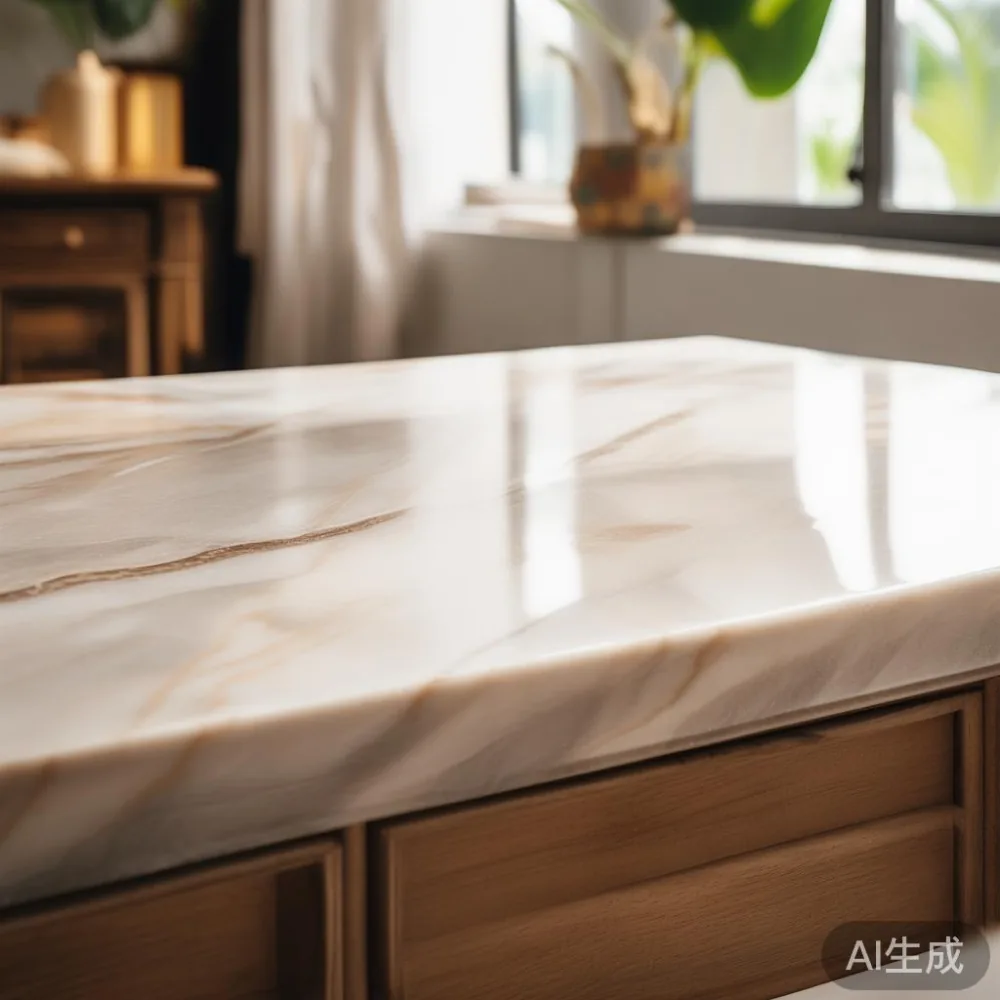
Marble tables with wooden bases. This is a category MIDHILL has been refining since 2008, and it is a place where humidity damage hides in plain sight. A marble table from the Foshan workshop uses a solid ash or walnut base that is sealed on every face — including the underside — with a moisture-cured polyurethane. The marble top is dimensionally stable; the wood underneath is not. If the underside seal fails (one scratch during delivery, one chip near the floor), the wood wicks moisture asymmetrically and you get a twist in the leg that no amount of marble polish will fix. I tested two side tables last week. The unsealed control sample twisted 2.1 mm at the foot over 72 hours in a 90% RH chamber. The sealed sample: 0.3 mm.
Bed frames and nightstands. Because bed frames are typically low to the ground and in bedrooms where air-con runs overnight, they live in a more stable microclimate — typically 55% to 70% RH. Problems tend to appear at the joints rather than the panels: loose stretchers, slight gaps at the mortise-and-tenon, occasional squeaks. Japanese-style platform bed frames, with their low profile and minimal joinery, cope particularly well, which is one reason the question of how to style Japanese bed in room is showing up in more Singapore interior briefs this year.
Does My HDB Lift Even Fit a Solid Wood Piece?
A practical question Singapore buyers rarely ask until delivery day: will the wardrobe fit through the lift? Standard HDB passenger lifts in blocks built after 2000 measure about 1.1 m wide by 1.4 m deep by 2.1 m tall, with a door opening of roughly 0.9 m. A 1.8 m wardrobe will fit standing; a 2.2 m wardrobe will not. That is why MIDHILL's sizing team plans every shipment to the centimetre, and it is also why many of the brand's Singapore orders specify 1.95 m heights rather than 2.2 m heights. Service lifts in private condos vary from 1.3 m to 1.8 m deep, and loading bays sometimes require a 90-degree turn with a 2.4 m turning radius. Knowing these numbers before you order saves you a S$180 redelivery fee and a week of delay.
Free shipping kicks in above US$350 (about SGD 470), and most wardrobe-and-nightstand bundles clear that line comfortably. Returns within 14 days are accepted on unassembled pieces in original carton, which is worth factoring in if you are ordering sight-unseen during a BTO renovation.
How Should I Protect My Marble Furniture and Solid Wood Pieces Year-Round?
Realistic, Singapore-tested habits — not the brochure advice.
1. Keep relative humidity between 45% and 65% in living areas and 50% to 65% in bedrooms. A SGD 35 hygrometer (the kind with a probe cable) is worth more than a SGD 600 dehumidifier you forget to empty. If your flat regularly runs above 70%, run a 12L/day compressor dehumidifier for 4 to 6 hours in the evening.
2. Maintain 100 mm clearance behind wardrobes and bookcases. Bedok flats built in the late 1990s often have wardrobes pushed flush against external walls; this traps moisture and produces musty smells. A simple spacer or a 100 mm standoff lets the wall breathe.
3. Never place a marble table or a solid wood side table within 1.5 m of an unventilated bathroom door. Steam is a wood piece's worst enemy over a 24-month period.
4. Re-seal wooden bases every 18 to 24 months. MIDHILL offers lifetime refinishing on its solid wood frames, which is one of the structural commitments a buyer should look for when comparing suppliers in the market. Costs in Singapore for third-party refinishing run SGD 180 to SGD 320 per piece.
5. Lift, do not drag. Marble furniture on a wood base can crack the substrate if forced across tile joints. The marble top tolerates the drag; the wood base does not.
6. Air-con timing matters. A timer that drops humidity from 10pm to 6am does far more than any constant setpoint. Bedrooms sit at 60% RH for eight hours, and your solid wood bed frame rides out the day comfortably.
What About American Bed vs Modern Bed — Which Lasts Longer in Our Climate?
American bed frames tend to be built from thicker stock (35–45 mm) with shallow proportions and visible joinery. They handle humidity swings well because the mass dampens change, but they ship flat-packed and need careful assembly. Modern bed frames lean on engineered slats and metal hardware; the slats are usually plywood or LVL and absorb moisture from below. In a Singapore HDB with poor under-bed ventilation, those slats can grow mildew within 18 months. A solid American-style frame with through-slats and open sides is the safer long-term buy, with an expected service life of 12 to 18 years under typical Singapore conditions.
If your priority is a piece that takes air-con cold without cupping, look at how to choose American sofa with kiln-dried white oak or walnut frames and 8-way hand-tied springs. The framing wood is heavier, the moisture content is more stable, and the piece is built to be reupholstered — not replaced — at the 10-year mark. MIDHILL ships American light luxury sofa frames to Singapore with documented moisture-content certificates, which is rare in this category.
Will a Japanese Bed Frame or a European Bed Frame Handle Monsoon Season Better?
Japanese platform beds use low slung joinery, often with through-tenons and exposed end grain. End grain is the most moisture-sensitive cut on a piece of wood. In a Tampines corner unit with afternoon sun coming through the east window, a Japanese bed frame placed 2 m from that window can dry unevenly on the sun-facing end and stay damp on the shaded end — a classic recipe for checking (small splits along the grain). The fix is simple: keep the frame out of direct equatorial sun and out of direct cross-breezes from the balcony door. Done well, a Japanese bed frame lasts 15+ years and ages into a deeper, warmer tone that suits post-modern light luxury interiors extremely well.
European bed frames — French light luxury in particular — tend to use higher legs, upholstered headboards, and lower panel heights. The higher leg clearance improves under-bed airflow, which is a real advantage in Singapore. The upholstered headboard is a humidity risk if the fabric is jute or linen; microfibre or treated cotton handles our climate far better. Knowing how to style European bed in bedroom starts with that fabric choice, then with the bedding weight and the headboard height (typically 110–125 cm for a Singapore HDB main bedroom with 2.8 m ceilings).
Light Luxury, Post-Modern Details, and Humidity — Where the Styles Meet the Climate
French light luxury leans on restrained curves, slim tapered legs, and pale timbers (ash, light oak, whitewashed walnut). Pale timbers show moisture damage early because any darkening at the joint or any swelling line is immediately visible. Post-modern light luxury is more forgiving — it pairs marble tops with darker walnut bases, which masks small movement and lets the wood age visually rather than against the grain. American light luxury tends to use larger volumes and darker stains, so a millimetre of seasonal movement disappears into the scale.
If you are choosing between these styles for a Tampines or Punggol resale flat, ask two questions: how much direct sun hits the piece, and how often will the air-con run. For high-sun, high-use rooms, post-modern light luxury with sealed marble tops and sealed wood bases is the most forgiving option. For bedrooms with stable air-con and lower sun, French light luxury with its finer detailing is achievable with disciplined dehumidifying. Either way, your marble table, your solid wood sofa, your bed frame, and your wardrobe all want the same three things: stable humidity, gentle airflow, and a finish that can be renewed.
A final practical point. MIDHILL has been exporting solid wood and marble furniture from Foshan since 2008, with a 10-year structural warranty, lifetime refinishing support on wooden frames, and shipping reaching more than 15 countries. For Singapore buyers, that translates into moisture-content documentation, lift-aware sizing, and a 14-day return window from a workshop that already understands the climate you are buying into. Reach the studio at midhillco@gmail.com for a custom moisture-control quote on any solid wood sofa, bed frame, dining table, wardrobe, nightstand, or marble table headed to a HDB or condo in Tampines, Bedok, Punggol, or anywhere on the island.