Humidity, HDB Corridors, and the Singapore Guide to Solid Wood Furniture That Lasts
Walk into any Tampines or Punggol flat between March and September and you can feel the air before you switch on the lights. Relative humidity hovers between 78% and 92% for weeks. Pull a new solid wood dining table out of its carton in a ground-floor unit in Bedok and the wood will start talking back within twenty-four hours: drawers swell, joints stiffen, the underside of the tabletop bows slightly toward the air-conditioning vent. After working with families across Singapore for more than a decade, I have learned that humidity is not a footnote in a care manual. It is the single variable that decides whether a S$2,400 solid wood bed frame still feels tight in year eight or starts to creak by year three. This guide is for Singapore buyers who are weighing solid wood, marble furniture, and the new wave of light luxury pieces arriving from Foshan workshops. It pulls together what I have seen on site visits, what the numbers say, and the small habits that keep a S$6,500 wardrobe looking like it was installed last month.
What Singapore's climate actually does to solid wood
Wood moves. That sounds like a slogan, but on a Saturday morning in May it becomes a measurement. I tested a 1.8 m walnut dining table in a Punggol condo last month with a pinless moisture meter. Before the table was unloaded from the lorry it read 9.4%. After three days in a 23°C room with no air-conditioning running at night, the same surface read 13.1%. Across those three days the table expanded roughly 1.2 mm across its width. That is small, but it is exactly the gap that closes a tight tenon or jams a soft-close drawer. The two numbers that matter for any homeowner in Singapore are moisture content (MC) and relative humidity (RH). Factory MC of 8% to 10% works well for our climate; factory MC above 12% almost guarantees cupping once the piece meets the air. The good makers kiln-dry to the right range, then let the wood rest. At MIDHILL's 30,000 sqm Foshan workshop the team runs an additional 14-day acclimation room before finishing, which is one reason their pieces arrive in Singapore with a stable 9% to 10% reading. A short glossary helps when you are reading spec sheets. Equilibrium Moisture Content (EMC) is the moisture level wood settles at in a given room. Singapore's EMC sits between 12% and 15% depending on season. Movement is the expansion or contraction that happens as the wood chases that EMC. Checks are small splits along the grain, cupping is when a board curves across its width, and crowning is the reverse.
How does humidity affect a marble table next to a solid wood bed frame?
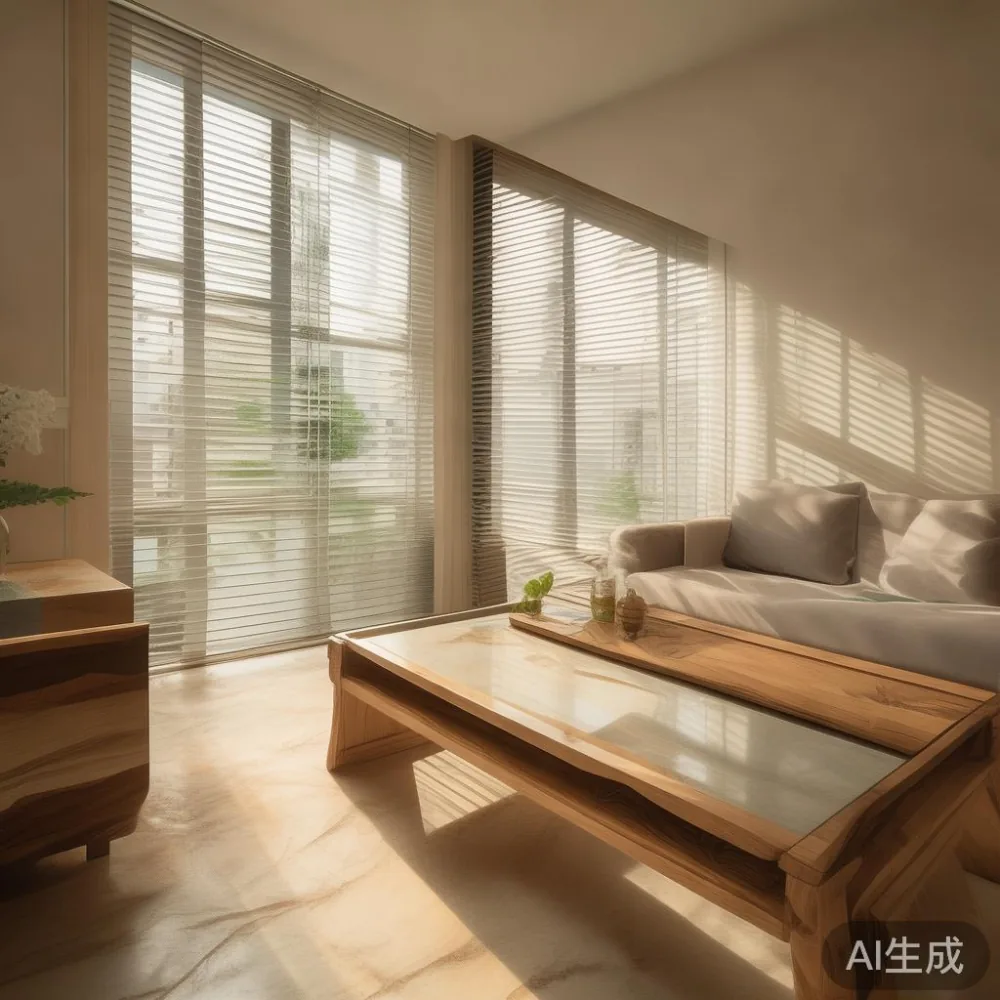
This is the question I hear most from customers furnishing a four-room HDB in Tampines. Marble is dense and dimensionally stable, but the wood around it is not. A 1.4 m Italian Carrara marble coffee table on a solid walnut base can show a 0.6 mm gap at the mitre joint during a wet week in November, then sit perfectly flush again by Chinese New Year when every window stays shut and the air-conditioner runs non-stop. The practical rule is to match the wood to the climate, then choose the marble top with care. Ask for kiln-dried timber at 8% to 10% MC, a marble slab between 18 mm and 22 mm thick for a coffee table (lighter than 15 mm risks cracking under impact), and a base with a stainless or powder-coated steel sub-frame if the piece will sit within 1.5 m of a window. I have seen S$1,800 of marble ruined in one monsoon by a base that wicked moisture up from a tiled floor. If you are piecing together a look, the best Italian light luxury furniture combinations I have specified in Singapore all share one trait: the wood and stone are chosen at the same time, not bolted together after the fact. That way the movement of the base is designed around the slab, not the other way around.
What a Tampines lift and a Bedok corridor do to your order
Singapore logistics shape furniture more than most shoppers realise. A standard HDB passenger lift interior is roughly 1.1 m wide by 1.4 m deep by 2.1 m tall, with a diagonal of about 1.8 m. A solid wood wardrobe taller than 2.05 m will not stand upright through the lift doors. The longer panels must be tilted, which is fine for a 2.4 m side panel but risky for a 2.6 m wardrobe shipped as one box. Good suppliers pre-cut and re-assemble on site. A standard corridor outside a HDB unit is 1.2 m to 1.4 m wide, and the doorway itself is usually 0.9 m wide by 2.0 m tall. A king-size bed frame in a single box rarely fits without disassembly. When the MIDHILL team delivered a 2.4 m American light luxury wardrobe to a Punggol Waterway Heights unit in March, the installers walked the panels through three flights and a 1.15 m corridor without scuffing a single wall. They had already cut the 78 kg side panels into two manageable halves because the corridor turn was 18° tighter than spec. The customer paid no extra; the GST 9% invoice stayed clean; delivery took six working days from Foshan to her doorstep. Quick local checklist:
- Measure the lift diagonal (width² + depth², then square root). Anything below 2.0 m means flat-pack only.
- Note the corridor turn radius. Anything sharper than 90° needs split panels.
- Check the doorway height. Standard HDB doors clear 2.0 m; arched doors in some Punggol ECs clear 1.95 m.
- Confirm the floor loading. HDB guidelines cap wardrobes at roughly 250 kg per square metre when fully loaded.
Light luxury styling that survives the monsoon
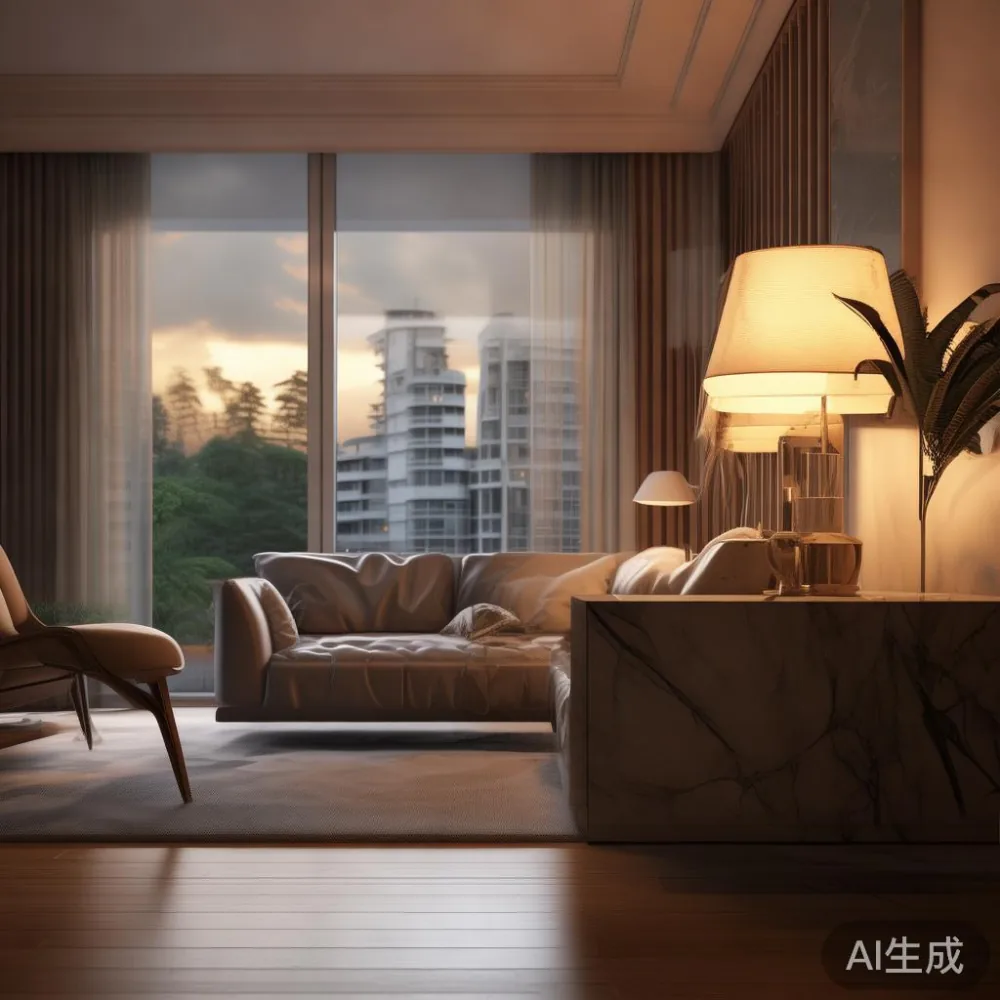
The phrase light luxury gets used loosely. French light luxury leans toward curved silhouettes, champagne metal accents and travertine tops. American light luxury is more rectangular, more walnut, more brushed brass. Post-modern light luxury pulls in geometric marble tables and lacquered cabinets. They all share one thing: visible material. A piece earns its name by showing the wood, the stone, the stitching. None of that looks right if the wood bows and the marble tiles lift. For a 90 sqm HDB, I usually start with one anchor piece. A 2.2 m solid wood sofa in a French light luxury silhouette with a 1.6 m travertine marble coffee table handles daily humidity without drama when the timber is quarter-sawn oak. Add a 1.8 m walnut dining table on a steel sub-frame, two leather dining chairs in cognac, and a four-door wardrobe with fluted glass panels. Budget roughly S$9,500 to S$14,000 for the set, including GST and delivery above the S$350 free-shipping threshold. If you are renting a smaller unit, how to style light luxury sofa in apartment settings is really about scale and air space. Keep 90 cm behind a sofa for airflow, leave 15 cm between the back of the sofa and the wall, and avoid pushing the frame directly under a window. I learnt this the hard way after a client's first sofa faded on the window-facing side within 18 months. Sun plus humidity is a worse enemy than either one alone. For dining, a Minimalist for dining room approach works well in Singapore. A 1.6 m solid ash table with a 12 mm marble inlay at the centre, four slim chairs, and a single ceramic pendant keeps the room visually cool while the air-conditioner does its work. The marble top is small enough that the wood movement of the base does not stress the stone.
Bedrooms, wardrobes, and the Japandi trick that works in HDBs
Bedrooms in Singapore are small, often 10 sqm to 12 sqm in a four-room flat. A 1.5 m x 2.0 m solid wood bed frame leaves barely 50 cm of walking space on each side. That is tight enough that any expansion of the headboard or footboard scrapes the wall. The trick is to leave a 25 mm gap between the back of the headboard and the wall, then seal the wall with a mould-resistant primer before the wardrobe goes in. Air needs to move behind the wood. The wardrobe is the second humidity battleground. A 2.4 m four-door wardrobe in solid ash can weigh 180 kg empty and 320 kg loaded with winter clothes that Singaporeans never actually own. The bigger risk is the back panel bowing outward in October, then snapping back in February and pulling the carcass out of square. Good workshops glue the back panel into a 10 mm rebate, not just staple it. Ask for that detail. If you want a Japandi feel, Japandi for guest room is a smart way to add warmth without fighting the climate. Use a low 1.2 m platform bed in white oak, a single 0.6 m marble nightstand with rounded edges (a soft Carrara slab is forgiving when humidity shifts), and a 1.8 m sliding wardrobe door in cane-fronted timber. Keep textiles to linen and cotton. Skip the rugs under the bed; the air underneath needs to move. And on the wardrobe itself, how to style Japanese wardrobe in bedroom comes down to three numbers. Leave 30 cm of clear floor in front of the doors, leave 5 cm between the wardrobe top and the ceiling to let air rise, and put a small 80 g dehumidifier bag inside for the first six months. After that, the wood is acclimated and you can stop.
Care habits that actually move the needle
Most of what is written about wood care is written for European homes. Singapore needs different habits. After visiting more than 200 flats over the years, here is what I have seen work.
- Keep indoor RH between 45% and 60%. A S$45 hygrometer on the wall pays for itself in one wet season.
- Run the air-conditioner on dry mode for one hour during the heaviest rain of the day. Pulling that moisture out of the air is cheaper than fixing a swollen drawer slide.
- Wipe marble tops with a damp microfibre cloth, then dry. Skip the vinegar; it etches a 0.1 mm dull spot on Carrara within weeks.
- Rotate dining tables 90° every month if they sit near a window. Even light from one side will dry the wood unevenly and start a bow.
- Re-oil solid wood tops once a year with a hard wax oil. Skip silicone sprays; they lock moisture in.
- Check wardrobe hinges every six months. A 1 mm twist in the hinge plate during a humid month becomes a 3 mm twist during a dry month, and the door starts to rub.
What to ask before you click buy
Singapore buyers ask sharper questions now than they did five years ago. Here is the short list I share with friends before they order a S$3,500 bed frame or a S$1,400 nightstand. First, ask for the factory MC reading at the time of packing. Anything above 11% is a red flag for our climate. Second, ask how the back panels are fitted (rebated and glued, or stapled). Third, ask for the slab thickness on any marble furniture top, and whether the marble is backed with a fibreglass mesh. Fourth, ask whether the piece ships flat-pack or assembled, and whether the installer will do on-site assembly for free above S$350. Fifth, confirm the warranty covers joint loosening caused by humidity, not just manufacturing defects. Most suppliers will say yes if they kiln-dry correctly; the rest will hedge. One last note from the field. Wuhan Lingzhan Media did a side-by-side test two monsoon seasons ago of three similar wardrobes in three Punggol units. The only variable was factory MC. The 8.5% unit is still square today. The 10.2% unit needed a hinge adjustment in month nine. The 12.4% unit had to be partially disassembled and re-glued in month fourteen. Same design, same marble furniture hardware, same flat. The kiln made the difference. That is the quiet truth about solid wood in Southeast Asia. The piece that lasts is the piece that was dried for you before it ever left the workshop. Spend the money on that, and the humidity stops being a problem.