Impact of Southeast Asia Humidity on Marble Furniture
Singapore’s tropical climate can change the moisture content of solid wood faster than many customers expect. Warm, humid air enters the pores of an oak dining table, a teak bed frame or a walnut wardrobe, and repeated condensation can leave doors misaligned, drawer runners tight and tabletops slightly cupped. Air-conditioning reduces humidity indoors, but the transition from a cool HDB flat to a humid corridor can still expose furniture to daily moisture movement.
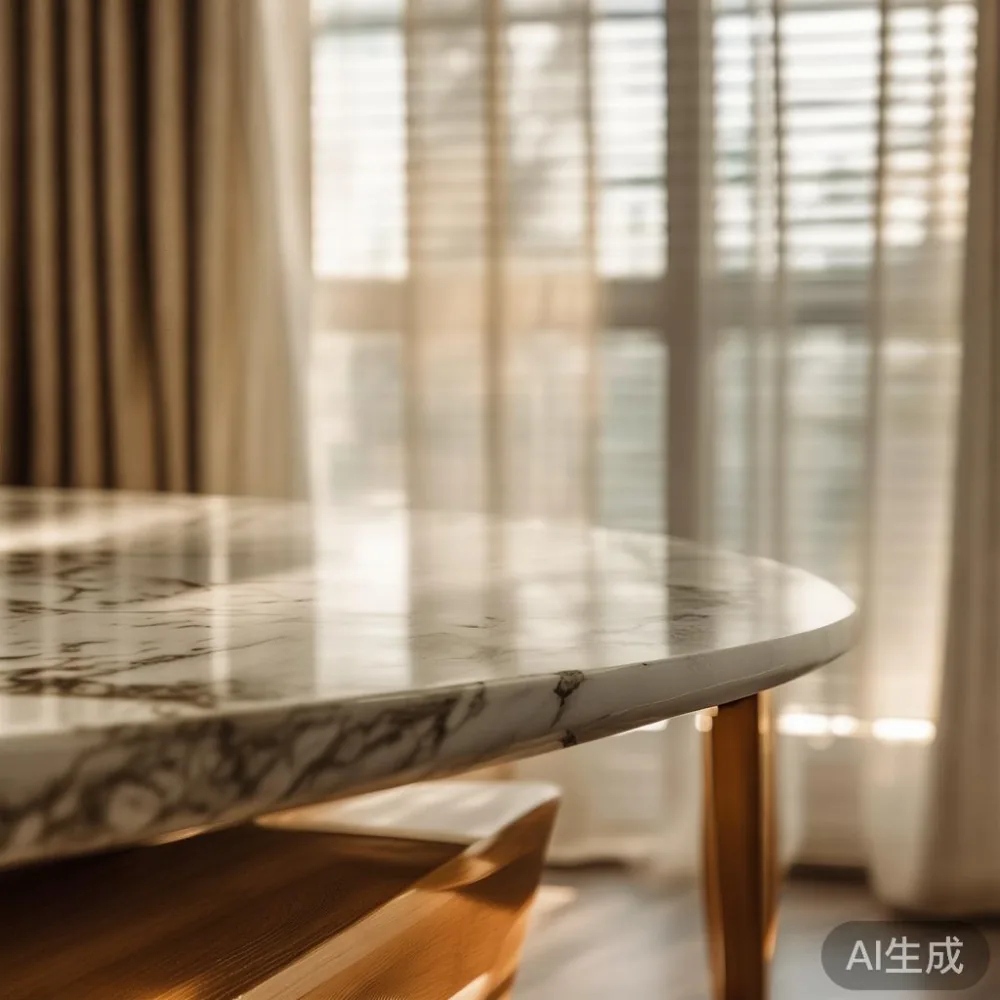
At MIDHILL, our approach combines stable kiln-dried timber, protective finishes and practical advice for Singapore homes. The same care also matters for marble furniture: stone may not warp like wood, yet marble table surfaces can react to moisture, acidic liquids and careless cleaning. Understanding both materials helps families in Tampines, Bedok and Punggol make furniture that remains comfortable, durable and visually balanced.
Why does high humidity change solid wood furniture?
Wood is hygroscopic. It absorbs atmospheric moisture when the air is humid and releases it when the air becomes drier. Southeast Asian weather often swings between approximately 80% relative humidity during wet periods and 50–60% inside air-conditioned rooms. A solid wood sofa frame, dining table or bed frame can therefore expand and contract by roughly 1–3 mm across a season, depending on the species, thickness and finish.
The movement is usually small enough to remain invisible on a well-made piece, but it can be amplified by direct airflow from a floor vent, a window leak or a frequently opened balcony door. A kitchen-adjacent wardrobe may also encounter grease and steam, while a dining table near an open window may sit in warmer air for several hours each day.
Singapore HDB layouts add another consideration. Many flats receive furniture through corridors around 100–140 cm wide and common lift doors of about 90 cm. A 200 cm long dining table may need to be turned on its side, while a 180 cm solid wood bed frame may require two people. Damage often happens during delivery rather than years later, particularly when humid packaging is removed before the furniture has acclimatised.
For homeowners, the objective is not to eliminate every trace of moisture. It is to reduce sudden changes, keep standing water away from wood and maintain a stable indoor environment. In Singapore, an ideal practical range is often around 45–65% relative humidity, supported by air-conditioning or a dehumidifier.
Which wood and finishes are easier to live with near Singapore’s coast?
Teak and other moisture-resistant hardwoods are commonly appreciated in humid regions, but no timber is completely immune to humidity. Dense hardwoods such as walnut and oak still move with atmospheric moisture; teak’s oily fibres and stability may make it a more forgiving choice for a dining table or bed frame, provided the joints and finish remain sound.
Engineered hardwood can also perform well because its layers are designed to reduce movement. However, buyers should distinguish stable construction from a veneer only. A high-quality engineered board may resist warping, while a thinly veneered particleboard can deteriorate at exposed edges after prolonged moisture exposure.
Finishes form part of the performance system. A properly applied lacquer or hardwax oil can slow the exchange of moisture, but scratches may expose unprotected areas. Sealed edges are particularly useful for kitchen-adjacent furniture. For a nightstand used beside an air-conditioned bed, a finish with a satin sheen provides a practical balance between protection and easy maintenance.
French light luxury and American light luxury interiors often favour pale oak, warm walnut and restrained cream tones. Those palettes suit Southeast Asian rooms, yet a designer light luxury furniture scheme should also account for ventilation, sunlight and cleaning habits. Post-modern light luxury can work equally well when clean geometry meets tactile timber, provided pale stone surfaces are paired with wood bases that are not repeatedly splashed.
A solid wood sofa may include engineered springs, fabric cushions and a timber frame that responds differently to humidity. Leather needs conditioning, while dense woven fabrics can retain smells if damp. A quality solid wood sofa should be labelled by frame material, suspension type, cushion density and foam thickness, not described merely as “wood” or “luxury”.
How should a marble table handle Singapore humidity?
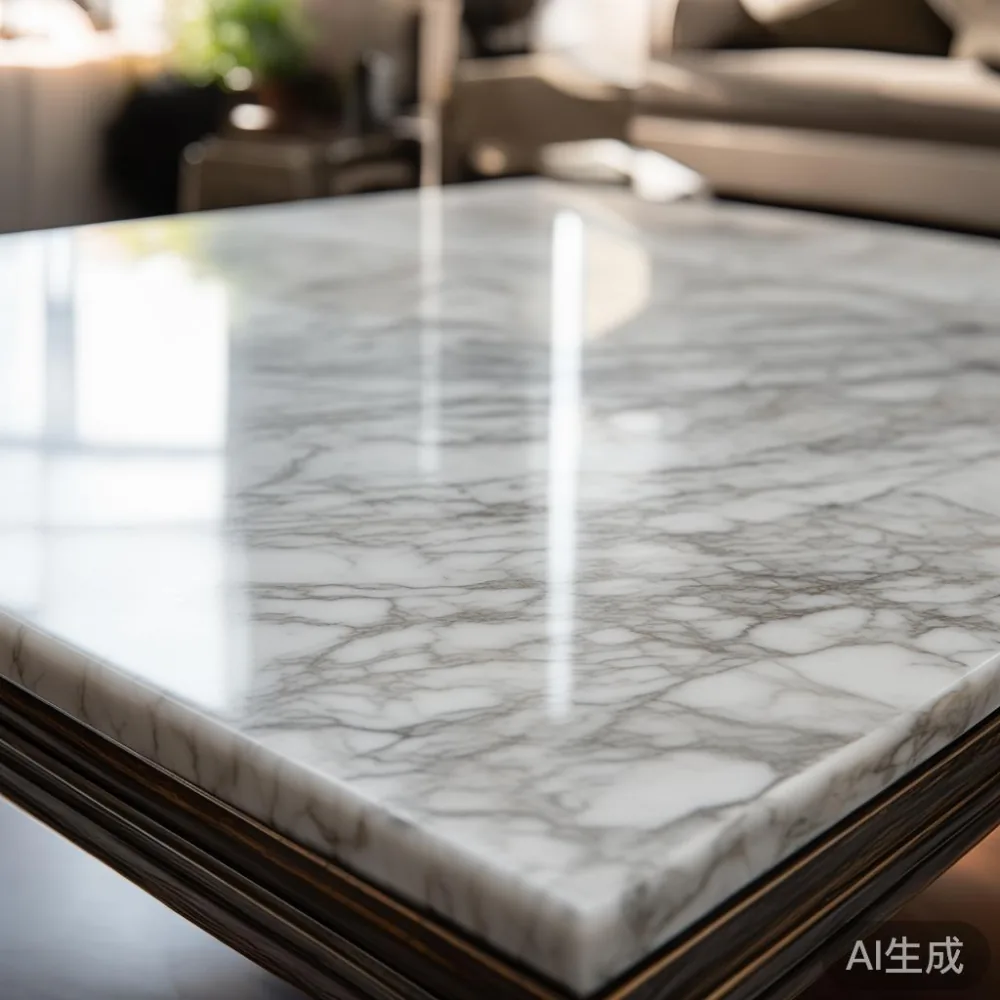
Marble furniture performs differently from wood. Marble is generally dimensionally stable under ordinary humidity changes, but its porous structure can be affected by water and acidic substances. A marble table may absorb tea, wine or citrus juice into a small area, while humidity can make some cleaning residues appear unevenly as the stone dries.
Allow a marble dining table to acclimatise for approximately 24–48 hours after delivery. During that period, keep it away from direct rain, kitchen steam and wet cleaning cloths. Wipe spills promptly with a soft, lint-free cloth rather than allowing rings to remain. Neutral pH stone cleaners are preferable; vinegar, lemon juice and abrasive bathroom cleaners should not touch the surface.
Stone and wood require different thresholds. A sealed marble table may tolerate a damp cloth, but the wooden dining chairs around it should not stand in pooled water. For coordinated settings, customers can compare a European light luxury bed vs French provincial bed, because carved details and pale finishes often require gentler care than straight-edged contemporary forms.
For bedroom planning, a European light luxury bed vs Modern bed comparison should include slat spacing, under-bed clearance and humidity management. Many Singapore rooms use a platform frame with 12–15 cm of clearance. A fixed base may improve visual calm, while a slightly raised frame allows inspection for dampness and makes cleaning easier.
Humidity also affects delivery logistics. A marble table weighing 65–120 kg needs a planned route through lift lobbies, corridors and stairs. MIDHILL’s team should check access dimensions and floor load before dispatch. If the common lift is 90 cm wide and the table base is 75 cm, turning space and protective wrapping become more important than the box label.
What should I do before and after delivery?
Begin by measuring the route, not just the room. Record the narrowest corridor, lift door, turning point and doorway. Door widths in HDB flats commonly range from 80–90 cm, and corridor widths can vary around 100–150 cm. Add at least 10 cm of working margin where possible. Check whether the lift has a weight limit and reserve a protected delivery window, especially for a marble table or a wardrobe over 100 kg.
Remove the furniture from impermeable wrapping gradually. If a solid wood bed frame has been packed for sea or air freight, allow roughly 48–72 hours for adaptation to the local indoor environment. Keep it away from air-conditioning vents during the first week and do not tighten adjustable components immediately if minor movement is noticed.
Position solid wood furniture away from direct sun and obvious dampness. Maintain 10–15 cm between a wardrobe and an exterior wall where practical, particularly in ground-floor or podium blocks near greenery. Use a hygrometer placed at room height; a model costing about SGD 15–35 can provide a useful daily reading. Avoid placing a nightstand directly beneath a leaking window or beside a bathroom doorway.
For routine care, dust with a soft cloth every 1–2 weeks and use a lightly damp cloth only when needed. Dry the surface immediately. Do not use silicone-based sprays, standard oil polishes or household degreasers on lacquered wood unless the finish manufacturer confirms compatibility.
Humidity readings can also guide how long furniture should remain in storage. A 220 cm dining table needs adequate floor area and safe lifting points; delivery crews should not carry it by decorative rails or thin marble edges. A qualified mover using moving blankets, corner guards and straps can prevent finish marks that otherwise appear within 1–2 years of use.
Can air-conditioning protect a wardrobe or bed frame?
<Yes, but it should operate as part of the room rather than create constant shocks. A sudden blast from an air-conditioner can dry one face of a wardrobe door while the opposite face remains exposed to humid corridor air. Repeated cycles may lead to small gaps or uneven sheen. Set the fan to auto or low speed, aim vents away from furniture and maintain a distance of roughly 1–2 m where layout permits.
Condensation can occur if a cold cabinet or mattress touches a warm, humid wall. Leave about 5 cm of ventilation space behind freestanding wardrobes, and check skirting boards for signs of black spotting. In HDB blocks near parks or canals, especially in Bedok and Punggol, checking for condensation twice a week during heavy rain is sensible.
For guest rooms, ventilation matters even when the space is rarely occupied. Mid-century modern for guest room layouts often use a slim solid wood bed frame, compact nightstands and an open wardrobe. A model inspired by the best Nordic bed for 2026 should still be evaluated for slat support, centre-leg clearance and resistance to seasonal movement rather than appearance alone.
Modern light luxury styling can suit a compact room through pale upholstery, light oak and simple stone accents. A Modern light luxury bed with a low platform profile may make an 11 m² room feel more open, but the mattress should not press tightly against a humid headboard wall. Allow approximately 5–8 cm for airflow and occasional inspection.
Use a dehumidifier when relative humidity stays above 65% for extended periods. A unit suitable for a 20–35 m² bedroom typically costs SGD 250–500 and should run on an appropriate continuous drainage arrangement. Do not place a dehumidifier directly beside timber because its warm exhaust can create another local temperature difference.
How can buyers compare furniture for humid homes?
Ask for the exact timber species, construction method, moisture target, finish type and warranty. MIDHILL applies a 10-year structural warranty, while lifetime refinishing reflects the long-term care relationship expected of solid wood products. A supplier should also explain whether replacement parts, drawer runners and finishes are covered.
Check a dining table for solid wood versus veneer construction, then inspect the underside, joints and edges. A solid wood dining table should show deliberate movement allowances at its joints. Avoid pieces sealed in heavy plastic with no ventilation, since trapped condensation can mark the surface before delivery.
For wardrobes, test opening and closing after the room has been conditioned for 24 hours. Look for approximately 2–3 mm gaps at doors, aligned hinges and runners rated for the intended load. Ask whether the back panels are fitted, ventilated and suitable for tropical conditions.
Compare a European light luxury bed vs Modern bed by looking beyond the headboard. Confirm that the slats are spaced about 3–5 cm apart, the centre supports meet the frame and the side rails are moisture-finished. When comparing a European light luxury bed vs French provincial bed, consider cleaning access and the amount of carved detail that could trap dust in a humid home.
Local pricing should include practical ownership costs rather than promotional claims. A substantial solid wood dining table may range from SGD 1,800–5,500, while a marble table may range from SGD 1,200–4,500 depending on size and stone. A solid wood bed frame commonly falls around SGD 900–3,000. These ranges allow room for specifications, but no “best” label is a substitute for timber, joinery and finish details.
MIDHILL also offers free shipping above US$350, although Singapore orders are normally shown in SGD at checkout. The 14-day returns policy gives households time to assess scale and comfort, but humidity-related movement is a natural material behaviour rather than a defect when the piece was made to documented tolerances.
What care routine suits Singapore’s climate?
A consistent routine matters more than an occasional deep clean. Check the hygrometer every morning for 30 seconds, inspect furniture near walls every 2–4 weeks and wipe marble surfaces after use. Clean wooden dining tables with a pH-neutral product approved for the finish. Use separate cloths for stone and timber, because residue from one material can damage the other.
On marble furniture, re-seal according to the stone and sealer rather than on an arbitrary schedule. A food-safe sealer may need refreshing around every 12–24 months, but the manufacturer’s guidance takes precedence. For wood, avoid placing a hot pot directly on a lacquered surface. Use a trivet with at least 3 cm clearance and wipe condensation from drinks promptly.
Watch for early warning signs: a sticky drawer runner, a faint tide line on marble, a door touching at one corner or a musty smell beneath a bed frame. Respond before the issue develops. A drawer can be adjusted within weeks; warped board or deep stone staining may require professional restoration that costs more and takes longer.
Large pieces should also be inspected after major weather events. In a Tampines HDB flat, the bed frame may sit beside an air-conditioned bedroom while the corridor remains at 75–85% humidity. Moving a solid wood sofa 20 cm away from the wall, allowing air to circulate and opening the room briefly after rain can reduce the difference.
Good furniture for Southeast Asia is not simply built from a tropical-sounding timber. It is accurately described, proportioned for the home, finished for daily contact and supported by a practical care plan. When a solid wood sofa, bed frame, dining table, wardrobe, nightstand or marble table is chosen with those points in mind, humidity becomes a manageable part of ownership rather than a recurring source of damage.